
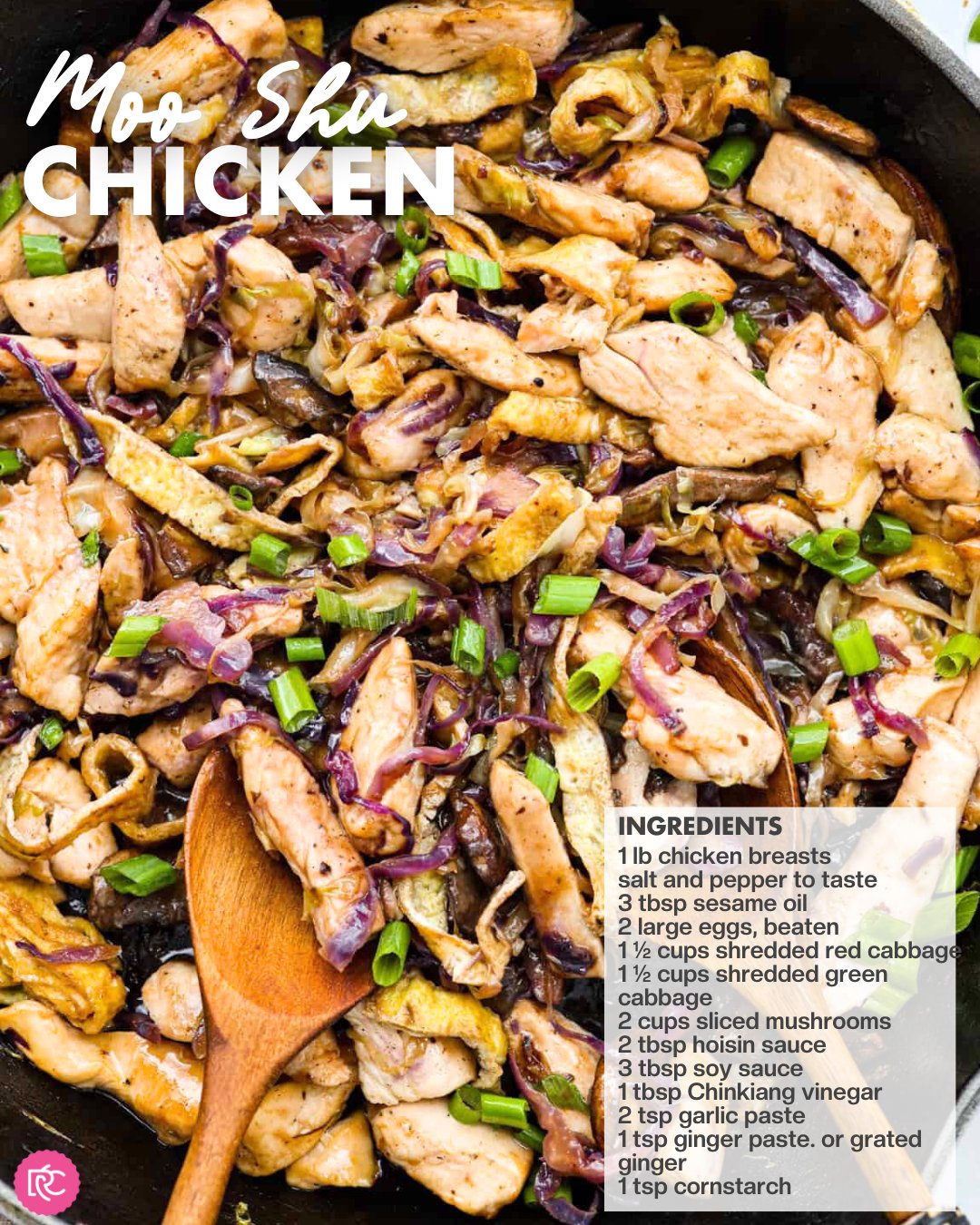
Moo Shu comes from northern Chinese cooking, where the original pork version paired sliced pork, egg, and wood ear mushrooms; American‑Chinese adaptations swap in cabbage, shiitake or button mushrooms, and sometimes carrots, then add a glossy sauce based on soy, hoisin, and sesame oil.
For Moo Shu Chicken, thin strips of chicken breast or thigh are briefly marinated so they stay tender, then stir‑fried hot and fast with vegetables and ginger‑garlic, and finally tossed with an umami, slightly sweet sauce to coat everything. The dish is served with thin Mandarin pancakes (or tortillas) and extra hoisin sauce, so everyone can build their own wraps at the table.
Equipment
- Large skillet or wok for stir‑frying.
- Small nonstick skillet for cooking the egg omelet.
- Mixing bowls for marinating chicken and mixing the sauce.
- Cutting board and sharp knife for slicing chicken and vegetables.
Ingredients
Typical Moo Shu Chicken recipes share the same core elements: marinated chicken, egg, cabbage, mushrooms, aromatics, and a soy‑hoisin sauce, with pancakes or tortillas for serving.
For the chicken and marinade:
- 1 pound boneless, skinless chicken breasts or thighs, thinly sliced.
- 1–2 teaspoons cornstarch.
- 1–2 teaspoons neutral oil (canola, vegetable, or avocado).
- 1 teaspoon sesame oil (optional, for flavor).
- 1–2 teaspoons soy sauce and a pinch of white or black pepper.
For the stir‑fry:
- 2–3 tablespoons neutral oil, divided.
- 2 large eggs, lightly beaten with a pinch of salt.
- 2–3 cups thinly sliced green or Napa cabbage or coleslaw mix.
- 1–2 cups sliced mushrooms (shiitake, wood ear, or button).
- 1–2 carrots, cut into matchsticks or thin strips (optional but common).
- 2–4 green onions, sliced.
- 2 cloves garlic, minced.
- 1–2 teaspoons fresh ginger, grated or minced.
For the sauce:
- 2–4 tablespoons soy sauce.
- 1–3 tablespoons hoisin sauce.
- 1 teaspoon sesame oil.
- 1–2 teaspoons rice vinegar or mirin, for brightness and sweetness.
- 1–2 teaspoons cornstarch stirred into a few tablespoons of water to thicken.
For serving:
- Mandarin pancakes, thin flour tortillas, or lettuce cups.
- Extra hoisin sauce and sliced green onions.
Instructions and steps
Start by marinating the chicken so it stir‑fries tender. In a bowl, combine the sliced chicken with cornstarch, a little neutral oil, soy sauce, sesame oil if using, and a pinch of pepper. Toss until the chicken is evenly coated and let it stand for about 10–15 minutes while you prep the other ingredients. This quick “velveting” style marinade helps the meat stay moist and gives the sauce something to cling to.
While the chicken marinates, cook the egg omelet that will be sliced into strips. Heat a small nonstick skillet over medium heat with a little oil. Pour in the beaten eggs, tilt the pan to spread them into a thin layer, and cook undisturbed until just set, then flip and cook briefly on the second side.
Slide the omelet onto a cutting board, let it cool slightly, then roll or stack it and slice into thin strips; set aside. The egg adds color, protein, and a soft contrast to the crunchy vegetables.
Mix the sauce in a small bowl so it’s ready to go. Whisk together soy sauce, hoisin sauce, sesame oil, rice vinegar or mirin, and water, then whisk in cornstarch until smooth. Adjust the balance of sweet and salty by adding a bit more hoisin for sweetness or soy for saltiness as needed; set the sauce aside near the stove.
Stir‑fry the chicken. Heat a tablespoon or so of oil in a large skillet or wok over medium‑high heat until shimmering. Add the marinated chicken in a single layer and cook, stirring only occasionally, until it is lightly browned and just cooked through, usually 4–6 minutes depending on thickness. Transfer the chicken to a plate and keep warm.
In the same pan, add a little more oil if needed and stir‑fry the vegetables and aromatics. Add garlic and ginger and cook for 20–30 seconds until fragrant. Immediately add the cabbage, mushrooms, and carrots if using, and stir‑fry over medium‑high heat for 2–5 minutes until the cabbage is wilted but still crisp‑tender and the mushrooms are cooked through. Toss in the sliced green onions during the last minute of cooking so they stay bright.
Return the chicken and egg strips to the pan with the vegetables. Give the prepared sauce a quick stir, then pour it into the hot pan. Increase the heat and bring to a gentle boil, stirring constantly as the cornstarch activates and the sauce thickens to coat the chicken and vegetables with a glossy sheen. This usually takes 30–60 seconds. Once everything is coated and heated through, taste and adjust seasoning if needed with extra soy or a tiny bit more hoisin. Remove from heat so the vegetables stay crisp.
To serve, warm the Mandarin pancakes or tortillas according to package or recipe directions, keeping them wrapped so they stay soft and pliable. Spread a thin layer of hoisin sauce on each pancake, add a spoonful or two of the Moo Shu Chicken mixture, sprinkle with extra green onions if desired, then fold or roll up like a small burrito. Serve immediately, with more hoisin at the table for dipping.
Variations
Classic vs. shortcut Moo Shu:
Some recipes lean more traditional by including wood ear mushrooms and bamboo shoots and serving with homemade Mandarin pancakes. Others simplify with coleslaw mix instead of hand‑shredded cabbage and use flour tortillas as a stand‑in for pancakes for a faster weeknight version. Both keep the same structure—chicken, cabbage, egg, mushrooms, and a hoisin‑soy sauce.
Paleo, Whole30, or low‑carb Moo Shu Chicken:
Paleo and Whole30 versions swap cornstarch and hoisin for grain‑free thickeners and homemade paleo hoisin, and use coconut aminos instead of soy sauce. They’re often served in lettuce cups or grain‑free tortillas rather than traditional pancakes, but still feature the key trio of chicken, cabbage, and egg.
Extra‑saucy or spicy Moo Shu:
For a saucier filling, some recipes increase the sauce quantities or add a little chicken broth before thickening so there’s more to soak into the pancakes. You can also stir in chili‑garlic sauce, sriracha, or extra ginger for a spicier version that still retains the classic sweet‑savory hoisin profile.
Different wrappers and serving styles:
While Mandarin pancakes are the traditional choice, many home cooks use flour tortillas, scallion pancakes, or even rice paper wraps to hold moo shu fillings. The same stir‑fry can also be spooned over steamed rice or noodles instead of being wrapped, turning Moo Shu Chicken into a simple stir‑fry rice bowl.
Moo Shu Chicken brings together tender marinated chicken, crisp vegetables, and silky egg in a fast stir‑fry that’s all about texture and savory‑sweet flavor, especially when tucked into warm pancakes with hoisin—essentially a Chinese‑style chicken and veggie wrap that’s both weeknight‑friendly and takeout‑level delicious.