
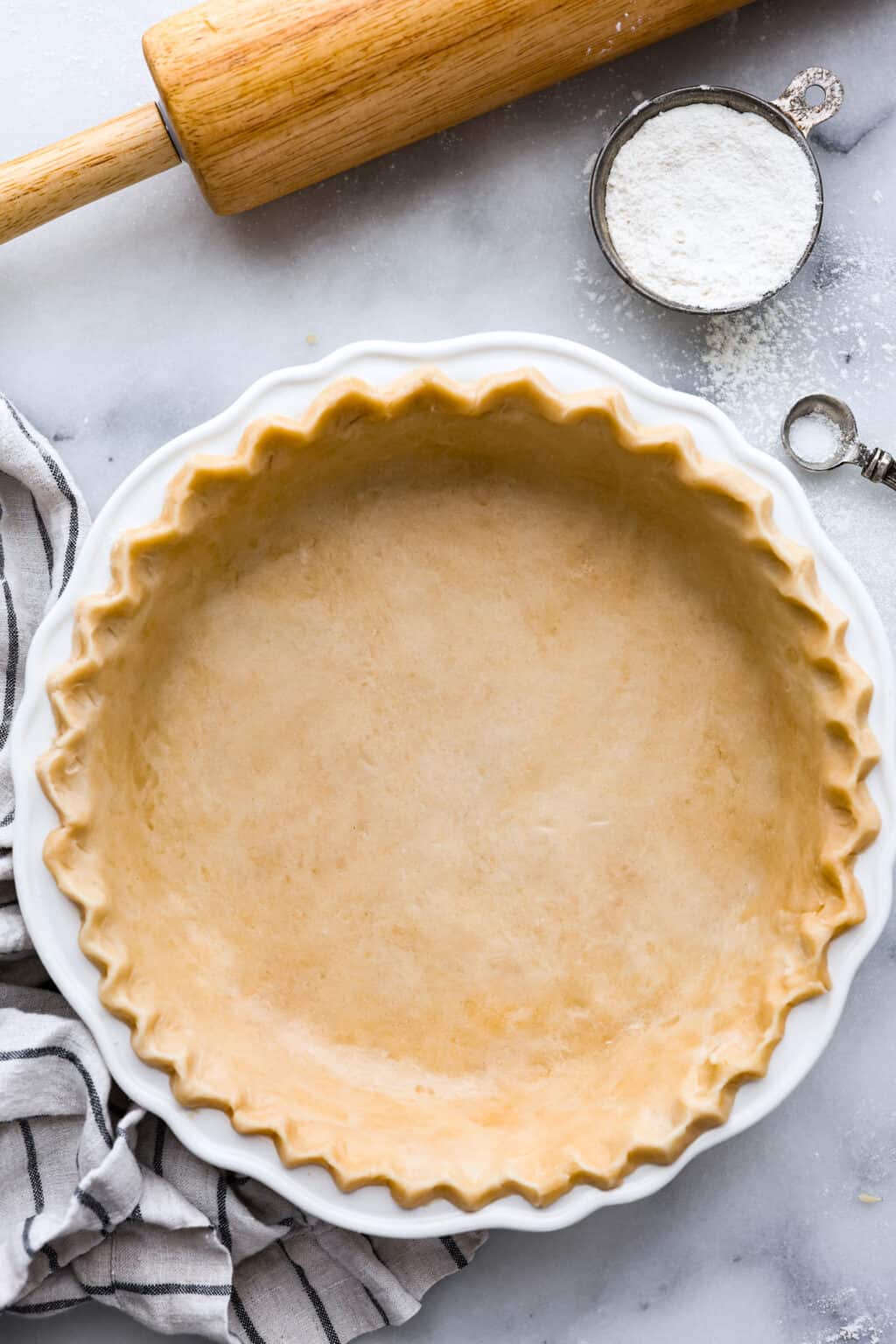
Unlike a simple flour‑butter‑water crust, Grandma’s Perfect Pie Crust usually has two “secrets”: a mix of fats for both flavor and tenderness (often butter plus shortening or all shortening) and a wet mixture made from egg, cold water, and vinegar.
The flour and fat are first cut together until crumbly, then the egg–vinegar–water mixture is drizzled in to bring everything together into a soft, easy‑to‑handle dough. That dough is chilled, rolled, and fitted into a pie plate; it bakes up flaky and golden, with enough structure to hold fillings but a tender bite that feels nostalgic and “like Grandma made.”
Equipment
- Large mixing bowl for dry ingredients and fat.
- Small bowl or measuring cup for whisking egg, water, and vinegar.
- Pastry cutter, two knives, or fingertips for cutting in shortening/butter.
- Rolling pin and lightly floured surface.
- 9‑inch pie plate.
Ingredients
This is a classic Grandma‑style crust with egg and vinegar that makes enough dough for a double‑crust pie (top and bottom) or several single crusts.
- 3 cups all‑purpose flour.
- 1 teaspoon salt.
- 1–1½ cups shortening and/or a combination of ½ cup shortening + ½ cup cold butter (many grandmas use all shortening; some newer versions use a butter/shortening mix).
- 1 large egg.
- About ½ cup ice‑cold water.
- 1 tablespoon white vinegar (or apple cider vinegar).
Some specific “grandma” recipes add a pinch of cream of tartar or slightly adjust the shortening amount, but the structure is the same: flour + fat + egg‑vinegar‑water.
Instructions And Steps
Start by combining the dry ingredients and fat. In a large mixing bowl, sift or whisk together the flour and salt. Add the shortening (and cold butter if using a butter/shortening mix), cut into small pieces. Use a pastry cutter, two knives, or your fingertips to cut the fat into the flour until the mixture looks like coarse crumbs with pea‑sized pieces of fat still visible. Those small pieces of fat will later melt and create flakes in the crust when baked.
In a separate small bowl or measuring cup, crack the egg and beat it lightly with a fork. Add the vinegar and enough cold water to reach about ½ cup total liquid, or follow your recipe’s exact measurement (some specify ½ cup water plus 1 tablespoon vinegar, others mix water and vinegar to a specific line on the cup). Stir to combine.
The egg provides moisture and binding, making the dough easier to handle, while the vinegar helps keep the crust tender by limiting gluten development.
Drizzle the egg‑vinegar‑water mixture over the flour‑fat mixture a little at a time, gently tossing with a fork or mixing with a spatula as you go. Add just enough of the liquid for the dough to start clumping together; you may not need all of it, or you may need a touch more water depending on humidity and flour.
The dough should come together when pressed in your hand but should not be wet or sticky. Avoid over‑mixing—once the dough holds together, stop working it to keep the crust tender.
Turn the dough out onto a lightly floured surface and bring it together gently with your hands, pressing it into a ball without kneading it heavily. Divide it into 2 or 3 equal portions depending on how many crusts you need; for a standard double‑crust pie, divide into 2 discs.
Flatten each portion into a thick disc about 1 inch thick, smoothing any cracks at the edges. Wrap each disc tightly in plastic wrap and chill in the refrigerator for at least 1–2 hours, or longer if possible, so the fat firms up and the dough relaxes. Many “grandma” recipes note this dough keeps well in the fridge for several days or in the freezer for months, making it easy to prep ahead.
When you’re ready to roll, take one disc out of the fridge and let it sit at room temperature for a few minutes so it softens just enough to roll without cracking. Lightly flour your work surface and rolling pin.
Place the disc in the center and roll from the middle outward in all directions, rotating the dough a quarter turn between rolls, and dusting lightly with flour as needed to prevent sticking. Aim for an even circle about ⅛‑inch thick and 2–3 inches wider than your pie plate. If cracks form at the edges, gently pinch them together or patch with scraps.
To transfer the rolled dough to your pie plate, gently roll it around the rolling pin and unroll it over the plate, or fold it loosely into quarters and unfold it inside the dish. Ease the dough down into the bottom and sides of the plate without stretching it, as stretching can cause shrinking in the oven.
Trim the overhang to about 1 inch beyond the rim, fold the excess under itself along the edge, and crimp with your fingers or a fork. For a single‑crust pie, chill the lined pie plate before filling or blind baking; for a double‑crust pie, fill the bottom crust, add the rolled top crust, trim and crimp the edges together, and cut vents in the top.
Bake according to your pie recipe. If your filling will bake with the crust (like fruit pies), you’ll follow that recipe’s temperature and time, often starting at a hotter oven (375–425°F) to set the crust and then reducing heat.
If you need a par‑baked or fully blind‑baked crust for cream pies or custards, line the chilled crust with parchment, fill with pie weights or dried beans, and bake until the edges are set. Remove the weights and parchment, prick the bottom with a fork, then return to the oven until lightly golden for a partial bake or deeper golden for a fully baked crust.
Tips And Tricks
Keep your fats and liquids cold. Grandma‑style crusts with shortening and/or butter plus egg benefit from cold fat and cold water, just like all‑butter crusts; cold fat stays in pieces and melts in the oven to form flakes. The egg mixture should be chilled, and some recipes even chill flour and bowl for extra insurance.
Don’t over‑work the dough. The egg and vinegar already help keep the crust tender, but over‑mixing after adding liquid can still develop gluten and make the crust tough or prone to shrinking. Mix and handle only until the dough just comes together. Visible specks of fat in the dough are a good sign.
Measure flour correctly. Spoon flour into the measuring cup and level it off, or better yet, weigh it; too much flour can make your crust dry and crumbly, while too little can make it sticky and hard to handle. If the dough seems too dry and won’t hold together, add a tiny splash of cold water and gently work it in; if it’s too sticky, dust with a bit more flour as you bring it together.
Chill twice. Chilling the dough after mixing and again after fitting it into the pie plate (before baking) is a common “grandma” tip; it helps prevent shrinking, improves flakiness, and makes the crust easier to handle and crimp.
Grandma’s Perfect Pie Crust, with its egg‑and‑vinegar secret, strikes a balance between tender, flaky texture and forgiving, easy‑to‑roll dough, making it a reliable base for everything from fruit pies and custard pies to pot pies and quiches—just the kind of crust that becomes a family staple for generations.