
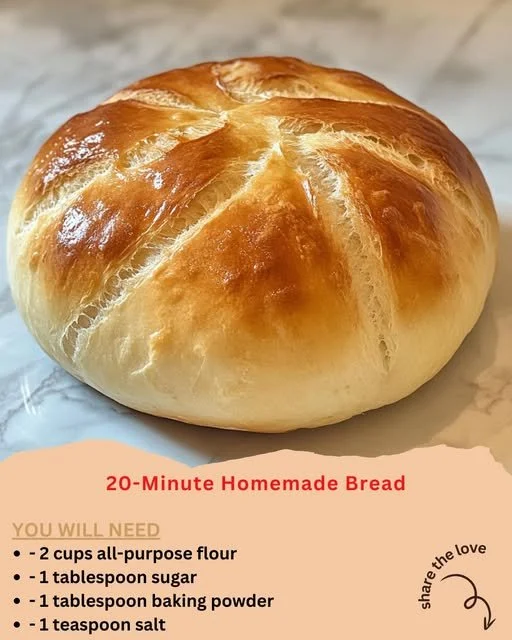
Then, turn the dough out onto a floured surface and knead for about 2-3 minutes. I find this step super satisfying; the dough transitions from a sticky mass to a smooth, elastic ball in your hands. Don’t worry if it still sticks a bit—it’s supposed to! Once kneaded, shape the dough into a loaf and place it into a greased loaf pan or onto a baking sheet if you’re feeling adventurous (round bread is fun, too!). Cover it with a clean kitchen towel and let it rest for about 5-10 minutes while your oven finishes preheating.
Once that timer goes off, pop the bread in for about 20 minutes or until the loaf is golden brown and sounds hollow when tapped on the bottom. I love the moment when the bread cools just enough for me to slice into it. The crust is perfectly golden, and the inside is soft. This is where I often get tempted to slather it with butter right away; the flavor is just incredible! Let it cool on a rack for a few minutes before diving in.
Pro Tips for Best Results
I’ve played around with this recipe several times, tweaking small ingredients to achieve perfection. One of my best discoveries was to add a tablespoon of honey to the mix, giving the bread a slight sweetness that pairs beautifully with savory meals. I also suggest checking the water temperature; it should be warm to the touch but not hot. Too hot, and it could kill the yeast, making the bread dense instead of fluffy!
Another tip I found helpful is to sprinkle a little flour on the countertop before kneading. It keeps the dough from sticking too much but not so much that it dries out. Just remember, the more you knead, the more airy your bread will be—don’t skip this step!
Lastly, if you want a crunchier crust, try placing a baking pan filled with water on the lower rack of your oven during baking. This will create steam, resulting in a crust that’s beautifully crispy. Over the years, I’ve enjoyed experimenting with these small adjustments to ensure my bread comes out perfectly every time.
Common Mistakes to Avoid
I have learned a lot about bread-making through trial and error, and I’d love to help you avoid some common pitfalls that I’ve faced. One of the most important things is measuring your flour correctly. I’ve made the mistake of scooping flour directly from the bag, which ends up compacting it and leads to a denser bread. Instead, spoon it into your measuring cup and level it off for an accurate measure. (See the next page below to continue…)