
Overbaking is a common culprit for dryness. You’re just heating it through and browning the top. Once it’s bubbly and the topping is golden, it’s done. Baking for too long can cause the sauce to break or absorb completely, leaving you with a dry casserole. Use the timer and trust your eyes.
Using only breadcrumbs for the topping, without the extra cheese mixed in, can result in a bland, one-note crust. The cheese mixed with the panko melts and creates flavorful, crispy-chewy pockets that are far superior. Don’t skip mixing cheese into your topping—it makes a huge difference.
Finally, skipping the veggie sauté step and adding raw onion and celery directly to the mix is a mistake. Sautéing them softens their texture and mellows their sharp flavors, allowing them to blend seamlessly into the creamy sauce rather than remaining crunchy and pungent.
Serving Suggestions
I love serving this casserole right from the dish at the table. A simple side of buttery steamed green beans, roasted broccoli, or a crisp garden salad with a bright vinaigrette is the perfect fresh contrast to the rich, creamy pasta. The cool, crunchy salad especially cuts through the richness beautifully.
For a true retro comfort meal, I’ll serve it with a side of canned fruit cocktail or chilled applesauce. The sweet fruit is a classic pairing that balances the savory flavors in a wonderfully nostalgic way. A slice of buttered dinner roll on the side is also a must for soaking up any extra sauce.
Leftovers are arguably the best part. I pack single servings for lunch—they reheat wonderfully. It also makes a fantastic brunch dish; I’ve even served squares of it with a fried egg on top for the ultimate savory breakfast.
Variations & Customizations
For a “California” style, swap the peas for a cup of thawed, frozen mixed vegetables (corn, carrots, peas, green beans). You can also add a drained 4-oz can of sliced mushrooms or a cup of fresh sautéed mushrooms for an even deeper umami flavor.
If you want to switch up the protein, use a couple of cups of shredded rotisserie chicken or even flaked, cooked salmon in place of the tuna. For a “Buffalo Tuna” twist, mix a 1/4 cup of buffalo sauce into the creamy mixture and use a blue cheese and panko topping.
For a crunchier, more decadent topping, mix the panko and cheese with 2 tablespoons of melted butter before sprinkling it on. For a lighter version, you can use cream of chicken soup and low-fat milk, though I find the full-fat versions deliver the best flavor and texture.
How to Store, Freeze & Reheat
Once cooled, I cover the baking dish tightly with foil or transfer leftovers to an airtight container. It will keep in the refrigerator for up to 4 days. The flavors meld and it often tastes even better on day two.
This casserole freezes exceptionally well, either before or after baking. To freeze unbaked, assemble the casserole right up to the topping step. Wrap the entire dish tightly in plastic wrap, then foil. Freeze for up to 3 months. Thaw overnight in the fridge before baking as directed, adding a few extra minutes. To freeze after baking, cool completely, portion, and freeze in airtight containers.
The best way to reheat is in the oven. Place individual portions or the whole dish (covered with foil) in a 350°F oven for 20-25 minutes until heated through. This keeps the topping crisp. The microwave will work in a pinch for a single serving, but it will soften the crunchy topping.
Conclusion
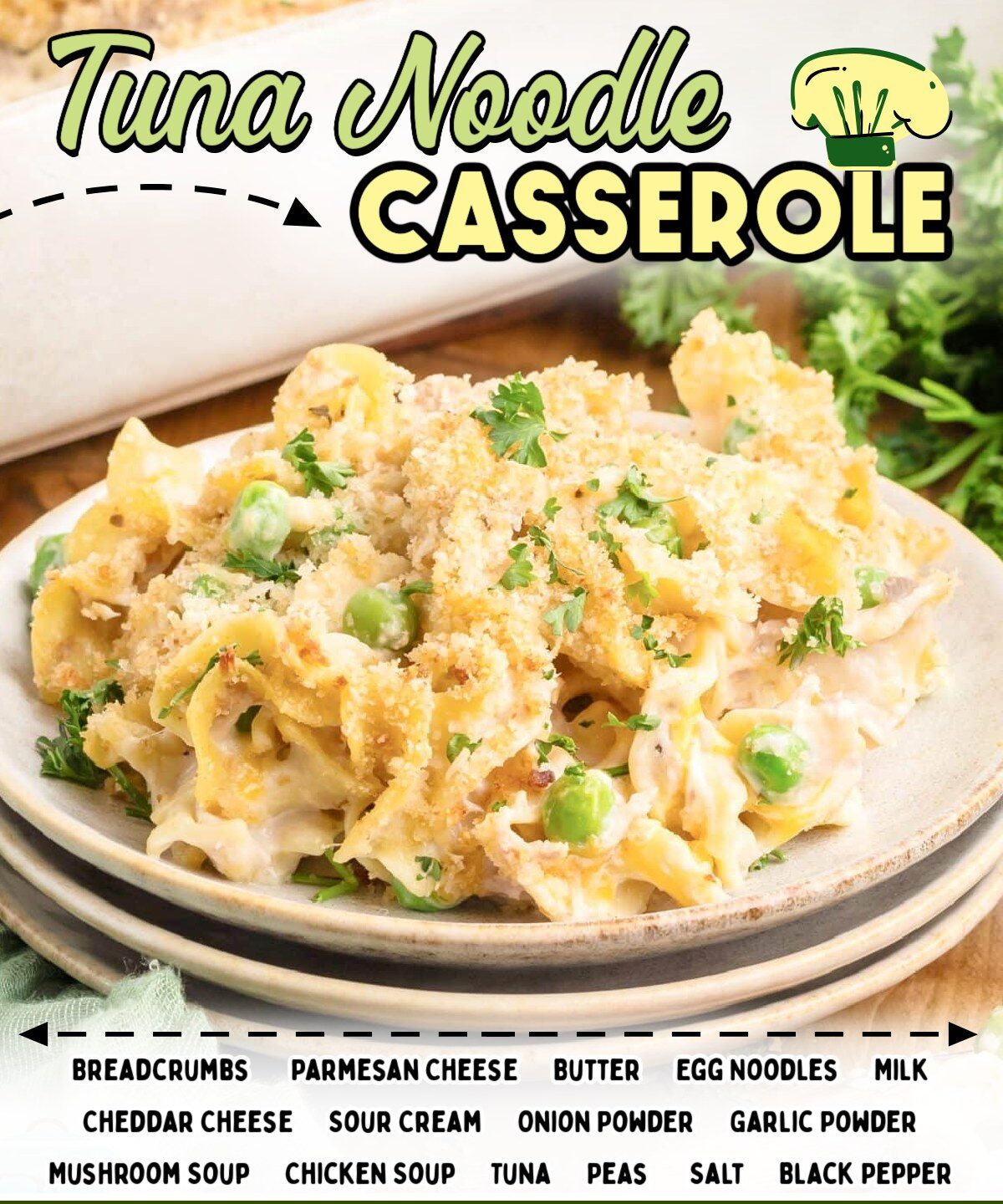
Tuna Noodle Casserole is more than just a recipe; it’s a warm, reliable friend in the kitchen. It has saved countless busy evenings in my home and never fails to deliver that deep sense of comfort we all crave sometimes. I hope this version becomes a trusted, beloved staple in your home, too. It’s proof that the simplest dishes, made with a little care, can be the most satisfying. Happy cooking