
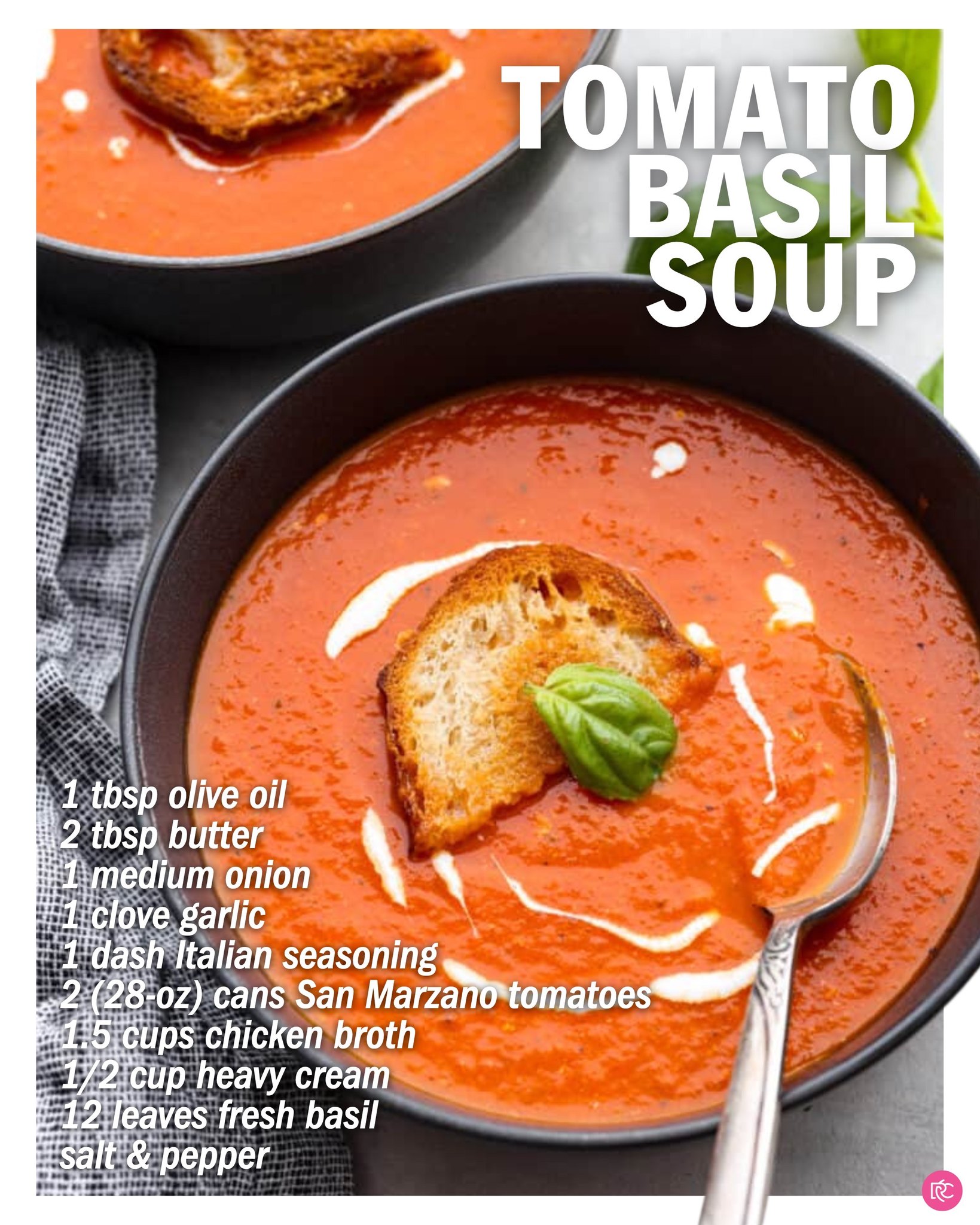
Tomato Basil Soup is a cozy, creamy tomato soup infused with sweet, fresh basil and often finished with a splash of cream and Parmesan for richness. It can be made with canned tomatoes for convenience or roasted fresh tomatoes for extra depth and is perfect with grilled cheese, crusty bread, or a simple salad.
What is Tomato Basil Soup?
Tomato Basil Soup is a smooth, blended tomato soup where basil is a key flavor, not an afterthought. Tomatoes (fresh roasted or canned) are cooked down with onion, garlic, and broth, then blended until velvety and finished with fresh basil leaves that add a fragrant, slightly sweet herbal note. Many modern recipes add a bit of cream, half‑and‑half, or mascarpone plus Parmesan cheese to create a creamy, restaurant‑style tomato basil bisque that still tastes bright and tomato‑forward.
The soup can be kept lighter and dairy‑free by skipping cream and using just olive oil and vegetable broth, or made richer with heavy cream and extra cheese. Roasting the tomatoes, onions, and garlic in the oven before blending is a popular approach because it concentrates their natural sweetness and adds a subtle roasted flavor that makes the soup taste slow‑cooked.
Equipment
- Large soup pot or Dutch oven for sautéing and simmering the soup
- Large rimmed baking sheet if roasting tomatoes, onions, and garlic
- Blender (countertop blender or immersion blender) for pureeing the soup until smooth
- Cutting board and sharp knife for chopping tomatoes, onions, carrots, garlic, and basil
- Measuring cups and spoons for broth, cream, seasonings, and oil
- Wooden spoon or spatula for stirring vegetables as they sauté
Ingredients
Classic creamy Tomato Basil Soup can be made with fresh roasted tomatoes or canned tomatoes; both use similar flavor building blocks.
Base ingredients (fresh roasted tomato version):
- 2½–3 pounds Roma or plum tomatoes, halved or roughly chopped
- 1 medium yellow or sweet onion, chopped
- 3–4 garlic cloves, chopped or left whole for roasting
- 2–3 tablespoons olive oil, plus more for roasting
- 3–4 cups vegetable or chicken broth (low‑sodium)
- 1 tablespoon balsamic vinegar or a pinch of sugar, to balance acidity
- 1 teaspoon fresh thyme leaves or a bay leaf/rosemary sprig (optional herb layer)
- 1 loosely packed cup fresh basil leaves, plus more for garnish
Creamy finish (optional but common):
- ½–1 cup heavy cream, half‑and‑half, or whole milk
- ½–1 cup freshly grated Parmesan cheese or mascarpone for extra richness
- Salt and freshly ground black pepper, to taste
Canned‑tomato creamy tomato basil soup:
- 1–2 cans (28 oz each) crushed or whole San Marzano or fire‑roasted tomatoes
- 1–2 red or yellow onions, chopped
- 3–4 cloves garlic, minced
- 3–4 cups chicken or vegetable stock
- ¾–1 cup heavy cream
- ½–1 cup grated Parmesan cheese
- 1 bunch fresh basil, torn or chopped
- Optional: carrots or celery sautéed with the onion for sweetness and body
Step-by-step instructions
Tomato Basil Soup usually follows a simple pattern: roast or sauté the vegetables, simmer with broth, blend until smooth, and finish with basil and cream. A roasted version starts by preheating the oven to high heat (around 400–425°F/200–220°C).
Tomatoes are arranged cut side up on a baking sheet with onion and garlic, drizzled with olive oil, and seasoned with salt and pepper. The tray is roasted until the tomatoes are soft, starting to caramelize around the edges, and the onions are tender—usually 25–40 minutes depending on size.
While the vegetables roast, a soup pot can be set over medium heat with a bit of olive oil to sauté any additional aromatics like carrots or extra onion until soft and sweet.
Once the roasted tomatoes, onions, and garlic are done, they are transferred (along with any juices) to the pot, and broth, thyme or other herbs, and balsamic vinegar are added.
The mixture is brought to a gentle boil and then simmered for about 15–20 minutes to let flavors meld and the tomatoes fully break down.
The soup is then blended. It is taken off the heat and allowed to cool slightly, then pureed directly in the pot with an immersion blender or in batches in a countertop blender until completely smooth and velvety. When using a traditional blender, the lid is vented and hot soup is blended in small batches to avoid pressure buildup.
Once smooth, the soup is returned to the pot if needed and fresh basil leaves are added, then pulsed or blended briefly so the basil is incorporated without turning bitter from over‑blending.
For a creamy version, cream and Parmesan (or mascarpone) are stirred in over low heat. Heavy cream, half‑and‑half, or milk is poured into the hot soup and stirred until fully combined, followed by grated Parmesan or other cheese until melted and smooth.
The soup is gently heated (but not boiled) for a few more minutes to warm through and thicken slightly. At this point, the soup is tasted and adjusted with salt, pepper, and, if needed, a pinch of sugar or splash of vinegar to balance acidity.
A canned‑tomato, stovetop‑only version skips the roasting step. Onion (and sometimes carrot and celery) is sautéed in olive oil until soft, garlic is added briefly, then canned crushed or whole tomatoes and broth are stirred in. The mixture simmers for 15–30 minutes, then is blended until smooth, and the basil, cream, and Parmesan are added as above. This version is fast (often under 30 minutes) and works well for weeknights.
Texture and flavor tips
A great Tomato Basil Soup should be silky, balanced in acidity, and strongly flavored with both ripe tomato and fresh basil. Choosing good tomatoes—ripe Roma or plum tomatoes for fresh versions, or quality canned San Marzano or fire‑roasted tomatoes for pantry versions—makes a big difference in sweetness and depth.
Roasting tomatoes, onions, and garlic caramelizes their natural sugars, which reduces the need for added sugar and adds a subtle smoky‑roasted background note.
Balancing acidity is important. Tomatoes and tomato paste can be quite acidic, so recipes often include a small amount of sugar, balsamic vinegar, or cream to round the edges. Cream and Parmesan both contribute fat and umami, which makes the soup taste richer and less sharp without losing tomato brightness.
For a very smooth texture, blending thoroughly and then straining the soup through a fine mesh sieve can remove seeds and any stray tomato skins.
Using an immersion blender right in the pot is convenient but might leave a slightly more rustic texture, which many people like. Adding fresh basil toward the end and avoiding over‑cooking it preserves its green color and fresh, peppery‑sweet flavor; long boiling can dull the basil and make the soup taste flatter.
Variations and add-ins
Tomato Basil Soup is easy to customize. Some recipes add extra vegetables like carrots, celery, or even roasted red peppers to boost sweetness and complexity; these are blended into the soup so they become part of the creamy base. Fire‑roasted tomatoes or roasted red peppers bring a smoky note that pairs well with basil and cream.
Herb variations include adding thyme, rosemary, bay leaf, or oregano along with or instead of basil, usually simmered and then removed before blending to avoid overpowering the basil. For a spicier version, red pepper flakes or a pinch of cayenne can be sautéed with the garlic or stirred in near the end for gentle heat.
Protein add‑ins turn the soup into a more substantial meal. Cooked tortellini, gnocchi, shredded chicken, or even small meatballs can be warmed directly in the finished soup. A drizzle of pesto on top, extra Parmesan, or garlic croutons also enhance flavor and make each bowl feel special.
Make-ahead, storage, and serving ideas
Tomato Basil Soup is ideal for making ahead. Many sources note that the flavors improve after a day in the refrigerator as the basil and tomato meld.
The soup can be cooled and stored in airtight containers in the fridge for 3–4 days; gentle reheating over medium‑low heat prevents cream from scorching. If you plan to freeze the soup, it often works best to freeze it before adding cream and Parmesan, then stir those in after thawing and reheating so the texture stays smooth.
On the table, Tomato Basil Soup pairs naturally with grilled cheese sandwiches, cheesy garlic bread, or a simple baguette for dunking. It also works well as a starter before pasta, roasted chicken, or salad‑based meals. Small portions can be served in cups or shot glasses for parties as a warm appetizer, especially when topped with a basil leaf and a sprinkle of Parmesan.
As a recipe style, Tomato Basil Soup combines pantry staples with fresh herbs, uses straightforward roasting and blending techniques, and offers easy levers (cream, cheese, extra veg) to shift it from light and bright to ultra‑creamy comfort, making it a versatile staple for home cooks.