
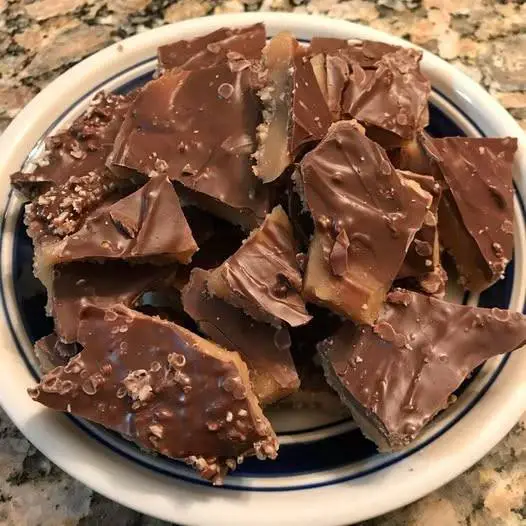
I’ll never forget the first time I successfully made this toffee. My kitchen smelled like a luxurious candy shop—rich, buttery, and deeply caramelized. The sound of the sugar and butter crackling as it reached the perfect hard crack stage was pure music. When I poured that molten gold over a blanket of chocolate and pecans, I held my breath. The snap of the cooled slab was the most satisfying sound I’d ever heard in my kitchen. That first buttery, crunchy, chocolatey bite was a revelation. It wasn’t just candy; it was a masterpiece I’d made with my own two hands.
Why You’ll Love This Recipe
You are going to fall in love with this recipe because it demystifies the art of perfect toffee. It walks you through the exact signs to look for, turning a potentially intimidating process into a fun, scientific-feeling adventure. The result is a professional-quality, buttery-crunchy candy with a luxurious chocolate coating that’s infinitely better than anything from a box. It’s the ultimate homemade gift and a stunning addition to any dessert table.
Ingredients
- 1 cup (2 sticks) unsalted, high-quality butter (like Kerrygold or Plugrá)
- 1 cup granulated sugar
- ¼ cup water
- 1 teaspoon pure vanilla extract
- ¼ teaspoon salt
- 2 cups semi-sweet chocolate chips (or a bar of high-quality chocolate, chopped)
- 1 cup finely chopped toasted pecans or almonds
The quality of your butter is everything. This is not the time for margarine or generic butter. A good European-style butter with a higher fat content gives the toffee its incomparable richness and prevents separation. Toasting the nuts is non-negotiable—it unlocks their oils and deep, fragrant flavor. And using a good chocolate you love to eat on its own means your toffee topping will be just as spectacular as the candy base.
Equipment Needed
- Heavy-bottomed saucepan (3-quart is ideal)
- Candy thermometer (digital is best)
- Whisk
- Baking sheet (half-sheet pan)
- Parchment paper or a silicone baking mat
- Heatproof spatula
A heavy-bottomed saucepan is your guardian against scorching. I learned this the hard way with a thin pot that burned my first batch in seconds. A candy thermometer is non-negotiable for beginners—it takes the guesswork out. I prefer a digital one for its speed and accuracy. The silicone baking mat is my secret for effortless release; parchment works, but the toffee can sometimes stick.
Step-by-Step Instructions
First, I prep my workstation. I line my baking sheet with the silicone mat or parchment. I sprinkle the finely chopped, toasted nuts evenly over the center, creating a bed for the toffee. I measure my chocolate chips and have them ready in a bowl. I also set my vanilla and salt nearby. Candy-making is fast-paced, so having everything mise en place is critical. There’s no time to search for ingredients.
In my heavy-bottomed saucepan, I combine the butter, sugar, and water over medium heat. I stir constantly with a whisk until the butter melts and the sugar dissolves completely. The mixture will look cloudy at first. Once it comes to a gentle boil, I stop stirring. This was my first big lesson: stirring after the boil can cause crystallization. I clip my candy thermometer to the side of the pot, ensuring it doesn’t touch the bottom.
Now, I watch and wait. The mixture will bubble and foam as it cooks. I gently swirl the pan occasionally for even heating, but I don’t stir. I watch the thermometer climb. Around 250°F, it starts to darken to a light amber. The smell changes from sweet butter to deep, nutty caramel. This is where patience is key. I wait for it to hit exactly 300°F (the hard crack stage). The second it does, I immediately remove it from the heat.(See the next page below to continue…)