
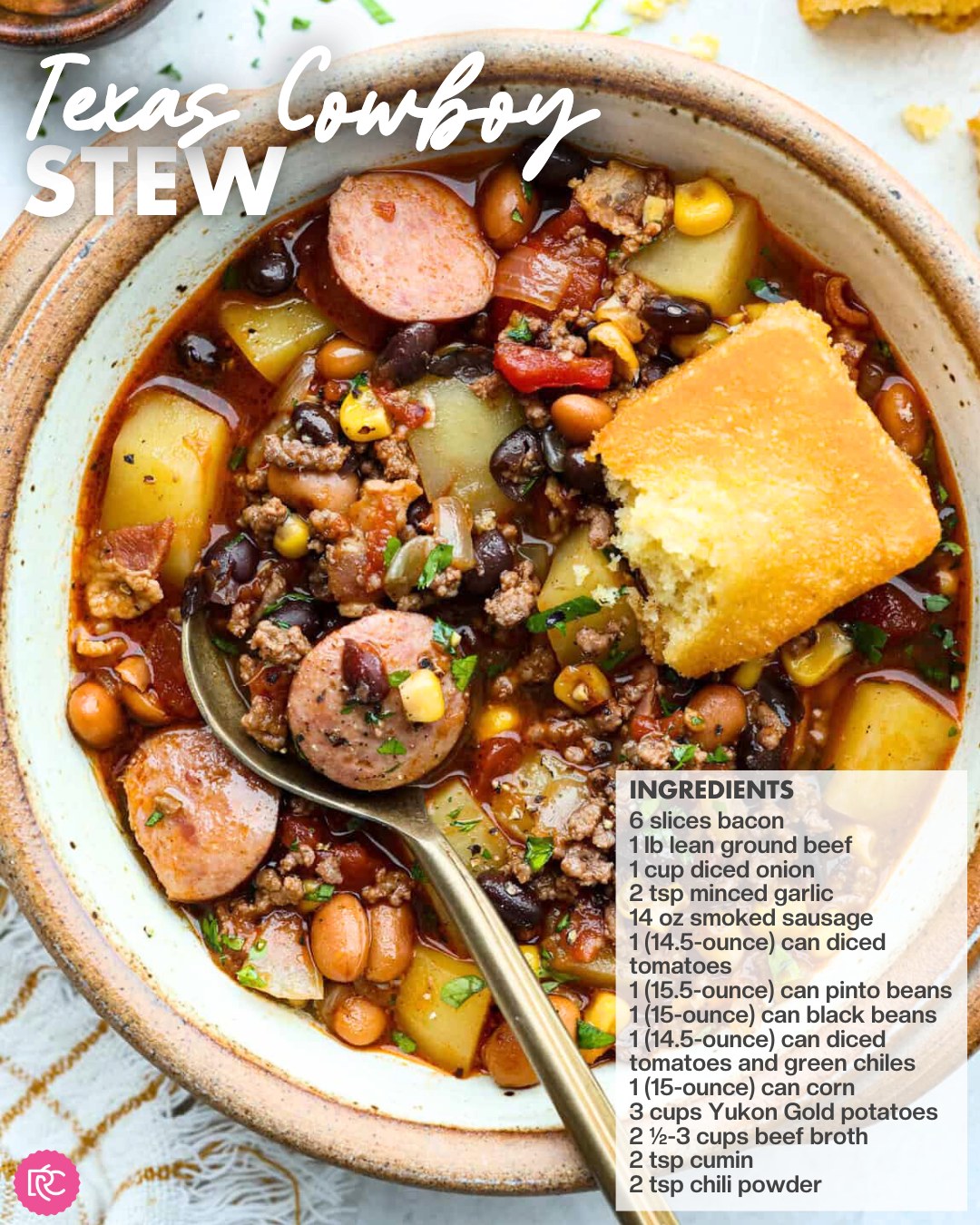
exas Cowboy Stew is a hearty, one‑pot meat and potato stew packed with ground beef, smoky sausage, beans, corn, and tender potatoes simmered in a rich, chili‑style tomato broth. It eats like a cross between chili and beef stew, with bold, smoky flavor and enough protein and veg to easily feed a hungry crowd with just a side of cornbread or crusty bread.
What is Texas Cowboy Stew?
Texas Cowboy Stew takes the spirit of classic cowboy cooking—meat, beans, potatoes, and simple pantry staples—and turns it into a chunky, tomato‑based stew that feels like chili’s heartier cousin. Traditionally, the pot is loaded with ground beef, smoked sausage or kielbasa, beans, corn, and diced potatoes, all simmered together in a well‑seasoned broth with tomatoes and chili powder. It’s meant to be filling, budget‑friendly, and easy to scale up, using ingredients that are shelf‑stable or freezer‑friendly.
Modern versions layer in even more flavor with bacon for extra smokiness, fire‑roasted tomatoes or Rotel with green chiles for a bit of heat, and spices like cumin and smoked paprika for depth. Everything cooks in one pot, so you get maximum payoff from minimal effort—perfect for weeknights, game day, or camping when you want big comfort food without a lot of dishes.
Equipment
- Large heavy‑bottomed pot or Dutch oven (5–7 quarts)
- Wooden spoon or spatula for browning meat and stirring
- Cutting board
- Sharp chef’s knife for chopping onion, potatoes, and slicing sausage
- Measuring cups and spoons for broth and spices
- Ladle for serving
(Optional for outdoor cooking)
- Cast iron Dutch oven with lid for campfire or charcoal cooking
- Long tongs and heat‑resistant gloves for handling hot cast iron
Ingredients
Meat and aromatics:
- 4 slices bacon, chopped
- 1 pound ground beef (80–90% lean)
- 14 ounces smoked sausage or kielbasa, sliced into ½‑inch rounds
- 1 medium yellow onion, diced (about 1½ cups)
- 3 cloves garlic, minced
Vegetables and beans:
- 3 medium Yukon Gold or russet potatoes, peeled and cut into ½–¾‑inch cubes (about 3 cups)
- 1 can (15 ounces) kidney beans, drained and rinsed
- 1 can (15 ounces) black beans, drained and rinsed
- 1 cup frozen corn or canned corn (if canned, drained)
Tomatoes and liquid:
- 1 can (14.5 ounces) diced tomatoes with juice
- 1 can (10 ounces) diced tomatoes with green chiles (such as Rotel)
- 4 cups low‑sodium beef broth
Seasonings:
- 2 tablespoons chili powder
- 1 teaspoon ground cumin
- 1 teaspoon smoked paprika
- 1½ teaspoons kosher salt, plus more to taste
- ½ teaspoon black pepper, plus more to taste
Optional (for thicker stew and garnish):
- 3 tablespoons all‑purpose flour to slightly thicken the broth
- Chopped fresh parsley or green onions, for serving
- Shredded cheddar or Colby Jack cheese, for topping
Step-by-step instructions
Texas Cowboy Stew builds flavor in layers, starting with the bacon and sausage, then the ground beef and aromatics, and finally the vegetables, beans, and broth. To begin, the chopped bacon is added to a cold heavy pot and cooked over medium heat until rendered and crisp.
Once the bacon pieces are browned, they are removed with a slotted spoon to a paper towel‑lined plate, leaving a thin layer of bacon fat in the pot. If there is a lot of fat, some can be spooned off to avoid greasiness later, but keeping about a tablespoon behind is ideal for browning.
The sliced smoked sausage goes into the hot bacon drippings next. It is browned on both sides until the edges are caramelized and golden, which deepens the sausage’s smoky flavor and creates browned bits on the bottom of the pot that will later dissolve into the stew. When the sausage is nicely browned, it is transferred to the plate with the bacon.
With the pot still over medium to medium‑high heat, the ground beef is added and broken apart with a wooden spoon. It is cooked until no pink remains and the beef is well browned. As the beef cooks, the diced onion is added and sautéed until it softens and turns translucent.
The minced garlic is stirred in and cooked for just 30–60 seconds, until fragrant but not browned. If there is more fat than you like at this point, it can be drained off carefully to keep the stew from feeling heavy.
If you want a slightly thicker stew, flour is sprinkled over the cooked beef and onions and stirred in, cooking for a minute or two. This forms a light roux that will help the broth take on more body later. Whether or not flour is used, the spices go in now: chili powder, cumin, smoked paprika, salt, and pepper are added and stirred into the hot mixture, toasting briefly in the remaining fat. This quick step blooms the spices, making their flavors deeper and more complex than if they were added straight to liquid.
Once the base is fragrant and well combined, the diced potatoes are added and tossed through the seasoned beef mixture so they’re coated with flavor from the start. Then the beans, corn, and tomatoes are added: kidney beans, black beans, corn, one can of diced tomatoes, and one can of tomatoes with green chiles all go into the pot. Many recipes suggest draining and rinsing the beans to control salt and texture, relying on the broth to build body instead of the starchy can liquid.
Beef broth is poured over everything until the solids are just covered or slightly submerged. The reserved bacon and browned sausage are then returned to the pot and stirred through, reuniting all three meats in the stew. The mixture is brought up to a boil over medium‑high heat, then the heat is reduced to low so the stew can simmer gently. Partially covering the pot helps maintain a steady simmer while allowing some steam to escape, which will slowly concentrate the flavors.
The stew simmers for about 25–35 minutes, or until the potatoes are fork‑tender and the broth has thickened slightly. During this time, occasional stirring helps prevent the potatoes and beans from sticking to the bottom. If you decide to add any extra frozen vegetables, such as peas or a mixed vegetable blend, they can be stirred in for the last 10–15 minutes of cooking so they heat through without turning mushy.
Once the potatoes are tender, the heat is turned down very low or off, and the stew is tasted for seasoning. Because bacon, sausage, broth, and canned ingredients all contribute salt, the stew may need only a small final adjustment.
A pinch more salt, a grind or two of black pepper, or another dash of chili powder can sharpen the flavor if needed. If the stew is thicker than you like, a splash of beef broth or water can loosen it; if it feels a bit thin, a few more minutes of simmering uncovered will thicken it up.
When the seasoning and consistency are right, the stew is ready to serve. It can be ladled into bowls as is or topped with chopped parsley or green onions and a sprinkle of shredded cheese for a chili‑style finish.
Texture and flavor tips
The ideal Texas Cowboy Stew has a thick, robust broth that lightly coats each spoonful of meat and vegetables rather than a thin, watery base.
Potatoes should be soft but not falling apart completely, the beans should remain intact, and the ground beef should be in small, tender crumbles rather than large clumps. The sausage slices and bacon bits offer a contrasting chew and a smoky punch, which keeps each bite interesting and satisfying.
Browning is where much of the flavor is built. Taking time to crisp the bacon, caramelize the sausage, and deeply brown the ground beef (instead of just cooking it until gray) develops tasty browned bits on the bottom of the pot. Those bits dissolve into the liquid when the broth and tomatoes are added, delivering a much richer stew. Likewise, blooming the spices in fat creates a more aromatic, full‑bodied chili flavor than adding them straight to cold broth.
Because so many of the core ingredients are savory and salty, using low‑sodium beef broth gives you better control over the final seasoning. It is easier to add salt at the end than to fix an overly salty stew. If the stew’s acidity from tomatoes feels a bit sharp, a tiny pinch of sugar can soften the edges, though many versions lean into that tomato brightness without any extra sweetening.
Variations and serving ideas
Texas Cowboy Stew is very adaptable to what you have on hand. You can swap the beans for your favorites—pinto, kidney, black, or even baked beans all work, and baked beans add a subtle sweetness and thicker sauce. Vegetables can be increased with bell peppers, frozen mixed vegetables, peas, or carrots if you want more color and nutrition in each bowl.
Heat levels are easy to dial up or down. For a milder stew, choose plain diced tomatoes instead of those with green chiles and use the lower end of the chili powder amount. For more spice, you can add chipotle powder, extra chili powder, or fresh jalapeños; using hot Rotel instead of regular also bumps up the heat.
You can also play with the meats. Italian sausage, andouille, or chorizo can stand in for smoked sausage to change the flavor profile. Ground turkey or chicken can replace ground beef for a leaner stew, though leaving in some bacon and sausage preserves that classic cowboy richness.
If you prefer, you can reduce the meat amounts slightly and increase the beans and potatoes to make it more budget‑friendly and veggie‑forward.
When it comes to serving, Texas Cowboy Stew is naturally a full meal in a bowl, but sides and toppings can take it to the next level. Cornbread, biscuits, or crusty bread are ideal for soaking up the thick broth. Toppings like shredded cheese, chopped green onions, and a dollop of sour cream lean into its chili‑like side and add a creamy, fresh counterpoint to the smoky stew. For an extra‑hearty plate, spooning the stew over rice or mashed potatoes turns it into a knife‑and‑fork comfort classic.
Make-ahead, storage, and reheating
Texas Cowboy Stew is excellent for making ahead because the flavors improve as it rests. Once the stew has cooled, it can be stored in airtight containers in the refrigerator for 3–4 days. Reheating on the stovetop over medium‑low heat or in the microwave works well; if the stew has thickened significantly in the fridge, a splash of beef broth or water will bring it back to a spoonable consistency.
The stew also freezes well, making it ideal for batch cooking. Many cooks freeze it in individual or family‑sized portions in freezer‑safe containers or bags, then thaw overnight in the refrigerator and reheat gently. The potatoes soften a bit after freezing, but in a rustic stew like this, the texture remains very enjoyable.
Whether you make it for a weeknight dinner, a big family gathering, or a camping trip, Texas Cowboy Stew delivers exactly what comfort‑food lovers want: simple ingredients, one‑pot cooking, smoky chili flavor, and a bowl full of hearty meat and vegetables that feels like a warm, satisfying hug.