
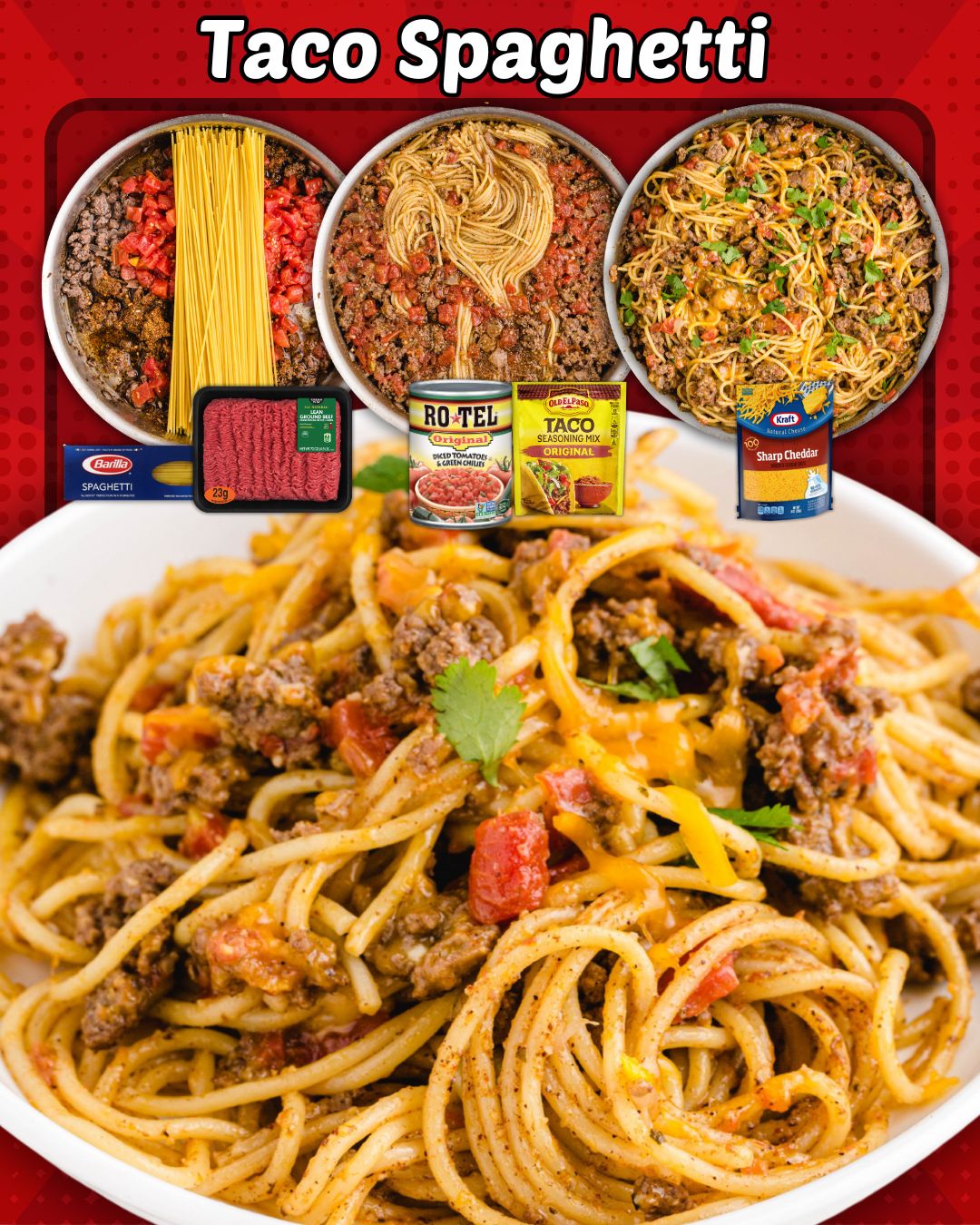
Finally, I add the shredded cheddar cheese, letting it melt into the sauce until everything becomes creamy and indulgent. The cheese pulls the whole dish together, turning the pasta and beef mixture into this rich, comforting taco-inspired pasta bowl. I usually let it simmer for a couple of minutes so the flavors have time to marry, and then it’s ready to serve—warm, cheesy, and completely irresistible.
Pro Tips for Best Results
I tested this recipe three different ways, and the biggest lesson I learned is that the pasta should be just slightly undercooked when you drain it because it continues to soften when tossed with the hot beef mixture. Overcooked pasta becomes mushy quickly, and this dish shines most when the spaghetti still has a bit of bite.
Another important tip is to use the full packet of taco seasoning. I tried using half a packet once, thinking that it might be too strong, but the flavor ended up flat and bland. The spices mellow out when mixed with pasta and cheese, so the full packet gives you the bold taco flair you want.
Adding a splash of pasta water—about a quarter cup—helps the sauce cling to every noodle. I know it might sound strange, but the starchy water is like glue for sauces. Every time I remember to add it, the dish becomes beautifully silky and evenly coated. When I forget, the cheese sometimes clumps instead of melting smoothly.
Finally, shred your own cheddar cheese if you can. Pre-shredded cheese contains anti-caking powder that keeps it from melting as smoothly. I’ve made this recipe both ways, and the difference is real. Freshly shredded cheese melts into the sauce like silk, giving you the creamiest, dreamiest Taco Spaghetti possible.
Common Mistakes to Avoid
I made this mistake the first time—overcooking the spaghetti. Because the pasta simmers with the beef mixture for a few minutes, it softens even more. I ended up with slightly mushy noodles that didn’t hold up well. Stopping the pasta a minute before al dente fixes everything.
Another mistake is draining too much tomato juice from the Rotel. The juices actually help create the sauce, thinning the cheese a bit so it spreads evenly. When I drained the can completely, the sauce became thick to the point of heaviness. Using the whole can as-is makes the spaghetti flavorful instead of pasty.
Don’t skip draining the beef. Leaving excess grease in the skillet makes the dish oily and prevents the cheese from melting smoothly. I once forgot this step because I was distracted, and the whole dish tasted too heavy. A quick drain makes a huge difference.(See the next page below to continue…)