
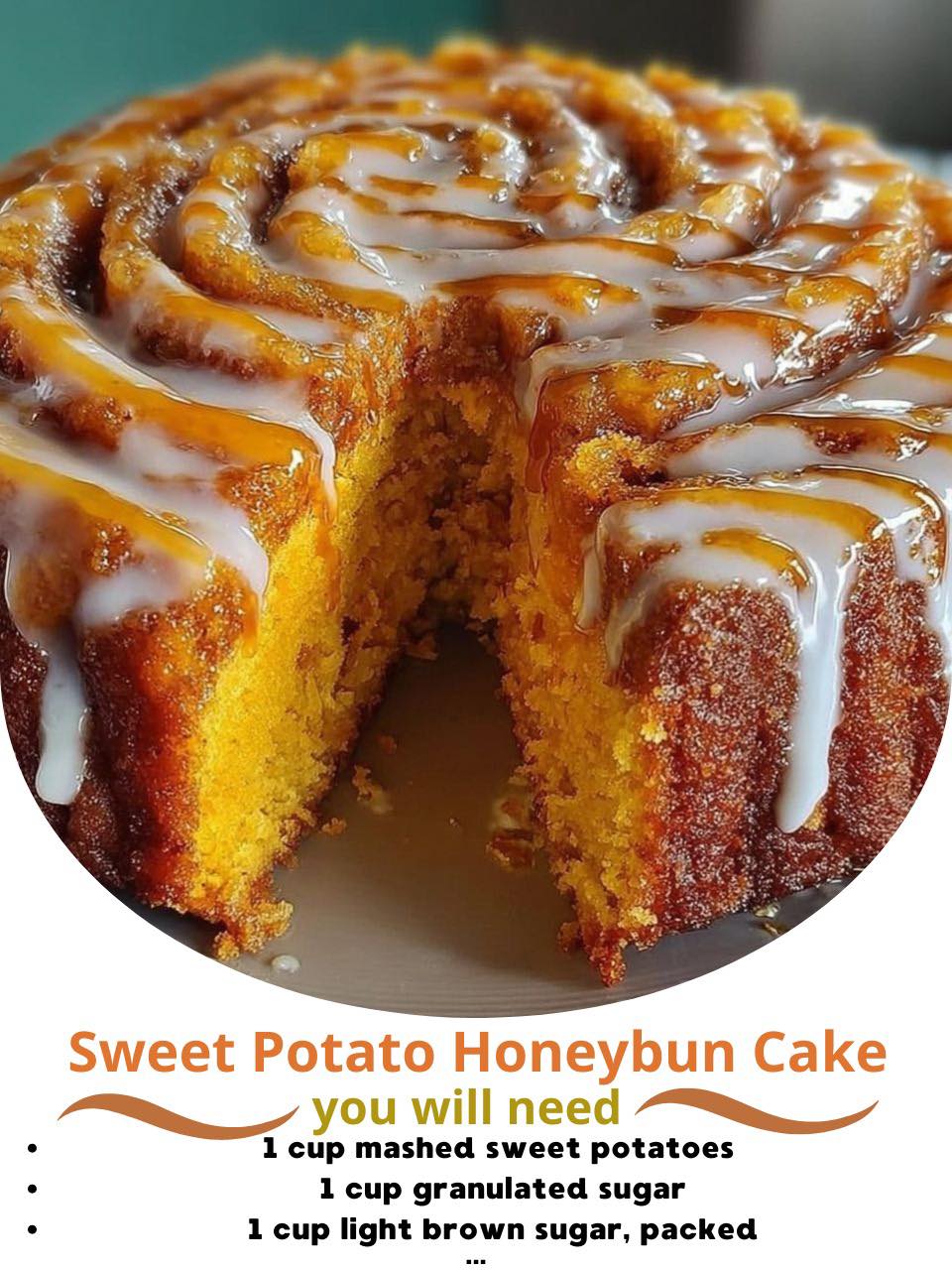
Sweet Potato Honeybun Cake is a mashup of cozy sweet potato cake, cinnamon roll swirl, and gooey honeybun-style glaze baked into one ultra-moist 9×13 dessert. It starts with an easy doctored yellow cake mix boosted with mashed sweet potato and sour cream, then gets a brown sugar–cinnamon–nutmeg swirl and a simple vanilla glaze on top. The result is a tender, fragrant cake with crackly icing that tastes like sweet potato pie met a sticky honeybun.
Equipment You Will Need
- 9×13-inch baking pan
- Mixing bowls (one large, one small)
- Whisk
- Rubber spatula or wooden spoon
- Measuring cups and spoons
- Hand mixer or stand mixer (optional but helpful)
- Toothpick or cake tester
Ingredients List
For the sweet potato cake
- 1 box (15.25 oz) yellow cake mix
- 1 cup mashed sweet potato (baked or canned, very smooth)
- 1 cup sour cream
- ¾ cup vegetable or canola oil
- 4 large eggs
- 2 teaspoons vanilla extract
For the honeybun-style swirl
- 1 cup light brown sugar, packed
- 2 teaspoons ground cinnamon
- ½ teaspoon ground nutmeg
- ¼ cup finely chopped pecans (optional)
For the vanilla glaze
- 1½ cups powdered sugar
- 3–4 tablespoons milk or cream
- 1 teaspoon vanilla extract
Step-by-Step Instructions
Preheat your oven to 350°F (175°C). Lightly grease a 9×13-inch baking pan with nonstick spray or butter; for extra easy slicing and removal, you can line the bottom with parchment and lightly grease that too.
Make sure your mashed sweet potato is smooth and at room temperature—any large lumps can make the batter patchy, so mash or blend until velvety.
In a large mixing bowl, combine the cake mix, sour cream, oil, eggs, and vanilla. Beat with a hand mixer on medium speed or whisk by hand until the mixture is mostly smooth and the eggs are fully incorporated.
Add the mashed sweet potato and mix again until the batter is thick, creamy, and evenly tinted with sweet potato. Scrape the bowl well so there are no streaks of plain batter hiding at the bottom.
In a small bowl, stir together the brown sugar, cinnamon, nutmeg, and pecans (if using) until everything is evenly mixed and there are no clumps of spice. This mixture will create that gooey, cinnamon-sugar “honeybun” ribbon through the cake, so keep it close by as you layer.
Pour about half of the cake batter into the prepared pan and spread it into an even layer, pushing it into the corners with a spatula. It doesn’t have to be perfectly exact, but aim for a fairly level base. Sprinkle the entire brown sugar mixture evenly over this first layer of batter, going all the way to the edges so every slice gets some of the swirl.
Spoon the remaining batter over the brown sugar layer in dollops, spacing them out over the surface. Use a spatula to gently spread the batter to cover most of the sugar layer; it’s fine if some of the brown sugar peeks through.
Take a butter knife or skewer and drag it through the batter in long, sweeping motions, first lengthwise and then crosswise, to create gentle swirls. You want to marble the layers without fully stirring them together.
Bake the cake in the preheated oven for about 30–40 minutes, depending on your oven and pan. Start checking around 28–30 minutes.
The cake is done when it’s golden, the center springs back lightly when touched, and a toothpick inserted in the middle comes out mostly clean, with maybe a few moist crumbs but no wet batter. If the top is browning quickly while the center still feels wobbly, loosely tent the pan with foil and continue baking.
When the cake is almost finished, mix up the glaze so it’s ready to go onto the warm cake. In a medium bowl, whisk together the powdered sugar, 3 tablespoons of milk, and vanilla until smooth and pourable.
If it’s too thick, add more milk a teaspoon at a time; if it’s too thin, add a little more powdered sugar. You want a consistency that will drizzle easily but still set into a thin, opaque layer.
As soon as the cake comes out of the oven, place the pan on a cooling rack and give it a couple of minutes to settle. While it’s still warm (not scorching hot, but definitely warm to the touch), pour the glaze evenly over the top.
Use a spatula or the back of a spoon to coax it into the corners and spread it into a thin, even coat. The warmth of the cake will help the glaze melt slightly and seep into the top layer, just like a classic honeybun.
Let the Sweet Potato Honeybun Cake cool completely in the pan. As it cools, the glaze will set into a shiny, crackly layer and the cinnamon-sugar swirl will stay gooey inside. Once fully cool, slice into squares or rectangles and serve straight from the pan, or lift portions out with a thin spatula for plating.
Expert Tips for Success
Use very smooth sweet potato for the best texture; baked sweet potatoes give deep flavor, but canned puree works if you’re pressed for time. If the mash is stringy or chunky, press it through a sieve or blend briefly so it blends seamlessly into the batter. Room-temperature eggs and sweet potato also help the batter mix evenly and rise more consistently.
Don’t over-swirl the brown sugar layer. A few deliberate passes with a knife are enough to create ribbons; too much motion will simply blend everything into one uniform layer and you’ll lose that honeybun-style pocket of cinnamon sugar. Likewise, avoid overbaking—pull the cake as soon as the center is set. The sour cream, oil, and sweet potato make it forgiving, but extra minutes in the oven can still dry the edges.
When making the glaze, always start with less milk than you think you need and thin it gradually. It should be thick enough to coat the back of a spoon but fluid enough to drizzle; an overly thin glaze will run off the cake and soak straight in, while a very thick one will sit in clumps instead of creating that smooth iced top.
Variations and Substitutions
You can play with spices to tailor the flavor. Add a pinch of ground ginger or allspice to the brown sugar swirl for a more “sweet potato pie meets spice cake” vibe, or increase the cinnamon for a stronger honeybun profile. If you love nuts, bump up the pecans or use a mix of pecans and walnuts for more crunch.
For a slightly richer cake, swap part of the oil for melted butter, or add a couple of tablespoons of brown sugar directly to the batter for deeper caramel notes. If you prefer a lighter glaze, replace some of the milk with orange juice and add a little orange zest for a citrus note that brightens the sweet potato and spices.
You can also tweak the sweetness level: reduce the brown sugar in the swirl slightly if you like a less-sweet dessert, or make a thinner drizzle of glaze instead of a full, opaque coating. For a more “bakery” presentation, top the glazed cake with a sprinkle of finely chopped pecans or a light dusting of cinnamon before the icing sets.
Serving Suggestions
Sweet Potato Honeybun Cake is perfect on its own with a cup of coffee, tea, or cold milk. Serve warm or at room temperature; the flavors really pop when it’s not ice-cold, and the glaze softens just enough to feel extra indulgent.
For brunch, cut smaller squares and offer alongside eggs, bacon, and fresh fruit as the sweet element on the table.
For dessert, dress it up with a dollop of whipped cream or a scoop of vanilla or butter pecan ice cream. A light drizzle of caramel sauce over each slice leans into the honeybun vibe even more.
Because it travels well in the pan and stays moist, this cake is also ideal for potlucks, holiday dessert tables, and gatherings where you want something that slices cleanly and feeds a crowd.
Storage, Freezing, and Reheating
This cake stays moist for days thanks to the sour cream, oil, and sweet potato. Once completely cool, cover the pan tightly with plastic wrap or foil and store at room temperature for up to 2–3 days. For slightly longer storage, you can refrigerate it for up to about 5 days; just let slices come to room temperature before serving so the crumb softens and the flavors shine.
Sweet Potato Honeybun Cake also freezes well. Cut cooled cake into squares and arrange them on a baking sheet to freeze until firm, then transfer to an airtight container or freezer bag with parchment between layers. Freeze for up to 2–3 months. Thaw slices at room temperature or in the refrigerator, then enjoy as-is or warm them briefly in the microwave for that fresh, cozy, just-baked feel.