
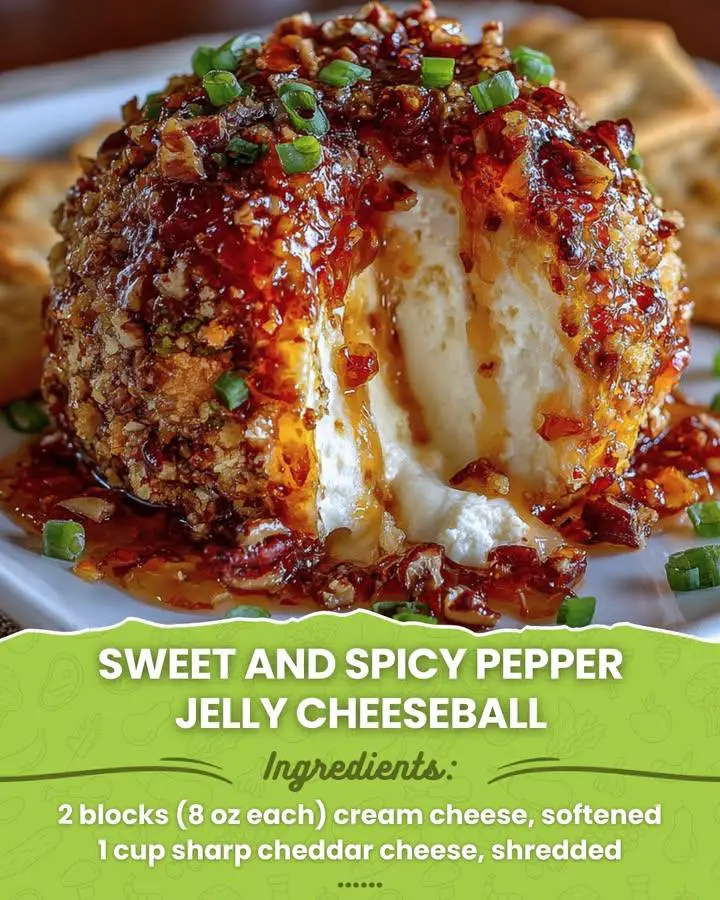
I warm the pepper jelly for about 10 seconds in the microwave just so it pours more smoothly. Then I spoon it over the cheeseball, letting it cascade down the sides. The warm jelly melts slightly into the cheese and pools around the bottom, creating this gorgeous sweet and spicy glaze. If I want to make it even prettier, I sprinkle sliced green onions on top for a pop of color. One look and you instantly know it’s going to be delicious.
Pro Tips for Best Results
I tested this recipe several ways and discovered that the flavor is best if the cheeseball chills at least an hour—but chilling overnight is even better. Letting the spices mingle with the cheese gives the whole mixture more depth and a smoother texture. The first time I made it, I only chilled it for 15 minutes and the inside was too soft, which made coating it more difficult. Patience really pays off here.
Another tip I learned is to grate your own cheddar cheese. Pre-shredded cheese contains anti-caking agents that make it slightly dry, and the cheeseball doesn’t turn out as smooth and creamy. When I grate it fresh, the cheese melts seamlessly into the cream cheese, creating that perfect spreadable texture.
Also, don’t skip toasting your pecans if you have a few extra minutes. Toasted pecans add a warm, nutty depth that elevates the whole cheeseball. I toast mine in a dry skillet for about three minutes until fragrant. Just be careful—pecans burn quickly, and I’ve ruined a batch or two by walking away for “just a second.”
Finally, choose your pepper jelly based on your spice preference. Mild creates that sweet glaze with just a little warmth, but hot pepper jelly gives the cheeseball a bold kick. I’ve found medium heat is the perfect crowd-pleasing option that even spice-sensitive guests enjoy.
Common Mistakes to Avoid
I made this mistake early on—using cream cheese straight from the fridge. It simply won’t mix well and leaves lumps in the cheeseball that don’t distribute the spices evenly. Always let your cream cheese sit at room temperature until it’s soft enough to press with a finger easily.
Another mistake I made once was using too much pepper jelly. It may be tempting to drown the cheeseball in jelly, but too much makes the surface slippery and hard for guests to scoop without making a mess. The right amount creates a glossy, flavorful coating without overwhelming the structure.
One time, I skipped the chilling step entirely and tried serving the cheeseball right away. It fell apart almost immediately, flattening into a mound on the plate. The chilling step is absolutely essential for shaping and serving. Even if you’re running short on time, give it at least 30–45 minutes in the fridge.(See the next page below to continue…)