
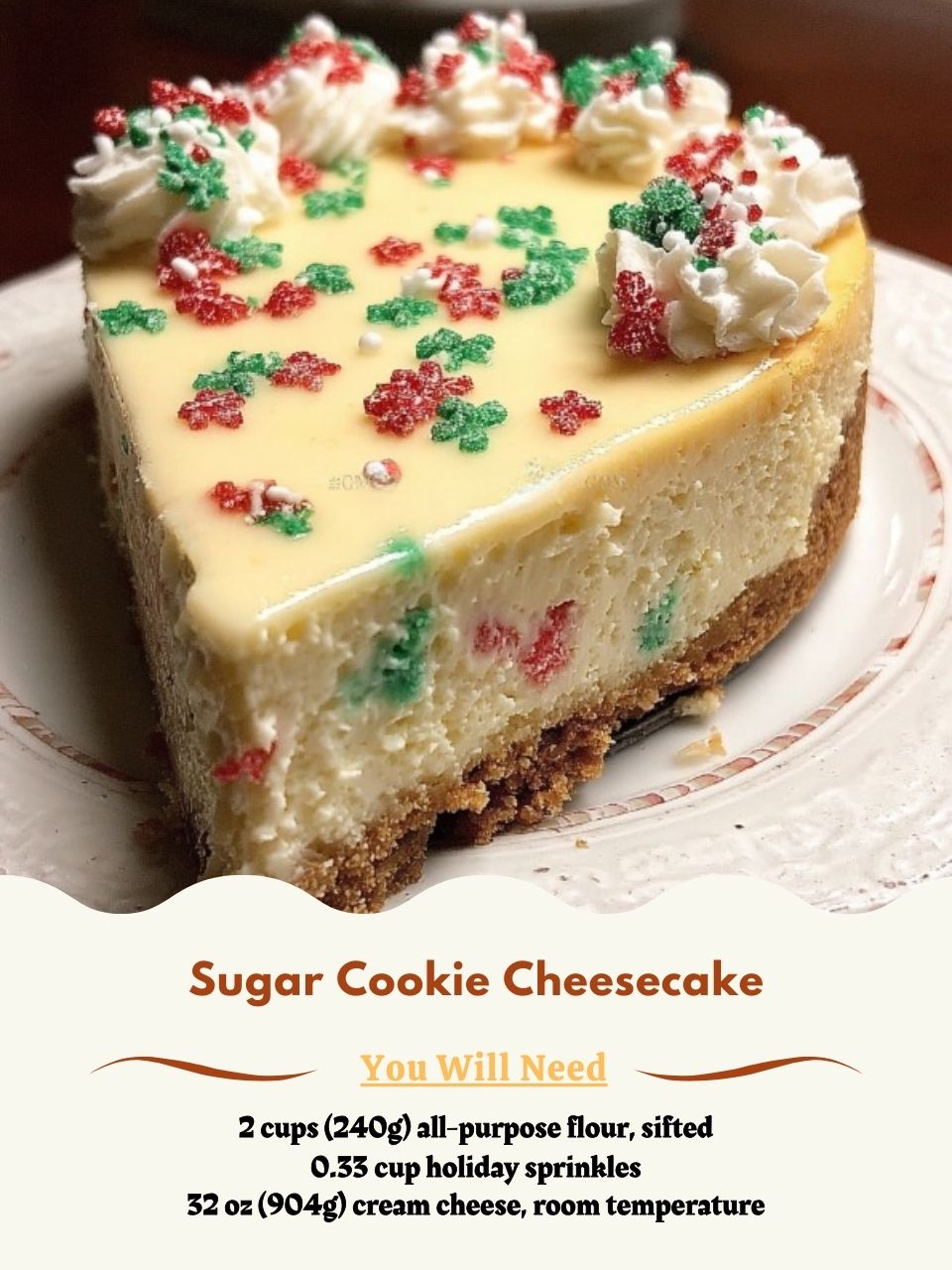
With the mixer on low, I blend in the sour cream and vanilla until just combined. Now, I remove the bowl from the mixer. This next step is critical: I gently fold in the holiday sprinkles by hand with a rubber spatula. If you use the mixer, you risk breaking the sprinkles and coloring the batter. I pour this gorgeous, speckled filling over the warm crust and smooth the top. I place the foil-wrapped springform pan into a large roasting pan, then I carefully pour boiling water into the roasting pan until it comes about halfway up the sides of the springform. This water bath is the secret to gentle, even heat and a flawlessly creamy texture without cracks.
I bake the cheesecake in a preheated 325°F oven for about 1 hour and 15 minutes to 1 hour and 30 minutes. The cake is done when the edges are puffed and set, but the center—about a 3-inch circle—still has a pronounced, gentle jiggle. It will firm up as it cools. I learned that if the center is completely firm in the oven, it’s already overbaked. I turn the oven off, crack the door open, and let the cake cool inside for one hour. This gradual temperature change prevents shocking and cracking. Then, I remove it from the water bath, carefully peel off the foil, and let it cool completely on a rack before refrigerating it, uncovered, for at least 12 hours, preferably 24.
Pro Tips for Best Results
To ensure no lumps, I now take the extra step of passing my completed cheesecake batter through a fine-mesh sieve into another bowl before folding in the sprinkles. It sounds fussy, but it guarantees that silky, diner-style texture. I tested this three different ways (straining, not straining, and using a blender), and straining by far gave the most professional, velvety result.
For the cleanest release, I run a thin, sharp knife under very hot water, wipe it dry, and carefully trace it around the inside edge of the springform pan before I chill the cake. Doing this after it’s chilled can tear the delicate top. This breaks any seal that formed during baking and prevents the surface from sticking to the ring as the cake contracts in the fridge.
The long chill is non-negotiable. I once tried to serve this after only 6 hours of chilling, and while it was tasty, the texture was slightly soft and it didn’t slice cleanly. The full 24-hour chill allows the flavors to meld and the structure to set perfectly, giving you those impeccable, photogenic slices.(See the next page below to continue…)