
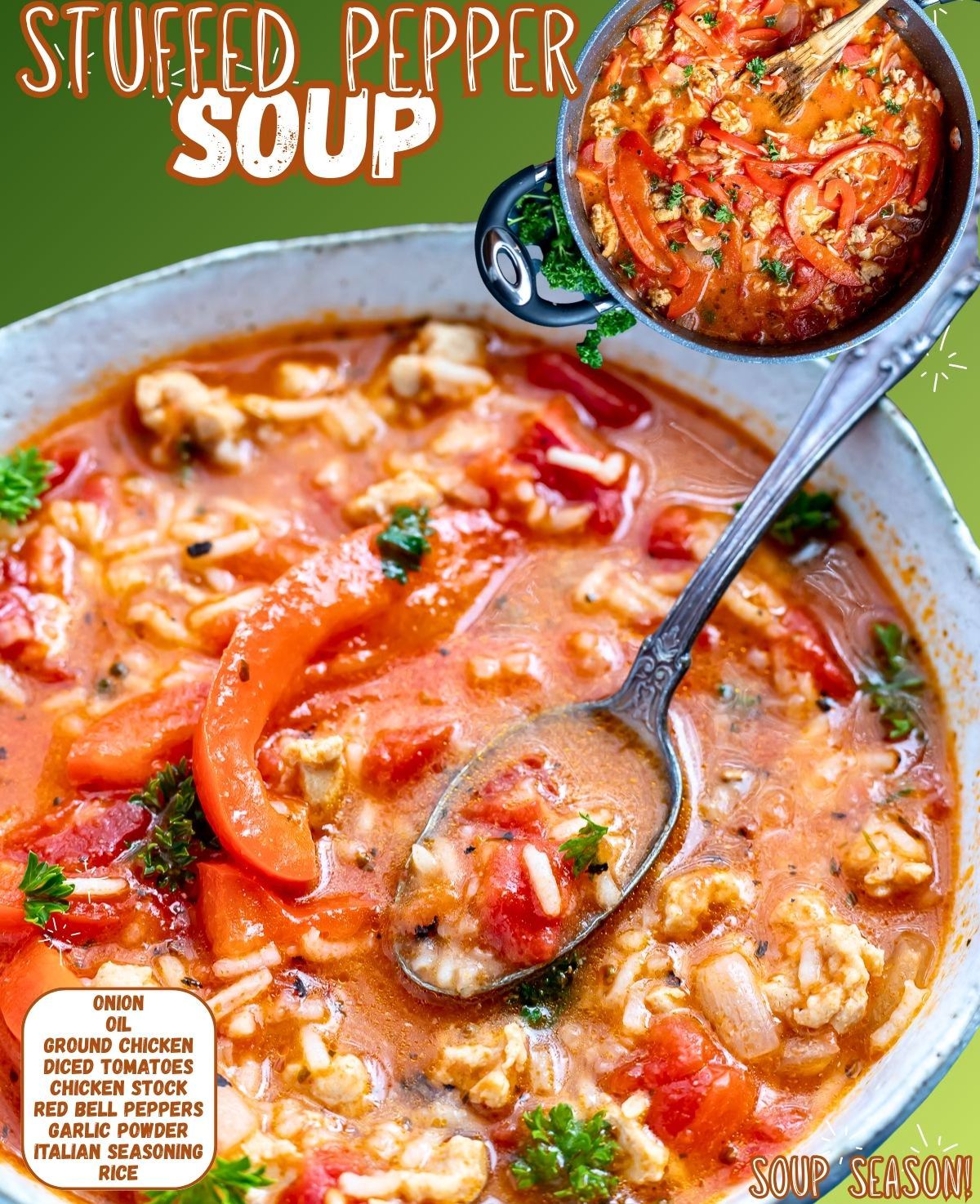
Adding the rice too early with the raw meat and peppers is an error that leads to mushy rice. The rice only needs 20-25 minutes to cook. If you add it when you add the broth, it will overcook and become bloated and starchy, thickening the soup too much. Wait until the broth is boiling, then stir in the rice. This ensures it cooks perfectly in the allotted time.
Using green bell peppers can be a disappointment if you’re expecting that sweet, mellow pepper flavor. Green peppers are less ripe and can have a slightly bitter, grassy taste that doesn’t soften into the same sweetness as red, yellow, or orange bells. I made this swap once thinking it wouldn’t matter, and the soup had a sharper, less rounded flavor. Stick with red for the best result.
Finally, skipping the step of sautéing the peppers with the aromatics is a missed opportunity. If you just dump them into the broth, they’ll taste boiled and one-dimensional. Taking those 5-7 minutes to cook them in the oil with the onions and meat builds a foundation of flavor that infuses the entire pot. It’s the difference between a good soup and a great one. Don’t rush the sauté.
Serving Suggestions
I love serving this soup steaming hot in big, wide bowls. My favorite way to finish it is with a generous handful of shredded sharp cheddar or Monterey Jack cheese right on top, letting it melt into the hot surface. A sprinkle of fresh chopped parsley or a dollop of cool sour cream adds a perfect touch of color and creaminess that cuts through the richness beautifully.
For a heartier meal, I serve it with a side of warm, crusty bread for dipping. A simple garlic bread or a slice of hearty sourdough is perfect for soaking up every last drop of the flavorful broth. It’s also fantastic with a simple side salad dressed with a bright, lemony vinaigrette to balance the soup’s heartiness.
When I’m serving it for a casual family dinner, I often put the garnishes in the middle of the table in little bowls—shredded cheese, sour cream, extra pepper flakes, maybe some diced avocado—and let everyone customize their own bowl. It makes dinner interactive and fun, and it’s a great way to please everyone’s taste preferences.
Variations & Customizations
For a richer, more traditional flavor, swap the ground chicken for ground beef or Italian sausage. Brown the beef well to develop flavor. I’ve also made a “pizza” version by using ground Italian sausage, adding a pinch of red pepper flakes, and topping it with melted mozzarella and pepperoni crisps for garnish. It’s a fun, family-friendly twist.
If you want to add more vegetables, this soup is wonderfully adaptable. I’ve stirred in a handful of fresh spinach or kale during the last 5 minutes of cooking. Diced zucchini or mushrooms sautéed with the peppers are also fantastic additions. You can even add a can of drained and rinsed kidney beans or black beans for extra fiber and protein.
For a different grain, you can substitute the white rice with an equal amount of uncooked quinoa (rinse it first) or small pasta like ditalini or orzo. If using pasta, cook it separately and add it to individual bowls when serving to prevent it from getting soggy in the leftovers. The base soup is so versatile, it welcomes all these changes beautifully.
How to Store, Freeze & Reheat
This soup stores and reheats beautifully, making it a fantastic make-ahead meal. Once completely cooled, I transfer it to airtight containers. It will keep in the refrigerator for 4-5 days. The rice will continue to absorb broth, so it will thicken considerably. This is normal and actually makes the flavors more concentrated.
You can freeze this soup for up to 3 months. I recommend freezing it without the rice for best texture, as rice can become grainy when frozen and reheated. Thaw overnight in the refrigerator. When ready to serve, reheat the soup on the stove, and cook fresh rice to add to each bowl. If you’ve frozen it with rice already in it, it will still taste good, but the rice will be much softer.
To reheat, I always do it gently on the stovetop over medium-low heat, stirring occasionally. If it has thickened too much in the fridge, simply add a splash of water, broth, or even a bit of extra diced tomatoes to loosen it up. The microwave works in a pinch, but stir it well halfway through to ensure even heating. Avoid boiling it vigorously when reheating, as this can break down the vegetables and rice too much.
Conclusion
This Stuffed Pepper Soup is more than a recipe; it’s a bowl of pure comfort and practicality. It has saved me on countless busy evenings, warmed us up on chilly days, and never fails to deliver that deeply satisfying feeling of a home-cooked classic. It’s proof that the best meals don’t have to be complicated. I hope this recipe finds its way into your regular rotation and brings as much cozy joy to your kitchen as it has to mine.