
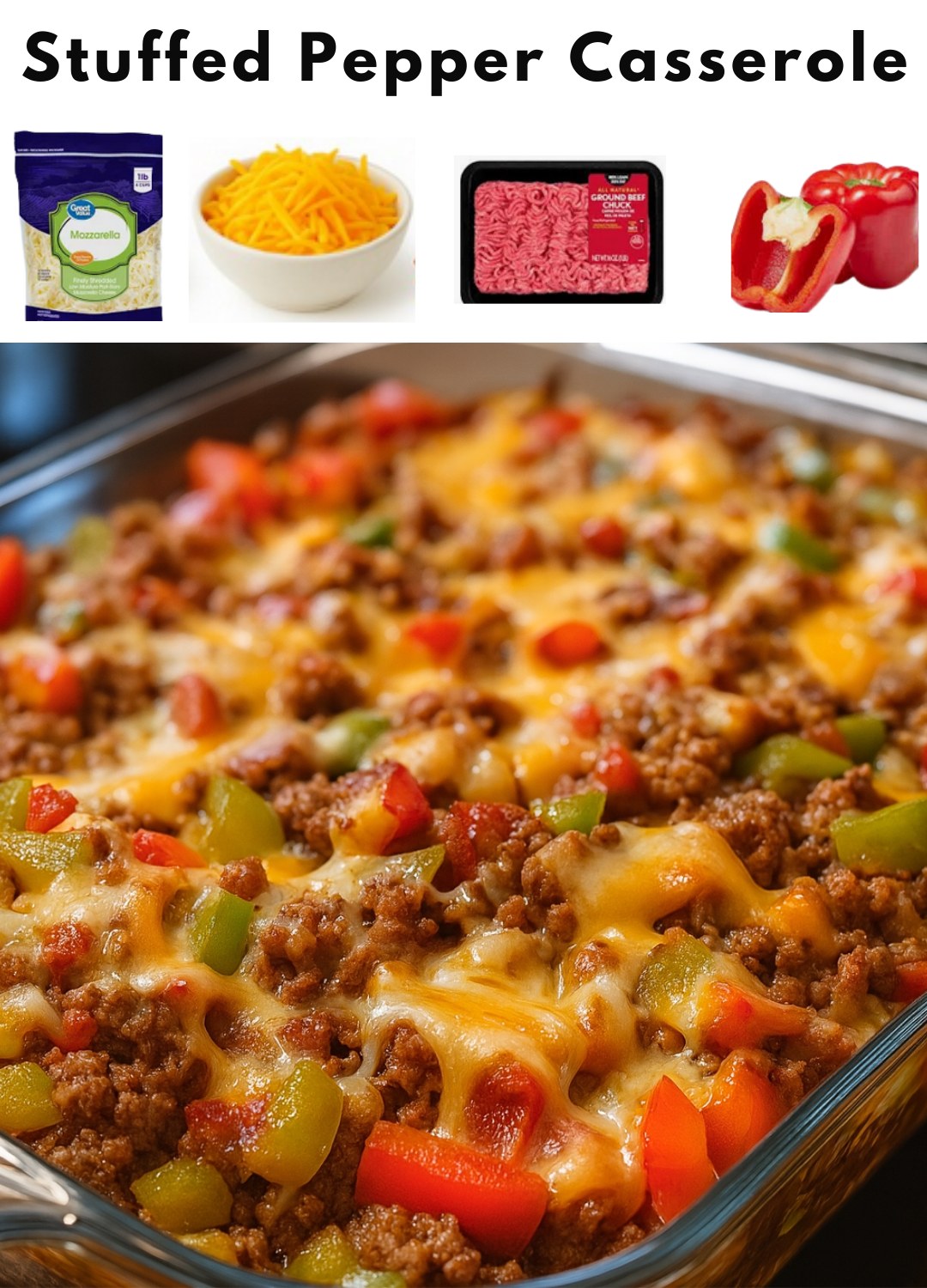
Stuffed Pepper Casserole is a deconstructed take on traditional stuffed peppers: instead of filling individual peppers, you cook ground beef or turkey with onions and bell peppers, then simmer it with rice, tomatoes, broth, and seasonings before topping with cheese.
The result is a hearty, scoopable casserole that delivers tender rice, sweet peppers, and savory meat in every bite, without the hassle of hollowing and baking whole peppers. It can be made entirely in one pot on the stovetop or started on the stove and finished in the oven, making it a weeknight‑friendly option that still feels like classic comfort food.
Equipment
- Large deep skillet, Dutch oven, or 3.5‑quart oven‑safe casserole pan with lid (for one‑pot versions).
- 9×13‑inch (or similar) baking dish if you prefer a bake‑in‑the‑oven style.
- Wooden spoon or spatula for browning and stirring.
- Cutting board and sharp knife for chopping peppers and onions.
- Measuring cups and spoons.
Ingredients
Quantities below reflect a typical one‑pot stuffed pepper casserole for 4–6 servings, based on several recipes.
Meat and vegetables:
- 1 lb (450 g) ground beef (or ground turkey / chicken).
- 1 medium yellow onion, diced.
- 2–3 bell peppers (any colors), diced (about 2 cups).
- 2–3 cloves garlic, minced (about 1 tablespoon), or 1 teaspoon garlic powder.
Tomato base and liquids:
- 1 can (14–15 oz / ~400 g) diced tomatoes with juices.
- 1 can (8 oz / 225 g) tomato sauce OR 1½–2 cups tomato sauce/purée.
- 1½–2 cups beef or chicken broth (more if cooking brown rice).
- 1 tablespoon Worcestershire sauce OR soy sauce/tamari.
Rice:
Seasonings:
- 1–2 teaspoons Italian seasoning OR a mix of dried oregano, basil, and thyme.
- 1 teaspoon smoked or sweet paprika.
- 1 teaspoon kosher salt, plus more to taste.
- ½ teaspoon black pepper.
- Optional: ½–1 teaspoon ground cumin or a pinch of cayenne for extra warmth.
Cheese:
Instructions And Steps
1. Brown the meat and soften the aromatics
Heat 1 tablespoon of olive oil in a large deep skillet or Dutch oven over medium‑high heat. Add the ground beef and diced onion, breaking the meat apart with a spoon as it cooks. Cook until the beef is browned and the onion is softened, 5–8 minutes.
Drain off any excess grease if needed, then add the diced bell peppers and a pinch of salt and pepper. Cook for another 4–6 minutes, stirring often, until the peppers start to soften but are not fully tender yet.
Add the minced garlic and cook for about 30 seconds, just until fragrant. Sprinkle in the Italian seasoning, paprika, and any optional cumin or cayenne, stirring to coat the meat and vegetables with the spices.
2. Add tomatoes, liquids, and rice
Stir in the tomato paste if using (some recipes add 1–2 tablespoons), cooking it for about a minute to deepen its flavor. Then add the diced tomatoes (with their juices), tomato sauce, Worcestershire or soy sauce, and the broth. Stir well, scraping up any browned bits from the bottom of the pan.
Bring the mixture just up to a boil over medium‑high heat. Stir in the uncooked rice, making sure it is evenly distributed and submerged in the liquid. Add another small splash of broth or water if necessary so the rice is mostly covered.
Taste the liquid and adjust seasoning with salt and pepper; the broth should taste well‑seasoned, since it’s what the rice will absorb as it cooks.
3. Cook until rice is tender
For stovetop one‑pot method:
Reduce the heat to low, cover the skillet or pot with a tight‑fitting lid, and simmer for 15–25 minutes (for white rice), stirring once or twice to prevent sticking. Check around 15–18 minutes to see if the rice is tender and most of the liquid is absorbed. If some rice grains are still firm but the liquid is mostly gone, add a bit more broth or water, stir, and continue cooking covered for a few more minutes.
For oven‑finish method:
Alternatively, once the liquids and rice are added, cover the oven‑safe skillet or transfer the mixture to a greased 9×13‑inch dish, cover tightly with foil, and bake at 350–375°F (175–190°C) for 20–30 minutes, until the rice is tender and the liquid is absorbed.
When the rice is cooked, fluff the mixture gently with a fork or spoon, mixing from the bottom up to distribute any remaining juices.
4. Top with cheese and finish
Once the rice is tender and the casserole base is thick and hearty, remove the lid (or foil). Sprinkle shredded cheese evenly over the top—using all or most of the 1½–2 cups.
For stovetop:
Turn off the heat, cover the pot again, and let it sit for 5–10 minutes so the residual heat melts the cheese and allows the flavors to meld.
For oven:
If you’re baking, remove the foil, top with cheese, and return the casserole to the oven, uncovered, for 5–10 minutes until the cheese is melted and bubbly, with light browning at the edges.
Garnish the finished casserole with chopped parsley for color and freshness. Let it rest for a few minutes, then serve hot in generous scoops.
Tips And Tricks
Use long‑grain white rice (not instant or parboiled) for the best texture. Recipes emphasize that instant or parboiled rice tends to get mushy in one‑pot casseroles; long‑grain varieties like basmati, jasmine, or Texmati hold their structure better.
Cut peppers into even pieces so they cook at the same rate. Most recipes dice bell peppers into about ½–1‑inch pieces, big enough to keep some bite but small enough to distribute evenly through the rice.
Mind the liquid ratio. For one cup of uncooked long‑grain rice, many recipes use around 2½–3 cups combined liquid (broth + tomato sauce + tomatoes) to account for evaporation and absorption. If you find the mixture too dry before the rice is done, add a small splash of broth and keep cooking covered.
Season in layers. Salt the meat and vegetable mixture lightly, season the broth after adding tomatoes and rice, and then adjust again at the end if needed. Tomatoes, broth, and cheese all add salt, so it’s safer to under‑season first and correct later.
Let the casserole rest after cooking. A short rest (5–10 minutes) off the heat allows the rice to finish absorbing any loose liquid and makes the casserole easier to scoop without being soupy.
If you want softer peppers closer to traditional stuffed peppers, sauté them a bit longer at the beginning or add them earlier; for more bite, add some of the peppers later so they stay a bit crisper.
Variations
Healthier or leaner:
Use ground turkey or chicken instead of beef and swap part of the broth for extra vegetables like spinach or zucchini. Brown rice can be used but needs more time and liquid; some recipes simmer brown rice for up to 45–60 minutes, adding more broth as needed.
Low‑carb “unstuffed pepper” version:
Skip the rice entirely and make a meat‑and‑pepper casserole thickened with tomato sauce and topped with cheese, as some low‑carb unstuffed pepper casseroles do. Bake until bubbly and the cheese is golden on top.
Mexican‑inspired twist:
Use cumin, chili powder, and perhaps a pinch of cinnamon along with the Italian seasoning, and add black beans or corn to the mixture. Top with cheddar or a Mexican cheese blend instead of mozzarella and garnish with cilantro and a squeeze of lime.
Cheesier or creamier:
Some recipes lean more heavily into cheese by using extra cheddar or mixing in a bit of cream cheese or sour cream for a creamier base, turning it into more of a “cheesy stuffed pepper casserole.” You can also add a layer of cheese in the middle before adding the rest on top.
Make‑ahead and freezer‑friendly:
Baked versions like unstuffed bell pepper casseroles can be cooled, wrapped, and frozen. To serve, thaw overnight in the fridge or bake from frozen at 350°F covered with foil until heated through, then add cheese and bake uncovered until melted.
Stuffed Pepper Casserole keeps the beloved flavors of beef‑and‑rice stuffed peppers—savory meat, tender rice, sweet bell peppers, tomato sauce, and melted cheese—while streamlining the technique into an easy skillet or baked dish that fits perfectly into busy weeknights or meal prep.