
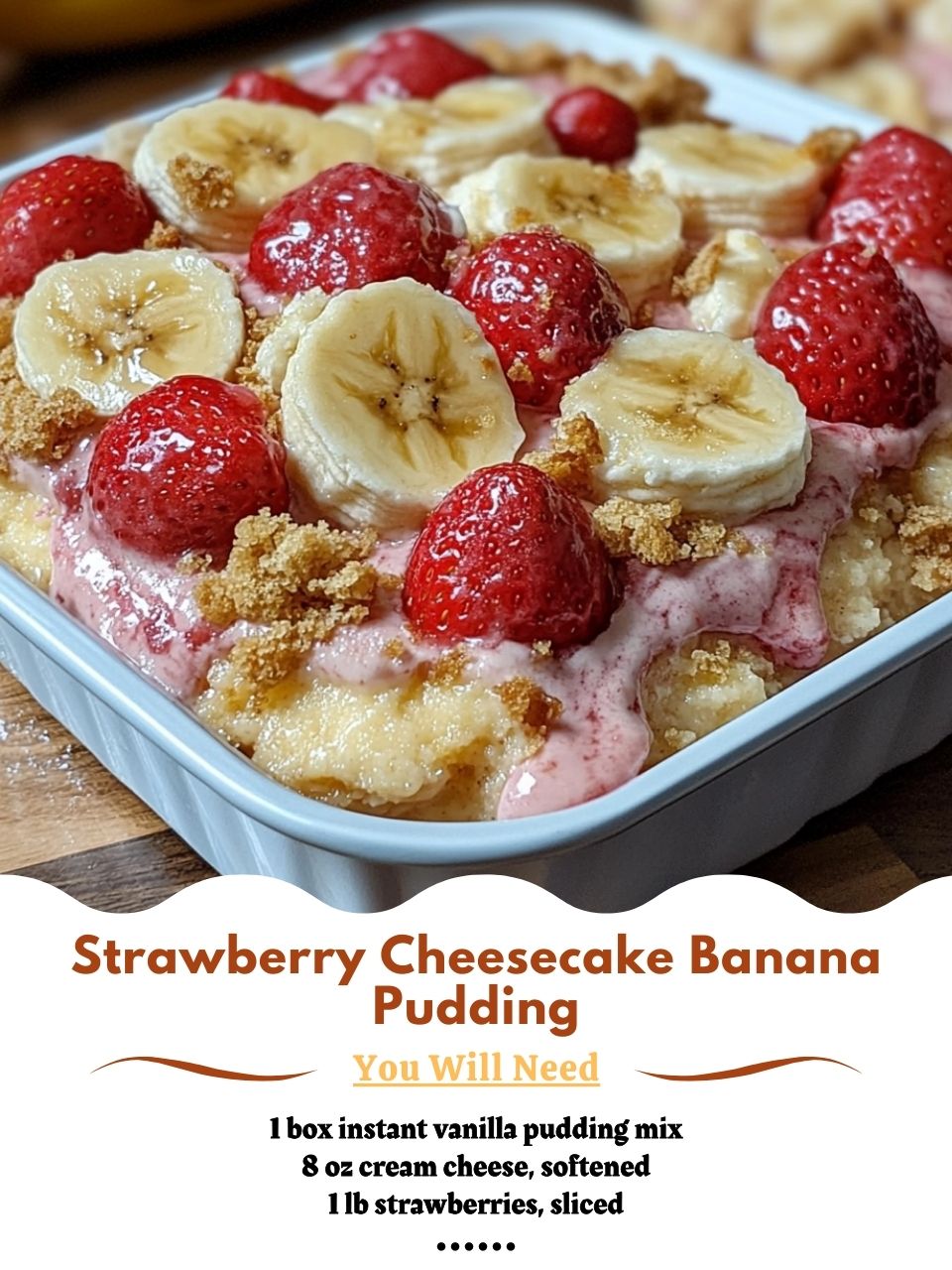
With my filling ready, I begin the assembly. In the bottom of my trifle dish, I create a single, snug layer of vanilla wafer cookies. I sometimes break a few to fill in gaps. Over this, I spread a generous third of my cream cheese pudding mixture. Then, I add a layer of sliced bananas and a layer of sliced strawberries, pressing them gently into the cream. The key is to make sure the fruit reaches the edges so you see it through the glass. I repeat these layers—cookies, cream, bananas, strawberries—two more times, ending with a final layer of the cream mixture.
For the finishing touch, I carefully spread the remaining half of the whipped topping over the very top as my “frosting.” Then, I get creative with garnish. I love creating a pattern with alternating strawberry and banana slices around the edge, or simply scattering a handful of crushed vanilla wafers and a few whole strawberries in the center. Once assembled, it’s absolutely crucial to cover it tightly with plastic wrap and refrigerate it for at least 4 hours, but ideally overnight. This waiting period is when the magic happens: the cookies soften into cake-like layers, the flavors meld, and the whole dessert transforms from pretty layers into a cohesive, sublime treat.
Pro Tips for Best Results
For the most stable and lush filling, fold the whipped topping in by hand with a spatula. I’ve tried using the mixer on low, and it can deflate the whipped topping, resulting in a thinner, less fluffy texture. The gentle folding motion preserves the airiness, giving you that perfect cloud-like cream.
To prevent brown bananas, you have two great options. First, you can toss your banana slices in a tablespoon of lemon or pineapple juice before layering. This adds a barely-there brightness and keeps them looking fresh. My preferred method, though, is to simply assemble the dessert just a few hours before serving, or to place the banana slices directly onto the creamy layer (not touching the cookies) so the cream seals them from the air. I’ve tried both, and they work better than doing nothing.
If you have the time, let the pudding mixture chill in the bowl for 15-20 minutes before assembling. This firms it up just enough to make spreading over the delicate wafers much easier and prevents the cookies from floating or sliding around when you add the fruit layers. It’s a small step that gives you much more control over your beautiful presentation.
Common Mistakes to Avoid
The number one mistake is using cold cream cheese. I made this error in my early testing, and no matter how long I beat it, I was left with tiny, frustrating lumps of cream cheese throughout my filling. It mixes smoothly only when it has been at room temperature long enough to be soft and pliable. Plan ahead for this—it makes a huge difference.
Don’t skip the long chill time. I was too eager the first time and served it after only two hours. The wafers were still crunchy, and the flavors hadn’t married. The dessert felt disjointed. The four-hour minimum, and preferably overnight, is non-negotiable. This is when the vanilla wafers absorb moisture and become soft, cake-like, and perfect.(See the next page below to continue…)