
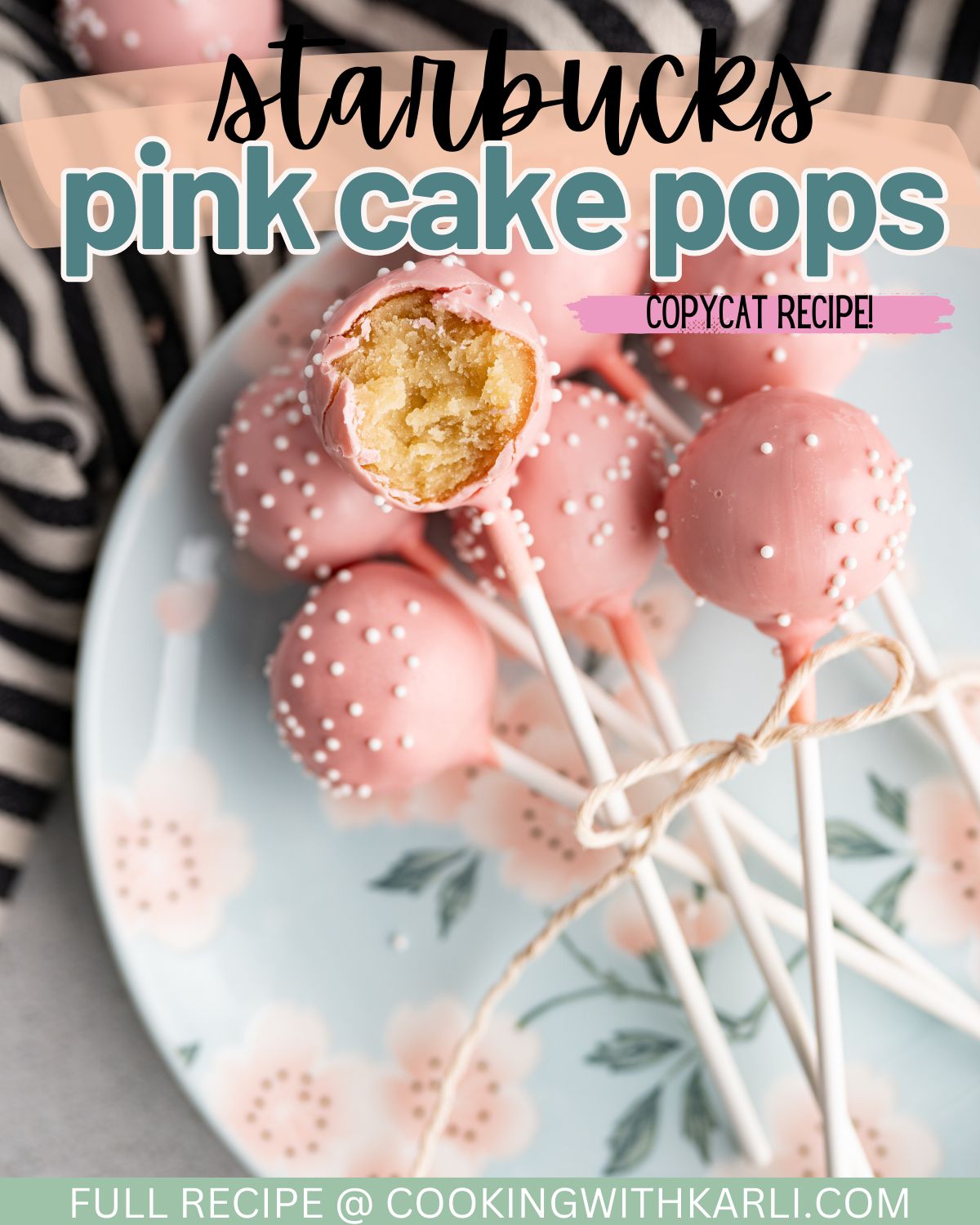
Then I melt a small amount of candy melts and use it as “glue.” I dip the end of each lollipop stick into the melted coating and insert it halfway into each cake ball. This helps the stick stay anchored when you later dip the entire pop. I’ve skipped this step before out of impatience, and the cake balls slid off the sticks while dipping — a messy disaster. Once all the sticks are in place, I refrigerate them for at least 20 minutes, which helps firm everything up.
Now for the best part: dipping. I melt the rest of the candy melts in the microwave, stirring every 30 seconds until perfectly smooth. If the coating feels too thick, I stir in a teaspoon of vegetable oil. Then I dip each chilled cake pop into the pink coating, turning it gently to cover every side. I lift it out and let the excess drip, then immediately add sprinkles before the coating sets. Setting them upright in a block of foam or laying them carefully onto parchment both work well. Once completely set, they look glossy, adorable, and ready to enjoy.
Pro Tips for Best Results
One of the most important things I learned early on is that the cake must be fully cooled before crumbling. If it’s even slightly warm, it holds too much moisture and makes the mixture mushy. Giving it time to cool ensures that the crumbs absorb the frosting properly without becoming dense. I sometimes bake the cake the day before just so I don’t rush the cooling process.
Another personal tip is to freeze the shaped cake balls for about 10 minutes before dipping. I tested this step three different ways — no chilling, fridge chilling, and freezing — and freezing gave me the smoothest finish with the least risk of the ball falling off the stick. They don’t need to be rock-solid; just slightly firm is perfect.
The candy melts can be finicky, and I learned the hard way that overheating them makes them seize up instantly. To avoid this, I microwave in short bursts and always stir even if the melts don’t look melted yet. Trust me, they melt from the inside out, and stirring prevents burning. If yours thicken too quickly, a splash of vegetable oil brings them back to a silky consistency.
And finally, when forming the cake balls, try to keep them smooth and compact. Any cracks or loose crumbs can cause the coating to appear bumpy. I gently roll each ball between my palms a few extra seconds until it looks perfectly rounded. This little bit of extra care always shows in the final glossy finish.
Common Mistakes to Avoid
The biggest mistake I see — and one I made myself — is using too much frosting. It’s tempting to add more when the mixture looks dry, but cake pops firm up as they chill. Too much frosting makes them heavy and doughy instead of soft and cakey. Start with less, test the consistency, and only add more if absolutely needed.
Another common issue is dipping the cake pops while the coating is too hot. When the chocolate is overly warm, it melts the cake ball and causes it to fall apart or slide off the stick. This used to frustrate me until I realized the solution was simply patience: letting the melted candy sit for two or three minutes before dipping.(See the next page below to continue…)