
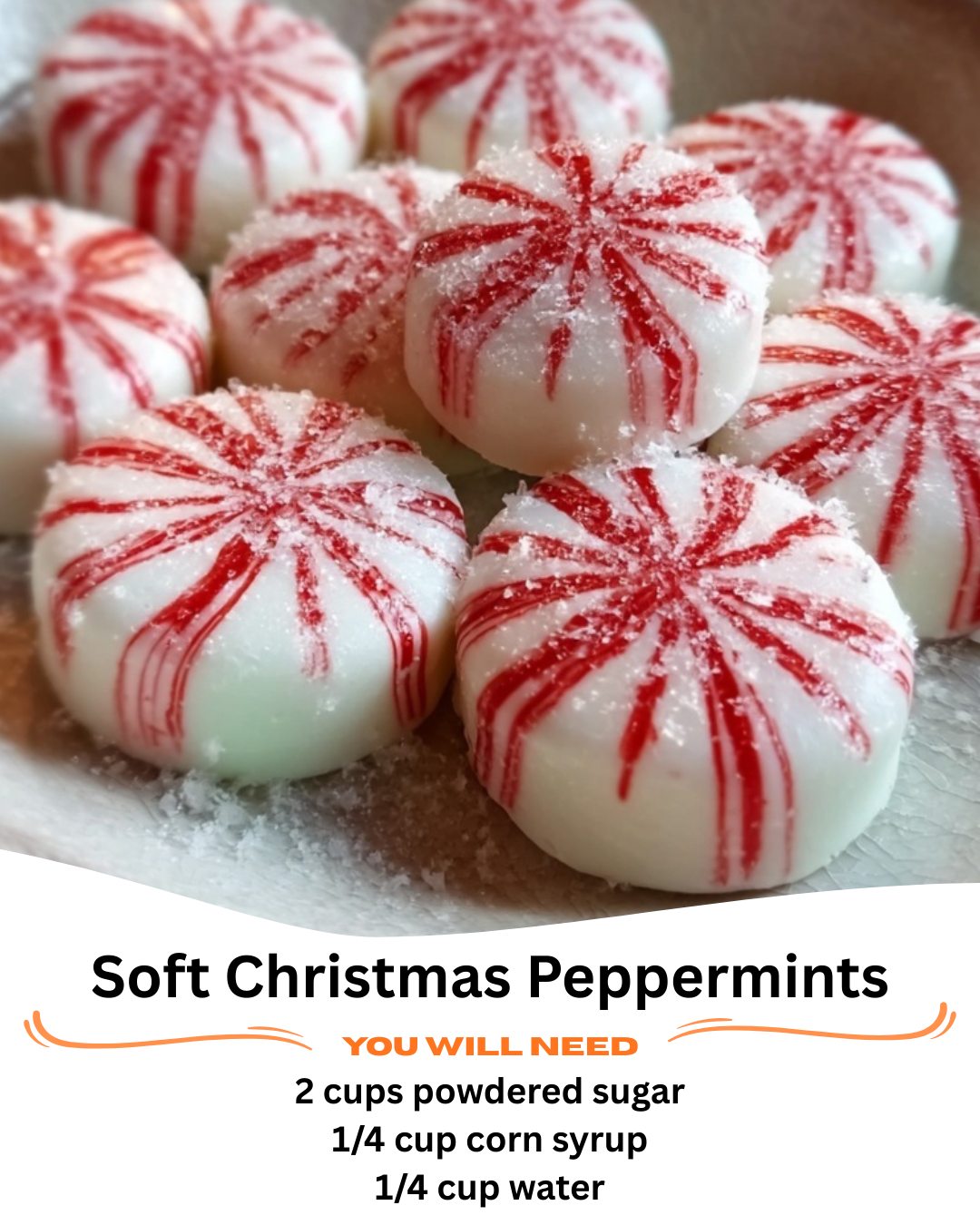
Do not substitute the corn syrup. I’ve had readers ask about honey or maple syrup, and while they’re delicious, they behave differently. Corn syrup is what gives these mints their signature smooth, non-crystalline, and soft texture. Honey can make them chewy and hygroscopic (meaning they attract moisture and get sticky). For the classic soft peppermint, corn syrup is essential.
Resist the urge to roll the dough too thin. If you go much thinner than 1/4-inch, the mints will dry out too much and become brittle instead of softly yielding. I use wooden dowels or chopsticks as guides on either side of my dough to ensure an even thickness. This little trick gives you uniform candies that dry perfectly.
Finally, storage is key. Once fully dried, these mints must go into an airtight container. I made the mistake of leaving a beautiful bowlful out on the counter for a few days, and they became unpleasantly hard. The airtight container keeps them at that perfect, soft-but-firm consistency for weeks. Layer them between sheets of parchment paper to prevent any chance of sticking.
Serving Suggestions
I love piling these mints in a festive crystal bowl or a small holiday tin as a centerpiece on our coffee table. They look so beautiful and inviting, and guests love to pop one in their mouth throughout the evening. They’re the perfect little palate cleanser after a rich holiday meal, and that burst of peppermint is wonderfully refreshing.
For gift-giving, I get small cellophane bags from the craft store and tie them with ribbon. A dozen mints in a bag make a wonderfully personal stocking stuffer, teacher gift, or hostess present. I often include the recipe on a little tag, too, because people are always so surprised and delighted that they’re homemade.
On Christmas Eve, my family has a tradition of placing a few of these mints on our dessert plates alongside a slice of Yule log or a warm cookie. The cool, melting mint is the perfect contrast to a warm, chocolatey dessert. Sometimes, I’ll even crush a few and sprinkle them over vanilla ice cream for an instant peppermint sundae.
Variations & Customizations
While peppermint is the classic, the flavor world is your oyster. I’ve made a wonderful “Winter Spice” version by swapping the peppermint for 1/2 teaspoon of cinnamon oil and a dash of nutmeg, using orange gel coloring instead of red. They taste like Christmas in a different, warm, and spicy way. For a citrus twist, lemon or orange oil with corresponding colors is absolutely fantastic and feels so bright.
You can also play with colors and patterns. For a candy cane effect, roll ropes of red and white dough, twist them together lightly, then coil them into a round mint before flattening slightly. For a marbled look, don’t fully knead in the food coloring—stop when it’s still streaky. You can even divide the dough into thirds and make red, white, and green mints for a full festive flag.
If you want to add a little texture, a very, very fine dusting of granulated sugar or even some decorative sanding sugar on top before they dry can add a subtle sparkle and crunch. Just press it in gently. I’ve also seen people embed a single, tiny chocolate chip in the center for a surprising little burst.
How to Store, Freeze & Reheat
Storing these correctly is simple but crucial. Once fully dried and firm to the touch, I place them in a single layer in an airtight container, separated by parchment paper if I’m stacking layers. They keep perfectly at cool room temperature for up to 3 weeks. I’ve found that the refrigerator can sometimes introduce unwanted moisture, so I avoid it unless my kitchen is very warm.
Yes, you can freeze them! For long-term storage, I arrange the fully dried mints on a parchment-lined baking sheet and flash-freeze them for an hour until solid. Then, I transfer them to a heavy-duty freezer bag or airtight container. They will keep for 2-3 months. This is a fantastic way to get a head start on your holiday prep in November.
To thaw, simply take the container out of the freezer and let it come to room temperature on the counter for an hour or two. Do not try to speed this up or “reheat” them. There is no reheating involved—these are a no-cook candy. The thawed mints taste just as fresh and soft as the day you made them, with no loss of texture or flavor.
Nutrition Information
Let’s be honest—these are a sweet, special-occasion treat. A typical mint is primarily powdered sugar, so it’s a source of simple carbohydrates for quick energy. I think of them as a little celebratory indulgence, much like a festive cookie. Because they’re so flavorful, one or two is usually enough to satisfy that sweet and minty craving completely.
On the positive side, they are fat-free and, depending on the extract you use, can be made without any artificial ingredients if you choose a natural peppermint oil and coloring. They are also naturally gluten-free. I always remind myself that homemade means I control the ingredients, which feels better than store-bought candies with long ingredient lists.
My personal philosophy with holiday treats like this is all about balance and joy. I enjoy making them, sharing them, and savoring a couple slowly. They’re not an everyday snack, but they are a cherished part of our holiday food tradition, and that in itself has its own kind of nourishment.
Conclusion
Making these Soft Christmas Peppermints has become one of my most anticipated holiday traditions. It’s a quiet, sweet ritual that fills my home with the scent of the season and my heart with the satisfaction of creating something simple and beautiful. I hope this recipe finds its way into your kitchen and becomes a part of your own festive memories. Wishing you a season filled with sweet moments, both in and out of the kitchen. Happy holidays, and happy candy-making