
Pro Tips for Best Results
One tip I learned after making this recipe several times is to cut the cream cheese into smaller cubes before adding it to the slow cooker. The first time I left it in one big block, it didn’t melt evenly, and I had to stir much more vigorously to combine the sauce. Cutting it up helps it melt smoothly and evenly as the chicken cooks.
Another tip is to always salt the pasta water generously. I used to think the sauce alone would bring enough seasoning, but unsalted pasta dulls the flavor of the dish. When the pasta is seasoned properly from the inside out, the whole dish tastes brighter and more well-balanced.
I also tested adding the pasta to the slow cooker early on—big mistake. It turns mushy and loses that satisfying bite. Pasta really does need to be cooked separately and added at the end. If you want leftovers to reheat better, slightly undercook the pasta before mixing it in; it will finish absorbing moisture from the sauce.
Finally, don’t be afraid to adjust the sauce thickness. Sometimes the sauce looks too thin right after shredding the chicken, but it thickens once you add the pasta. If it still seems too thick, a splash of warm pasta water works wonders. If it’s too thin, a little extra Parmesan or another few minutes of simmering in the slow cooker will fix it.
Common Mistakes to Avoid
One mistake I made the first time was using frozen chicken. It released too much water while cooking and thinned the sauce too much. I highly recommend thawing the chicken first. You’ll get richer flavor and a thicker, creamier sauce.
Another mistake is not softening the cream cheese. Cold cream cheese doesn’t melt evenly and can leave small lumps in the sauce. While they eventually melt, they take much longer and don’t mix as smoothly. Softening the cream cheese takes only a few seconds and makes a big difference.
Using the wrong pasta shape is another issue. I once used thin spaghetti out of convenience, and it turned into a tangled mess. Short pasta shapes like rotini, penne, rigatoni, or bowties hold up much better and catch the sauce in all their grooves.
Lastly, skipping the seasoning can hurt the final result. Even though the Olive Garden dressing is flavorful, the chicken itself needs seasoning while cooking. A simple sprinkle of garlic powder and Italian seasoning on the raw chicken elevates the entire dish.
Serving Suggestions
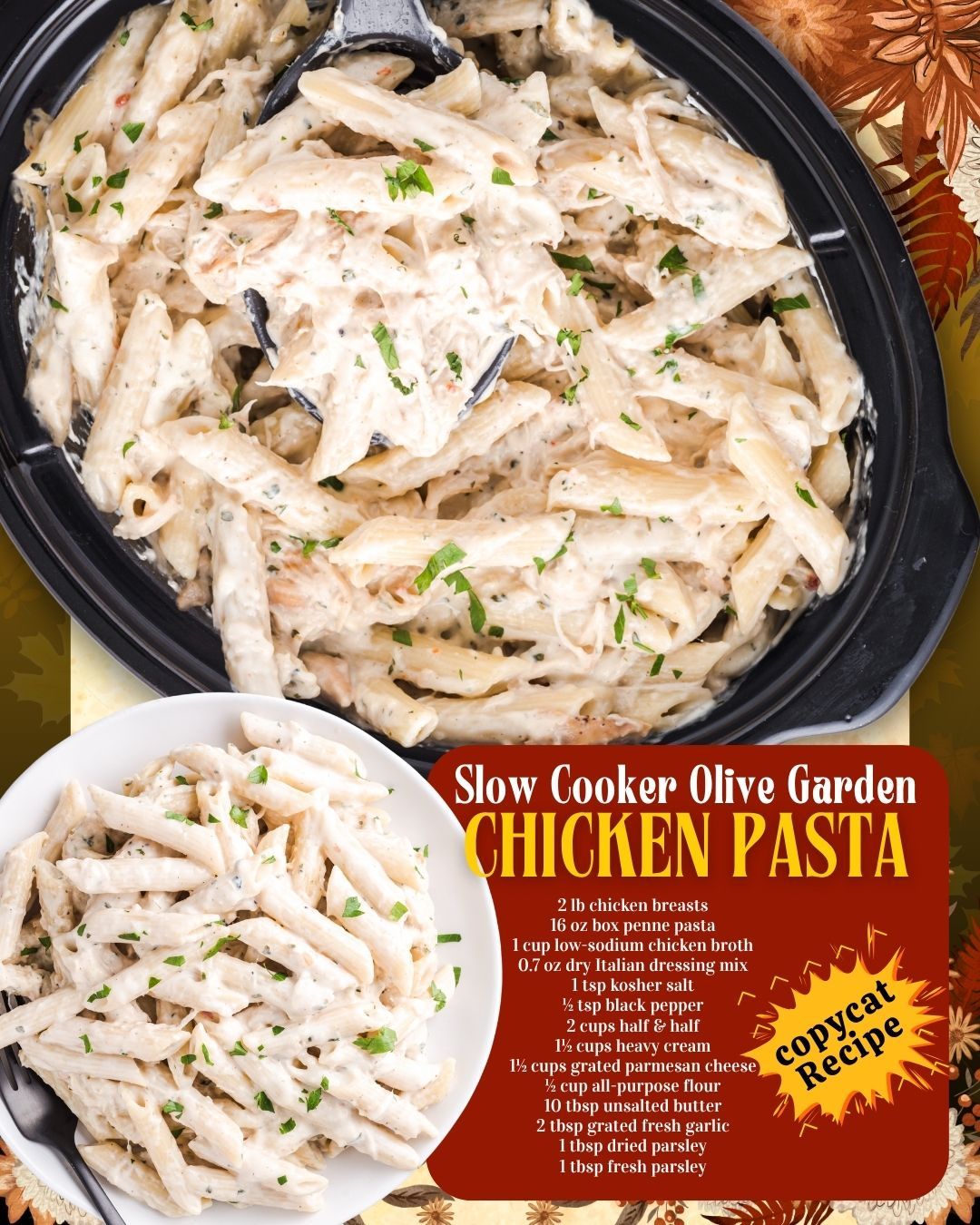
When I serve SLOW COOKER OLIVE GARDEN CHICKEN PASTA, I love pairing it with a simple green salad. The creamy, rich pasta contrasts beautifully with crisp lettuce, tomatoes, and cucumbers. Sometimes I even drizzle a little extra Olive Garden dressing on the salad to tie everything together.
Garlic bread or breadsticks are another must in my house. The sauce is so good that I always want something to soak it up. Warm, buttery breadsticks dipped into the creamy sauce are pure comfort. It feels like Olive Garden at home but even better.
For a heartier meal, I sometimes add steamed or roasted vegetables on the side. Broccoli, green beans, or asparagus add freshness that balances the richness of the pasta. The bright green veggies look gorgeous on the plate next to the creamy sauce.
If I’m serving this for a gathering, I garnish the top with chopped parsley, grated Parmesan, and even a sprinkle of red pepper flakes for a little kick. The pops of color make the dish look restaurant-quality without any extra effort.
Variations & Customizations
One variation I love is adding spinach during the last 10 minutes of cooking. The heat wilts the spinach perfectly, and it adds nutrition, color, and freshness. I fold it in after shredding the chicken so it stays vibrant and tender.
Another option is using sun-dried tomatoes. I chop a handful and toss them into the sauce after shredding the chicken. The tangy, sweet bites add bursts of flavor that pair beautifully with the creamy dressing. This version tastes slightly Mediterranean and incredibly delicious.
For a richer version, I add a splash of heavy cream or half-and-half after shredding the chicken. It thickens the sauce and makes it velvety smooth. Only a small amount is needed, but the texture becomes luxurious—almost like Alfredo.
You can also switch up the protein. I’ve made this recipe with boneless chicken thighs for extra juiciness. I’ve also tried it with cooked shredded rotisserie chicken (added halfway through cooking), and it sped up the recipe significantly while still delivering amazing flavor.
How to Store, Freeze & Reheat
Storing this dish is easy. I transfer leftovers into airtight containers and refrigerate them for up to three days. The sauce thickens more as it chills, so I usually add a splash of milk or water before reheating to restore its creaminess.
When reheating, I use the stovetop whenever possible. A saucepan on low heat allows me to stir gently and add liquid as needed. If using the microwave, I heat in short bursts, stirring between each round. This prevents the sauce from separating.
Freezing this dish works, but there are a few tricks. I recommend freezing the chicken and sauce separately from the pasta. Cooked pasta can become mushy after freezing. When reheating, boil fresh pasta and toss it with the thawed sauce. This gives you much better texture and fresher flavor.
If you do freeze everything together, slightly undercook the pasta before freezing. When reheating, add a splash of cream or milk to help revive the sauce. It won’t taste as perfect as fresh, but it’s still incredibly comforting and delicious.
Nutrition Information
This dish is definitely on the indulgent side, but it’s also incredibly satisfying and filling. The chicken provides protein, making the meal hearty and balanced, while the Italian dressing brings zesty flavor without needing extra oil. The cream cheese and Parmesan add richness, making this a comfort dish that feels worth every bite.
I like that the sauce is creamy without requiring a full stick of butter or heavy cream (unless you choose to add some for richness). It has all the indulgence of Alfredo pasta with a tangier, lighter finish thanks to the dressing.
The pasta adds carbohydrates that make the dish feel grounding and satisfying. When I want to lighten it up slightly, I serve a smaller portion of pasta with a big side salad or roasted vegetables. It stretches the meal while keeping things balanced.
Overall, this is one of those meals that fills you up emotionally as much as physically. It’s cozy, comforting, and tastes like something you’d order at a restaurant when you want a treat.
FAQ Section
1. Can I use homemade Italian dressing instead of Olive Garden brand?
Absolutely—I’ve done it before, and it works. But the Olive Garden version really gives the dish that signature flavor, so I recommend using it when possible.
2. Can I use frozen chicken?
Yes, but I don’t recommend it. I’ve tried it, and it releases too much excess water, thinning the sauce. Thawing the chicken first gives the best results.
3. Can I use a different type of pasta?
Yes! Just stick to sturdy shapes like rotini, penne, shells, or rigatoni. Thin pasta like spaghetti gets too soft and clumps together.
4. Why is my sauce too thick?
This usually happens after the pasta absorbs some sauce. I fix it with a splash of reserved pasta water or milk to loosen it back up.
5. Can I cook the pasta in the slow cooker?
I don’t recommend it. I tested it once, and the pasta turned mushy. Cooking separately keeps it al dente and delicious.
Conclusion
SLOW COOKER OLIVE GARDEN CHICKEN PASTA has become one of my go-to comfort meals because it’s creamy, flavorful, satisfying, and unbelievably easy to make—and every time I lift that slow cooker lid, I’m reminded how magical simple ingredients can be when they simmer together all day.