
Over-stirring while the meal cooks is another mistake I learned to avoid. Each time you lift the lid, the slow cooker loses heat and has to work harder to maintain temperature. I used to peek constantly because the smell was irresistible, but now I know to let it be. Trust the process, and only open it when you absolutely need to.
Finally, don’t skip the cornstarch slurry or add the cornstarch directly to the pot. I once sprinkled cornstarch straight into the simmering broth, and it clumped instantly. Mixing it with cool water first guarantees a velvety, smooth gravy without lumps.
Serving Suggestions
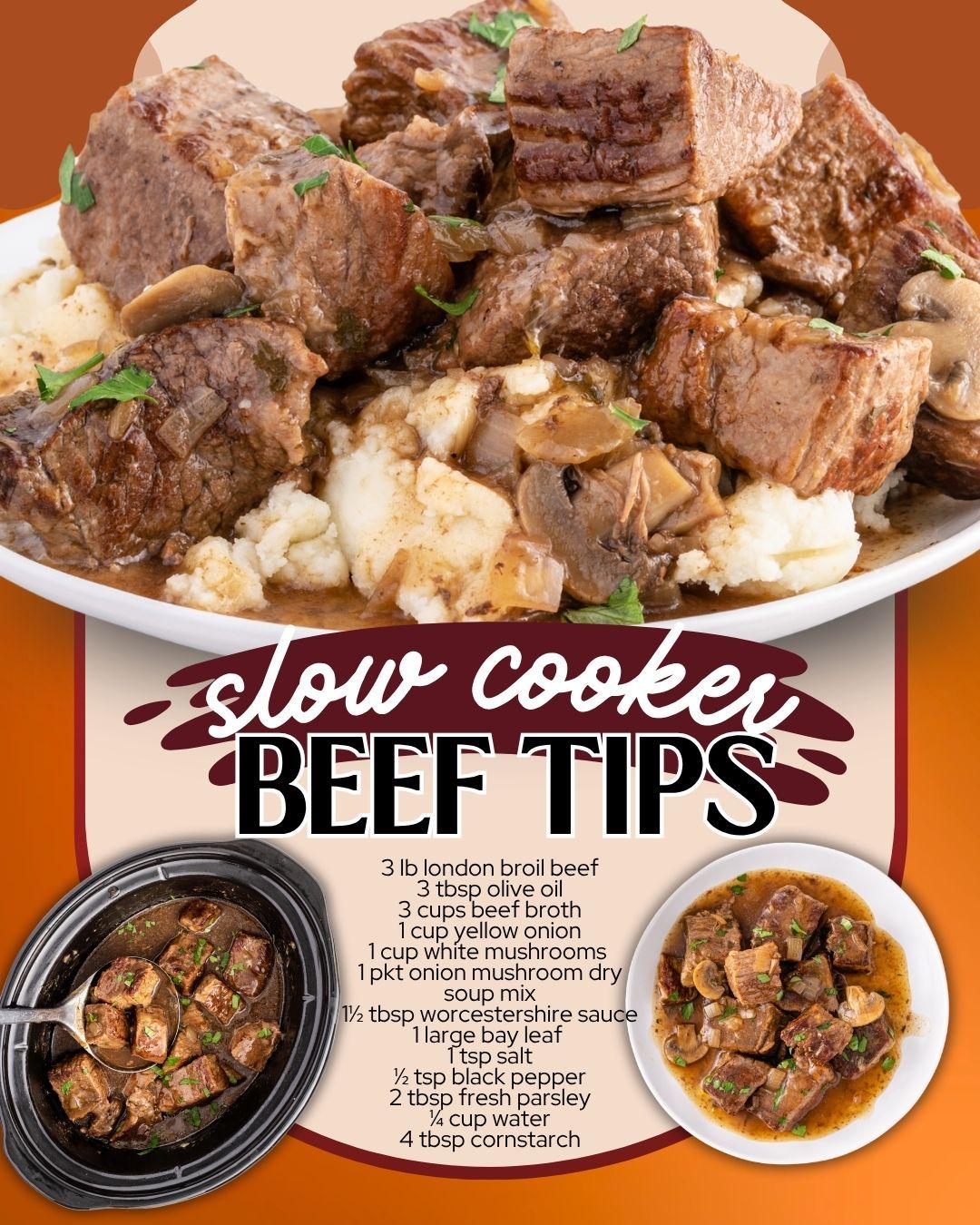
I love serving these beef tips over a bed of creamy mashed potatoes—the gravy soaks into them beautifully and makes every bite feel like pure comfort. When I’m in the mood for something a little lighter, I spoon the beef tips over steamed rice, which still absorbs all that rich sauce without feeling heavy. Both options work wonderfully depending on what kind of meal you want.
On days when I want something heartier, I serve them over buttered egg noodles. The noodles grab onto the gravy with every twist, and the dish feels like a cozy, old-fashioned family dinner. This version always reminds me of the meals my grandmother used to make, and it warms me from the inside out.
If I’m having guests, I like to pair the beef tips with roasted vegetables. The caramelized edges of the veggies balance the deep savoriness of the beef. Broccoli, carrots, and even Brussels sprouts roast beautifully and add great texture. A loaf of crusty bread on the table doesn’t hurt either—it’s amazing for soaking up the last bits of gravy.
Sometimes I spoon the beef tips into shallow bowls and serve them just as they are, like a stew. When the beef is this tender and the gravy this rich, you honestly don’t need anything else. It’s one of those dishes that feels complete all on its own.
Variations & Customizations
One variation I love is adding sliced carrots and celery to the slow cooker. They cook down into the gravy and give the dish a subtly sweet, earthy flavor that complements the beef beautifully. It turns the recipe into a full meal without needing sides, which is great for busy nights.
If you like a bit of heat, try adding a pinch of red pepper flakes or a splash of hot sauce. I experimented with this once on a whim, and the mild kick really brightened the gravy. It doesn’t make the dish spicy, just more dynamic. It’s a small tweak that can suit a lot of different palates.
You can also swap the mushrooms for pearl onions if you prefer a milder, sweeter taste. I’ve done this a few times, especially when serving guests who aren’t mushroom fans. The pearl onions melt slightly into the sauce and add a lovely texture that works surprisingly well.
For a richer, more decadent version, stir in a couple tablespoons of sour cream at the end. It transforms the gravy into something silky and luxurious. I only make this version occasionally because it feels indulgent, but wow—every time I do, I’m reminded of how magical that little addition can be.
How to Store, Freeze & Reheat
Storing leftover beef tips is simple, and they keep incredibly well. I usually spoon everything into an airtight container once it cools slightly, and it stays fresh in the refrigerator for up to four days. The gravy thickens a bit as it sits, but in the best possible way—it becomes even richer and more flavorful. In fact, I sometimes think the leftovers taste better than the first-day serving.
Freezing works beautifully too. I portion the beef and gravy into freezer-safe containers or heavy-duty bags, label them, and freeze for up to three months. When I’m ready to enjoy them again, I thaw the container overnight in the fridge. Freezing doesn’t hurt the texture of the beef at all because it’s already so tender.
Reheating is easiest on the stovetop. I warm everything over medium heat, stirring occasionally, until it’s heated through. If the sauce thickened too much in the fridge, a splash of beef broth brings it back to the perfect consistency. You can reheat in the microwave as well, but I like the gentle stovetop method best.
If you’re reheating from frozen, it’s best to thaw first for even heating. I tried reheating straight from frozen once, and the outside got hot while the inside stayed cold. Thawing avoids that issue completely and gives you the best final texture.
Nutrition Information
I always like to remind myself that dishes like this are meant to be hearty and satisfying, so the nutrition reflects that. Beef naturally brings protein and richness, and the slow cooking helps release the collagen, creating that luscious gravy. It’s a comforting meal that fills you up and leaves you feeling warm and satisfied.
The mushrooms and onions add fiber and nutrients without altering the indulgent feel of the dish. I’ve found that including them really balances everything out. Even if you’re not a huge mushroom fan, they cook down so much that they mostly melt into the sauce, adding flavor more than texture.
While this isn’t a low-calorie recipe, it is one that offers wholesome, hearty ingredients, especially if served with vegetables or a lighter side. I like that the recipe uses olive oil instead of butter for browning—it gives a little boost of healthy fats while still offering great flavor. Small choices like that help keep the meal balanced.
If you’re watching sodium, you can opt for low-sodium broth and reduce the added salt slightly. I’ve done this a few times, and the dish still comes out full of deep, savory flavor. Adjusting things to meet your needs won’t take away from the comforting nature of the recipe.
FAQ Section
Can I use a different cut of beef?
Absolutely. I’ve used chuck roast, stew meat, and even sirloin tips with great results. Just remember that tougher cuts benefit the most from long slow cooking, so I lean toward those rather than more tender cuts. They become incredibly soft and flavorful by the time the dish is done.
Do I have to brown the beef first?
Technically no, but trust me—it makes a huge difference. Browning adds deep flavor that you just can’t recreate later. I skipped it once when I was rushing, and the dish didn’t have the same richness. If you can spare the extra few minutes, it’s worth it.
Can I cook this on high instead of low?
You can, but the texture won’t be the same. Cooking low and slow is what makes the beef so tender it practically melts. When I cooked it on high, the meat didn’t break down quite as nicely. Low is the way to go if you want the ultimate comfort-food texture.
What can I use if I don’t have the soup mix?
If you’re out of onion mushroom soup mix, you can use a combination of beef bouillon, dried onion, and garlic powder. I’ve done this in a pinch, and it works surprisingly well. The flavor won’t be identical, but it still creates a deliciously savory gravy.
How do I thicken the gravy more?
If the gravy isn’t as thick as you’d like, you can make another quick slurry of cornstarch and water. Add it slowly, stirring until you reach your desired consistency. I’ve done this when I misjudged the liquid amounts, and it always saves the day.
Conclusion
Every time I make these Slow Cooker Beef Tips, I’m reminded of why this recipe has become such a staple in my home. It’s simple, comforting, deeply flavorful, and perfect for both busy weeknights and cozy Sunday dinners. From the first sizzle of browning beef to the final spoonful of silky gravy, it’s a dish that always brings warmth, comfort, and a whole lot of satisfaction. Enjoy every bite—I know I always do.