
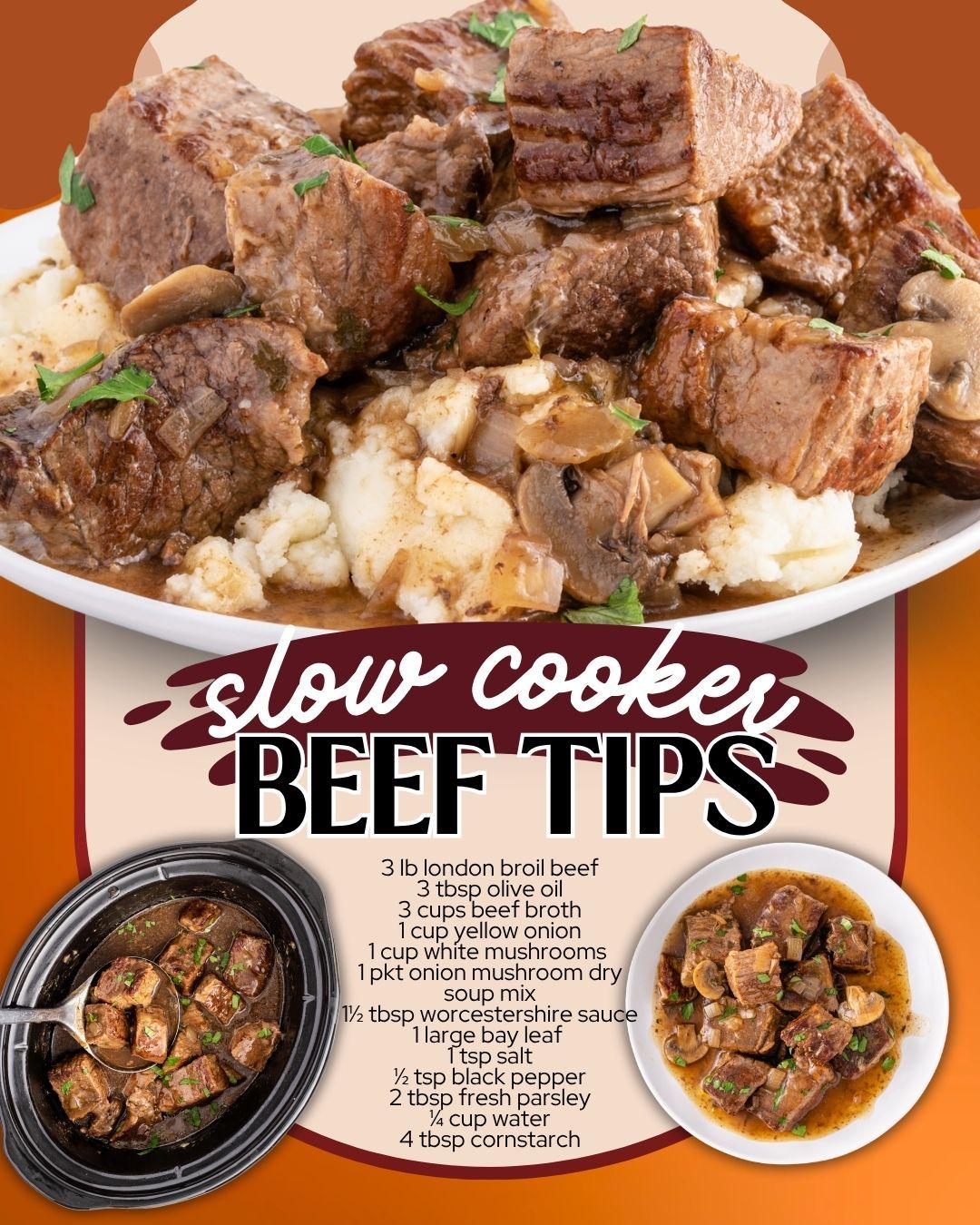
Once everything is in the slow cooker, I set it on low and let it cook for about 7 to 8 hours. Every time I walk past the kitchen during those hours, I catch little waves of savory steam escaping from the lid, and it’s honestly a form of comfort all on its own. By the time it’s done, the beef turns so tender that it practically falls apart when I nudge it with a spoon, and the broth has taken on deep, layered flavors.
Toward the end, I whisk together the cornstarch and water until smooth, then stir it into the slow cooker to thicken the gravy. I always give it a good 15 to 20 minutes to set up properly—you’ll see it transform from broth-like to silky and coat-the-back-of-a-spoon thick. Right before serving, I sprinkle in the fresh parsley, which adds a bright, fresh contrast to the rich sauce.
Pro Tips for Best Results
I’ve tested this recipe multiple ways, and the one thing that consistently makes the biggest difference is searing the beef first. I tried skipping the browning step once when I was short on time, and the flavor just wasn’t the same. That caramelization step builds depth that you absolutely want in your final dish. Don’t rush it—take your time with those batches.
Another tip I learned the hard way is not to overfill the slow cooker. When everything is too tightly packed, the meat doesn’t cook evenly and the gravy can become watery instead of silky. Leaving a little space for the heat to circulate works wonders. If your slow cooker is on the smaller side, consider halving the recipe or cooking it in stages.
Worcestershire sauce might seem like a small addition, but it makes a surprisingly big impact on the overall flavor profile. I tried leaving it out once, and the dish tasted noticeably flatter. It brings a subtle tang and richness that ties all the flavors together. Definitely don’t skip it.
Lastly, always taste the gravy before serving and adjust the seasoning if you need to. Depending on the broth or soup mix you use, salt levels can vary, and I’ve learned not to rely completely on measurements alone. A quick taste test ensures everything is perfectly balanced before it hits the table.
Common Mistakes to Avoid
The first mistake I made with this recipe was cutting the beef into uneven pieces. Some chunks were big, others small, and they ended up cooking at different rates. Since then, I always take the extra minute to make sure they’re similar in size—you’ll get a much more consistent texture that way. It seems small, but it makes a difference.
Another common issue is using too much liquid. Slow cookers don’t allow for evaporation like stovetop cooking does, so adding too much broth turns everything soupy. Stick with the measurements given; I’ve found they create just the right amount of rich gravy without overwhelming the dish. More liquid does not equal more flavor.(See the next page below to continue…)