
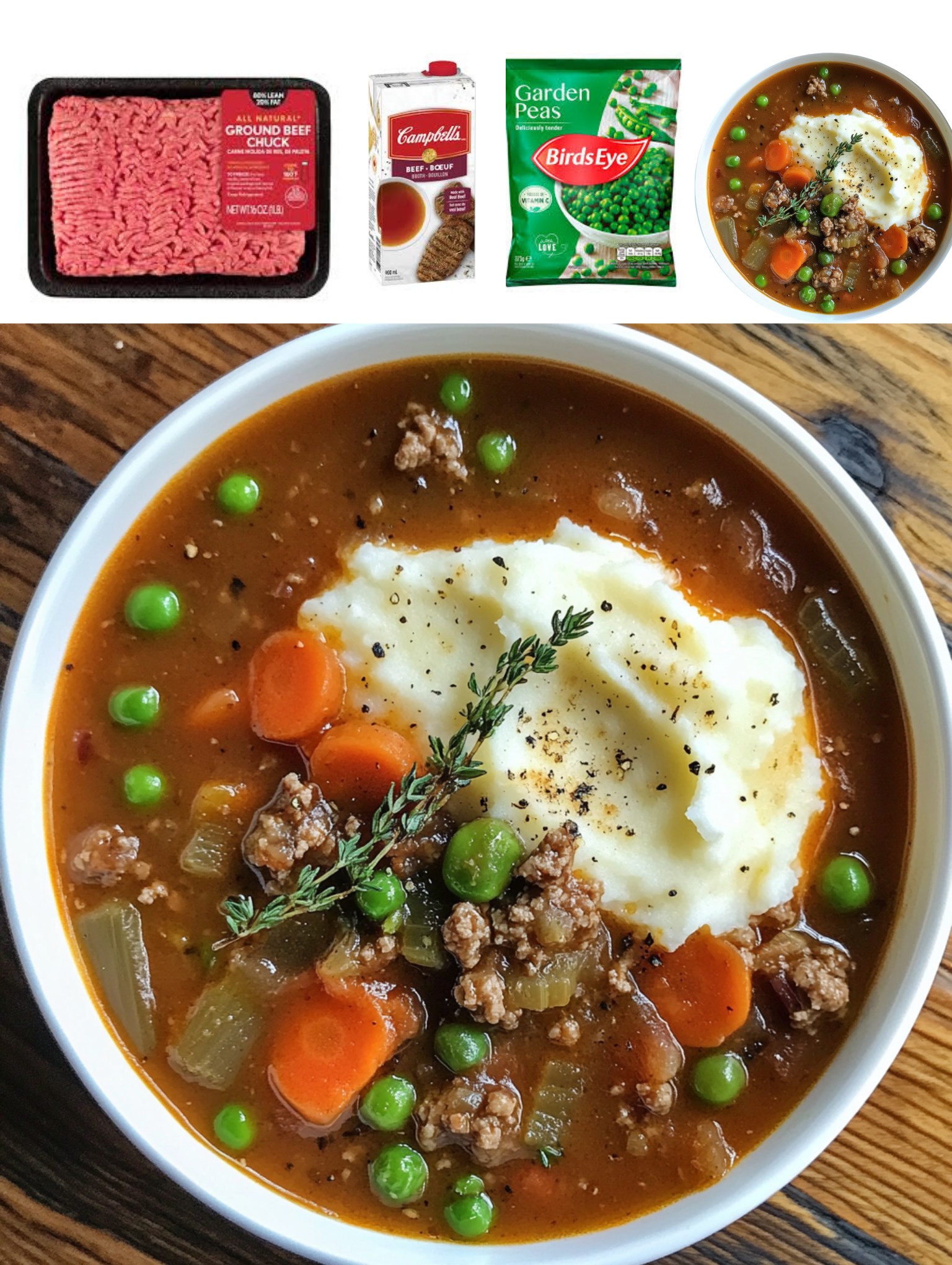
Shepherd’s Pie Soup is what happens when a traditional shepherd’s pie meets a thick, comforting stew. Instead of layering meat and veggies under a baked mashed potato crust, you build a flavorful base of browned ground beef or lamb, onions, carrots, peas, and corn in a savory broth scented with Worcestershire, tomato paste, rosemary, and thyme. Potatoes join the party in two ways—diced in the soup and/or mashed and stirred into the broth—to make it creamy and hearty, sometimes finished with a handful of cheddar for extra richness.
Ladled into bowls and topped with a spoonful of mashed potatoes or cheese, it delivers all the classic shepherd’s pie comfort in every spoonful.
Equipment
- Large heavy‑bottomed soup pot or Dutch oven (5–6 quarts).
- Wooden spoon or spatula for browning meat and stirring soup.
- Cutting board and sharp knife for chopping vegetables and potatoes.
- Potato masher or immersion blender (if using mashed potatoes to thicken).
- Measuring cups and spoons.
Ingredients
This version blends elements from several popular recipes to hit that classic shepherd’s pie flavor profile in soup form.
For the soup base:
- 1–1¼ lb (450–570 g) lean ground beef or ground lamb (beef is more common in soup versions).
- 2 tablespoons olive oil or butter, divided.
- 1 large yellow onion, diced.
- 2 carrots, peeled and diced.
- 2 celery stalks, diced (optional but classic stew flavor).
- 3–4 cloves garlic, minced.
Liquids and potatoes:
- 4–6 cups (about 1–1.5 L) beef or chicken broth/stock, divided.
- 2–3 medium russet or Yukon gold potatoes, peeled and diced for the soup (about 12–16 oz / 340–450 g).
- 1–1½ lb (450–680 g) potatoes for mashing into the soup OR 2–3 cups prepared mashed potatoes (optional method for extra creaminess).
Creamy/cheesy elements (optional but common):
- ½–1 cup heavy cream or half‑and‑half.
- ⅓–½ cup sour cream for mashed potatoes or stirring into broth.
- 1–2 cups shredded cheddar or aged white cheddar cheese, divided, for melting into the soup at the end.
Flour or thickener:
- 2–4 tablespoons all‑purpose flour (for roux), or 1–2 tablespoons cornstarch mixed with a splash of water as a slurry.
Veggies and seasonings:
- 1–2 tablespoons tomato paste.
- 1–2 tablespoons Worcestershire sauce.
- 1 teaspoon dried rosemary.
- 1 teaspoon dried thyme.
- 1 teaspoon Italian seasoning or mixed herbs (optional).
- 1–2 bay leaves.
- 2 cups frozen mixed vegetables (peas, corn, carrots; you can skip carrots here if already diced fresh above).
- Salt and black pepper to taste.
Optional toppings: extra mashed potatoes, shredded cheese, chopped parsley or chives.
Instructions And Steps
Heat 1 tablespoon of the oil or butter in the large pot over medium‑high heat. Add the ground beef or lamb and cook, breaking it into crumbles with a spoon, until it’s nicely browned and no longer pink. If you want a finer texture (closer to Wendy’s‑style chili), take time to really crumble the meat small. Drain off excess fat if there’s a lot, leaving just a thin coating for flavor, then transfer the meat to a plate and set aside.
Add the remaining oil or butter to the same pot, then add the diced onion, carrots, and celery. Cook over medium heat, stirring occasionally, until the vegetables soften and the onions become translucent, about 5–7 minutes. Stir in the minced garlic and cook for another 30–60 seconds until fragrant, being careful not to brown it too much.
Stir in the tomato paste and Italian seasoning if using, and cook for about a minute, stirring constantly to coat the vegetables and let the tomato paste darken slightly and caramelize. Sprinkle the flour over the vegetables and stir for 1–2 minutes to create a light roux; this will help thicken the soup later. If you’re using cornstarch instead, skip adding it now and reserve for later as a slurry.
Pour in about 4 cups of broth, scraping up any browned bits from the bottom of the pot with a wooden spoon. Add the diced potatoes, Worcestershire sauce, rosemary, thyme, bay leaves, and the browned meat back into the pot, stirring everything together.
Bring the mixture just up to a boil over medium‑high heat, then reduce the heat to maintain a steady simmer. Let the soup simmer gently, uncovered or partially covered, for about 15–20 minutes, or until the potatoes are fork‑tender and the flavors have begun to meld.
If you’re using cornstarch instead of flour, mix it with a couple tablespoons of cold water to make a slurry, then stir it into the simmering soup now. Let it simmer for another few minutes so the broth thickens slightly.
At this point you have a choice on how you want the “potato” element to show up in the soup:
- For a brothy/stew‑like version with chunks of potato, leave the diced potatoes mostly intact and skip adding mashed potatoes; you’ll rely on the roux/cornstarch and cream to thicken.
- For a thicker, creamier shepherd’s pie soup, mash some or all of the cooked potatoes directly in the pot with a masher or immersion blender, or stir in prepared mashed potatoes.
For the mashed‑potato approach, you can either:
- Boil extra potatoes separately until very tender, mash them with butter and sour cream, then blend them into the soup base as several recipes do.
- Mash part of the potatoes that are already in the pot directly into the broth, leaving some chunks for texture.
Once your potatoes are at your desired texture, reduce the heat to low. Stir in the cream or half‑and‑half and sour cream, if using, until the soup becomes creamy and slightly lighter in color. Do not let it boil vigorously after adding dairy to prevent curdling; a gentle simmer is plenty.
Add the frozen mixed vegetables (peas, corn, and possibly carrots if you didn’t add fresh ones earlier) to the pot. Simmer for another 5–10 minutes, stirring occasionally, until the vegetables are heated through and tender but still bright.
If you’re adding cheese directly to the soup, remove the pot from the heat and gradually sprinkle in the shredded cheddar a handful at a time, stirring until each addition melts smoothly before adding more. Adding cheese off the direct heat and in small batches helps prevent it from seizing or turning grainy.
Taste the soup and adjust seasoning with more salt, pepper, or Worcestershire sauce, as needed. Remove and discard the bay leaves. If the soup is thicker than you’d like, thin it with a bit more broth; if it’s too thin, let it simmer uncovered for a few more minutes or mash in a bit more potato.
Serve the Shepherd’s Pie Soup hot in bowls. For extra “shepherd’s pie” flair, top each serving with a spoonful or swirl of mashed potatoes and a sprinkle of cheese, then briefly place under the broiler in oven‑safe bowls to lightly brown the potato topping if you want to go all‑in. A final scatter of chopped parsley or chives adds color and freshness.
Tips And Tricks
Choose your meat based on how traditional you want to be. Classic shepherd’s pie is made with lamb, while cottage pie uses beef. Most soup versions use ground beef because it’s more common and affordable, but ground lamb gives you a more authentic flavor and stands up beautifully to rosemary and thyme.
Build flavor in layers. Browning the meat well, sautéing the vegetables until lightly golden, toasting the tomato paste, and blooming the herbs and spices before adding broth all contribute to a deeper, richer soup. Skipping these steps and just boiling everything together can give a flatter flavor profile.
Don’t rush the potatoes. Cutting them into even pieces and simmering until they’re fully tender is important whether you keep them in chunks or mash them. Undercooked potatoes will ruin the texture and also won’t thicken the broth effectively if you plan to mash them.
Use dairy carefully. Cream, half‑and‑half, sour cream, and cheese all make the soup taste luxurious, but they also can split if boiled too hard or added when the soup is scalding hot. Lower the heat, stir them in gradually, and avoid rapid boils once they’re in the pot.
Adjust the consistency to preference. Shepherd’s Pie Soup can range from a thick, stew‑like bowl to a looser, more brothy soup. More mashed potatoes and flour/cornstarch yields a thicker, spoon‑standing style; more broth and fewer potatoes mashed in yields a lighter, spoon‑sipping soup.
Like many hearty soups and stews, this one tastes even better the next day as flavors meld. The soup will thicken in the fridge; when reheating, stir in a splash of broth or milk to return it to your desired consistency, heating gently so the dairy stays smooth.
Variations
Cheesy mashed‑potato swirl: Make a separate batch of rich mashed potatoes seasoned with butter, sour cream, and cheddar, then either stir some into the soup (for thickness) and reserve some to dollop on top of each bowl, or pipe it over the top of oven‑safe bowls and broil briefly to mimic the baked potato topping of classic shepherd’s pie.
Lighter/veggie‑heavy: Increase the amount of carrots, celery, peas, and corn, and use extra broth with less cream for a lighter yet still hearty soup. You can also swap some or all of the potatoes for cauliflower florets and mash part of them into the broth for a lower‑carb twist.
Dairy‑free: Replace cream with unsweetened non‑dairy milk (like cashew or oat) and use a cashew cream or blended potato base to get the thick, creamy texture instead of sour cream and cheese. Omit the cheese or use a dairy‑free alternative melted in at the end.
Gluten‑free: Use cornstarch as the thickener instead of flour and ensure your broth and Worcestershire sauce are gluten‑free. The rest of the ingredients are usually naturally gluten‑free, making this an easy soup to adapt for gluten‑sensitive guests.
Slow‑cooker or pressure‑cooker: Brown the meat and sauté vegetables first on the stovetop (or using sauté mode in an Instant Pot), then add the broth, potatoes, herbs, and seasonings and cook under pressure or low and slow until the potatoes are tender. Finish by stirring in cream, vegetables, and cheese on a gentle heat after pressure is released or slow cooking is complete.
Shepherd’s Pie Soup gives you all the cozy, nostalgic flavors of the traditional casserole—savory meat, sweet vegetables, herby gravy, and creamy potatoes—in a flexible, make‑ahead‑friendly format that’s perfect for chilly nights and leftover lunches.