
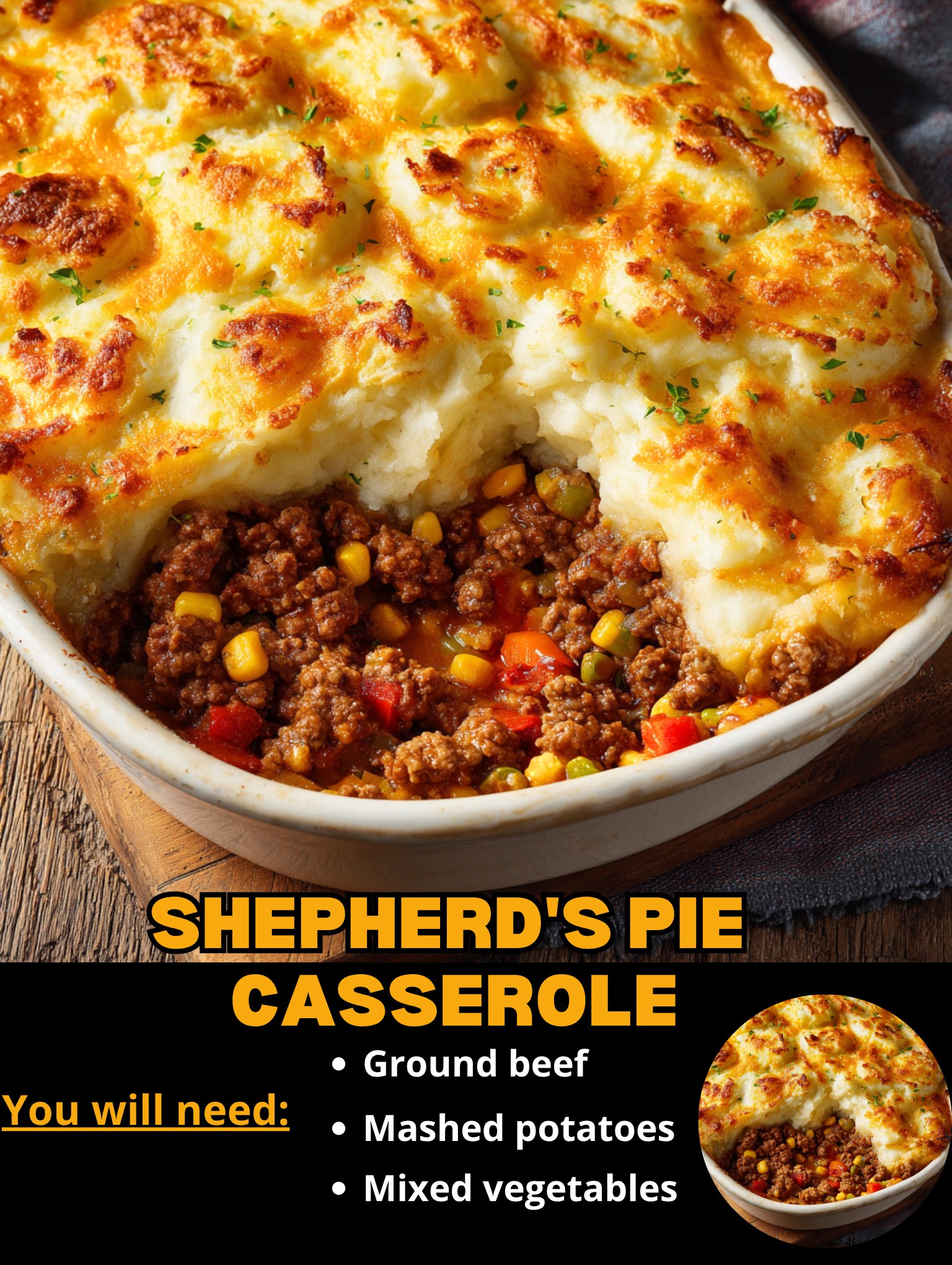
Shepherd’s Pie Casserole is classic, cozy comfort food layered into a 9×13 pan. A rich, savory ground beef and veggie filling simmers in a thick gravy on the stove, then gets tucked under a blanket of creamy mashed potatoes and baked until the top is golden and the edges are bubbling. It’s everything you want in a meat-and-potatoes dinner in one dish: hearty, satisfying, and perfect for feeding a hungry family or bringing to a potluck.
This version leans into convenience without losing that homemade, from-scratch feel. You’ll brown the beef with onions and garlic, stir in peas, carrots, and corn, and build a simple gravy right in the skillet. While the filling simmers, the potatoes boil and get mashed with butter and a splash of milk until fluffy. Once you spread that mash over the beef and slide the casserole into the oven, all you need to do is wait for those browned peaks and irresistible smells to fill the kitchen.
Equipment
- Large skillet or sauté pan
- Large pot (for potatoes)
- Colander
- Potato masher or hand mixer
- 9×13-inch baking dish
- Measuring cups and spoons
- Wooden spoon or spatula
Ingredients
For the mashed potato topping:
- 2½–3 pounds potatoes (Yukon gold or russet), peeled and cubed
- 4 tablespoons butter
- ½–¾ cup milk or half-and-half
- ½ teaspoon garlic powder (optional)
- ½–1 teaspoon salt (to taste)
- ¼ teaspoon black pepper
For the meat and veggie layer:
- 1½ pounds ground beef (or half beef, half ground sausage)
- 1 small onion, finely diced
- 2 cloves garlic, minced
- 2 tablespoons tomato paste
- 2 tablespoons flour (or cornstarch)
- 1½ cups beef broth
- 1 tablespoon Worcestershire sauce
- 1 teaspoon dried thyme or Italian seasoning
- ½ teaspoon smoked or sweet paprika (optional)
- 1 teaspoon salt (to taste)
- ½ teaspoon black pepper
- 2 cups frozen mixed vegetables (peas, carrots, corn), thawed slightly
Optional finishing:
- ½–1 cup shredded cheddar cheese (for a cheesy top)
- Chopped parsley, for garnish
Instructions
Start with the mashed potato topping so it’s ready when the meat mixture is done. Place the peeled, cubed potatoes in a large pot and cover them with cold water by about an inch. Add a generous pinch of salt, then bring the pot to a boil over medium-high heat.
Once boiling, reduce the heat to maintain a gentle simmer and cook until the potatoes are very tender when pierced with a fork, usually 12–15 minutes depending on the size of the cubes.
While the potatoes cook, start on the meat layer. Add the ground beef to a large skillet over medium-high heat. If you’re using very lean beef, you can add a small drizzle of oil to get things going; if the meat is fattier, it will release its own fat.
Cook, breaking the beef apart with a wooden spoon, until it’s mostly browned. Add the diced onion and cook together for another 3–4 minutes, stirring occasionally, until the onion is softened and the beef is fully cooked with no pink remaining. If there’s a lot of grease in the pan, carefully spoon or drain off most of it so the filling isn’t oily.
Stir in the minced garlic and cook for about 30 seconds, just until fragrant. Add the tomato paste and cook it for another minute, stirring it into the beef so it darkens slightly and loses its raw taste. Sprinkle the flour evenly over the meat mixture and stir well to coat; this will help thicken the gravy.
Let the flour cook for a minute to remove its raw edge, then slowly pour in the beef broth while stirring, scraping up any browned bits from the bottom of the pan as you go. Add the Worcestershire sauce, dried thyme or Italian seasoning, paprika if using, salt, and black pepper, and stir to combine everything into a cohesive mixture.
Bring the mixture to a gentle simmer, then fold in the frozen mixed vegetables. Let the filling bubble softly for 5–10 minutes, stirring occasionally, until it has thickened into a rich, spoon-coating gravy and the vegetables are tender.
Taste and adjust the seasoning with more salt, pepper, or Worcestershire if needed; this layer should be savory and full-flavored because the potatoes on top are mild by comparison. Once it’s seasoned to your liking, remove the pan from the heat and set it aside while you finish the potatoes.
By now, the potatoes should be tender. Drain them well in a colander, then return them to the warm pot. Add the butter, half of the milk or half-and-half, garlic powder if you’re using it, salt, and pepper.
Mash the potatoes with a masher or whip them with a hand mixer until they’re smooth and fluffy, adding more milk a bit at a time until they reach a creamy but still spreadable consistency. Taste and adjust the salt and pepper so the potatoes are flavorful on their own; they’re not just a lid, they’re half the experience of this casserole.
Preheat your oven to 375°F (190°C). Lightly grease your 9×13-inch baking dish. Pour the hot meat and vegetable mixture into the dish and spread it into an even layer, making sure the veggies and beef are evenly distributed to the corners.
Let it sit for a minute or two to settle. Next, dollop the mashed potatoes over the filling in large spoonfuls, spacing them across the surface. Using the back of a spoon or a spatula, gently spread the potatoes to cover the meat completely, working from the center out toward the edges.
Take care not to press too hard, or you’ll stir the beef up into the potatoes; instead, lightly drag the potatoes over the surface until everything is sealed under a smooth or softly textured blanket.
If you’re adding cheese, sprinkle the shredded cheddar over the top of the mashed potatoes in an even layer.
This will melt into a cheesy crust and give the casserole an extra indulgent finish. To encourage browning and texture, you can also drag a fork lightly across the top of the potatoes to create ridges and peaks; those little edges will crisp and color in the oven.
Place the baking dish on the middle rack of the preheated oven and bake for about 25–30 minutes, or until the filling is bubbling up around the edges and the top of the potatoes is lightly golden.
If you want a deeper golden-brown top, you can switch the oven to broil for the last couple of minutes; just keep a close eye on it so the potatoes and cheese don’t burn. When the casserole looks nicely browned and you can see the gravy bubbling at the sides, remove it from the oven.
Let the Shepherd’s Pie Casserole rest for about 10–15 minutes before serving. This resting time allows the layers to set up a bit so the casserole slices more cleanly and the gravy thickens just enough that it doesn’t run all over the plate.
Sprinkle chopped parsley over the top if you like a fresh bit of color, then use a large spoon or spatula to scoop generous portions, making sure each serving includes plenty of meat, vegetables, and mashed potatoes.
Tips & Variations
Shepherd’s Pie Casserole is endlessly flexible, so it’s easy to tailor it to your taste and pantry. Ground beef is classic and crowd-pleasing, but you can swap in part or all ground lamb for a more traditional shepherd’s pie, or use a mix of beef and sausage for extra richness and flavor.
If you’d like to lighten things up a bit, ground turkey can be used instead, though you may want to bump up the seasonings and use a bit of extra Worcestershire or tomato paste to add depth.
The vegetable mix is also very forgiving. Frozen peas, carrots, and corn keep things simple and reliable, but you can sauté fresh carrots and celery with the onions at the beginning, then stir in peas later.
Mushrooms are a great addition for earthiness; just cook them with the beef and onions so their moisture cooks off before you add the flour. If your family isn’t into certain veggies, it’s easy to adjust—more corn, fewer peas, or even a handful of green beans instead.
You can play with the gravy’s flavor without changing the basic structure. Tomato paste gives the filling a subtle richness and body, but if you’d like more of a brown-gravy vibe, you can skip it and add a bit more Worcestershire or even a teaspoon of soy sauce for umami.
A splash of red wine cooked down with the beef before adding the broth can also add depth. For a slightly creamier filling, a small splash of cream or half-and-half whisked in at the very end of simmering will round out the gravy nicely.
The mashed potatoes are another place to customize. Using Yukon golds will give you a naturally buttery, creamy mash, while russets will be lighter and fluffier. You can add shredded cheddar, Parmesan, or even a bit of cream cheese directly to the potatoes for a richer, more loaded topping.
Roasted garlic mashed into the potatoes instead of garlic powder adds a sweet, mellow garlic note. If you like a bit of tang, a spoonful of sour cream stirred into the mash is a nice touch.
For a shortcut on busy nights, you can use high-quality prepared mashed potatoes (homemade leftovers or refrigerated) or even instant mashed potatoes prepared richer than the box directions.
The key is to make sure they’re thick enough to sit on top of the meat mixture without sinking and well-seasoned so they still taste homemade. This can shave a good chunk of time off the recipe while preserving that layered casserole feel.
Serving & Storage
Shepherd’s Pie Casserole is a full meal in one pan—meat, potatoes, and vegetables all in each scoop—but it pairs well with a few simple sides if you want to stretch it or add freshness. A crisp green salad with a vinaigrette or a simple cucumber salad balances the richness of the potatoes and gravy.
Steamed or roasted green beans, broccoli, or Brussels sprouts make easy, colorful sides that complement the flavors without competing. If you’re serving a crowd, warm rolls or slices of crusty bread are always welcome for sopping up any remaining gravy.
Leftovers reheat beautifully and might even taste better the next day as the flavors meld. Let the casserole cool to room temperature, then cover the dish tightly with foil or transfer portions to airtight containers and refrigerate for up to 3–4 days.
To reheat a larger portion in the baking dish, cover with foil and warm in a 325°F (165°C) oven until hot all the way through; removing the foil for the last few minutes helps re-crisp the top. Individual servings can be reheated in the microwave in short bursts, stirring or rotating halfway through for even heating.
This casserole also freezes well. For best results, assemble it fully and bake it, then let it cool completely. Wrap the whole dish tightly in plastic wrap and then foil, or portion into freezer-safe containers. Freeze for up to a couple of months.
Thaw overnight in the refrigerator, then reheat covered in the oven until hot and bubbling, adding a sprinkle of fresh cheese or a pat of butter on top if you want to refresh the crust. With its comforting layers and make-ahead friendliness, Shepherd’s Pie Casserole is an easy go-to when you want something hearty, nostalgic, and guaranteed to satisfy.