
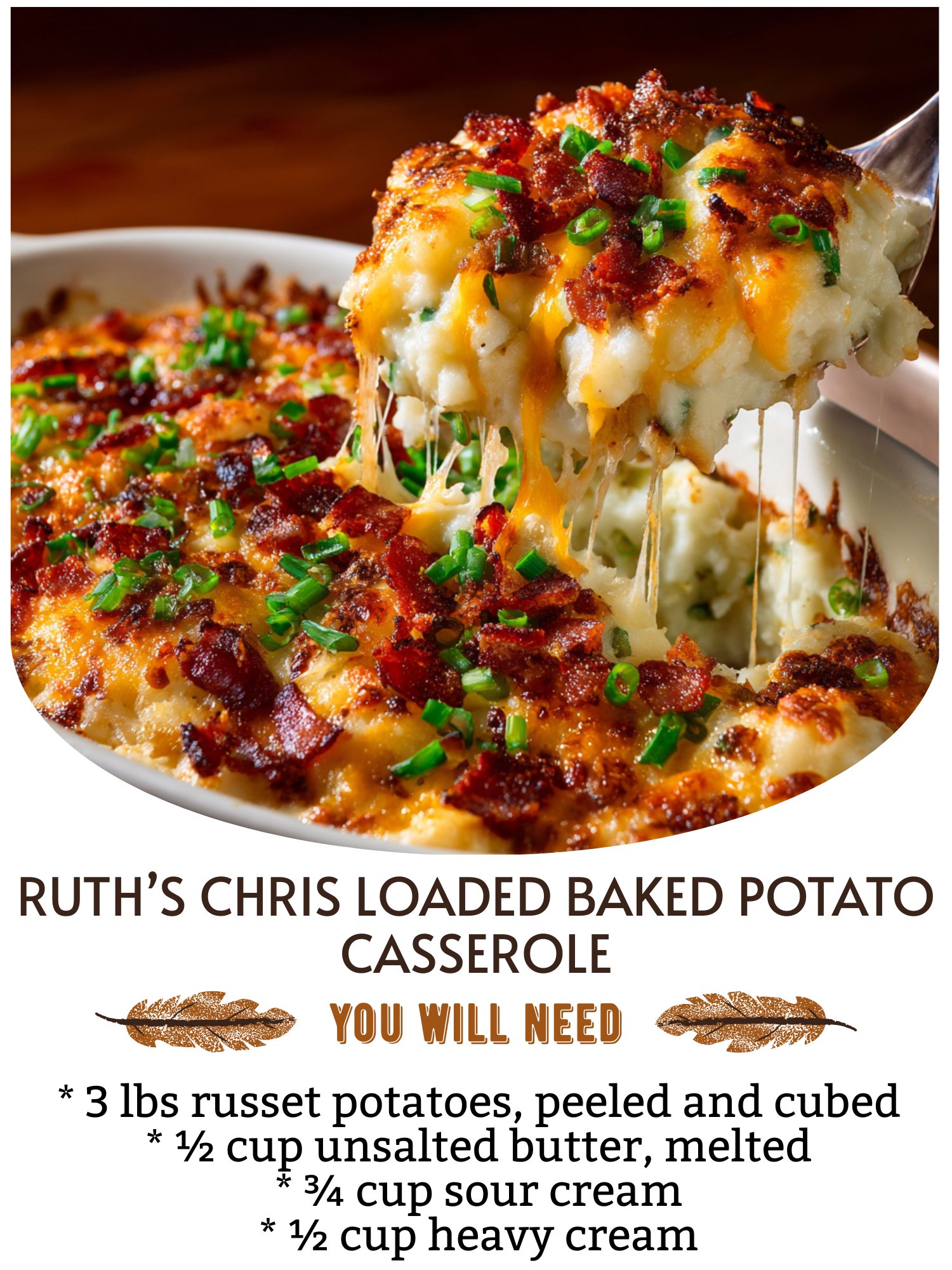
The moment I pulled my first Ruth’s Chris Loaded Baked Potato Casserole from the oven, my kitchen filled with the most incredible, comforting aroma. It was the smell of a hundred baked potatoes all at once—buttery, cheesy, and rich with the savory promise of bacon and chives. I remember the sight of the golden, bubbling surface, dotted with crispy bacon and melted cheddar, and the eager anticipation as I let it rest. That first spoonful, diving through the crisp topping into the ultra-creamy, fluffy potato below, was pure, unadulterated bliss. It was every delicious part of a loaded baked potato, transformed into a shareable, scoopable, show-stopping casserole that instantly became my ultimate comfort food.
Why You’ll Love This Recipe
You are going to love this recipe because it takes the classic, beloved flavors of a loaded baked potato and scales them up into the most decadent, crowd-pleasing side dish imaginable. It’s the perfect solution for feeding a group without having to bake and stuff individual potatoes, and it’s packed with all the good stuff—creamy potatoes, sharp cheese, crispy bacon, and tangy sour cream. From my experience, this dish is the star of any potluck, holiday table, or family dinner. It’s comforting, indulgent, and has a texture that’s both luxuriously smooth and delightfully crispy on top. It’s pure, unapologetic joy in a baking dish.
Ingredients
- 3 lbs russet potatoes, peeled and cubed
- 1/2 cup unsalted butter, melted
- 3/4 cup sour cream
- 1/2 cup heavy cream
- 1 ½ cups shredded sharp cheddar cheese, divided
- 1/2 cup grated Parmesan cheese
- 6 slices thick-cut bacon, cooked crisp and crumbled
- 1/3 cup chopped fresh chives or green onions, divided
- 2 cloves garlic, minced
- 1 teaspoon salt, plus more for potato water
- 1/2 teaspoon black pepper
- 1/4 teaspoon paprika
- For topping: 1 cup crushed potato chips, cornflakes, or panko breadcrumbs mixed with 2 tablespoons melted butter
Let’s talk ingredients, because choices here build that iconic flavor. The potatoes: russets are a must for their high starch content, which makes them fluffy and perfect for absorbing all that creamy goodness. The heavy cream and sour cream together create a richness that milk alone can’t achieve—don’t substitute. Use full-fat for the best texture. For the cheese, shred your own sharp cheddar from a block; pre-shredded cheese has anti-caking agents that can make the sauce grainy. The bacon should be thick-cut for maximum meaty, crispy bits. And fresh chives are non-negotiable for their bright, oniony pop that cuts through the richness. Trust me, they make a huge difference.(See the next page below to continue…)
Equipment Needed
- Large pot for boiling potatoes
- Potato ricer, food mill, or handheld masher
- 9×13 inch baking dish
- Mixing bowls (large and medium)
- Skillet (for bacon)
- Measuring cups and spoons
Step-by-Step Instructions
My journey always starts with the potatoes. I peel and cube them into 1-inch pieces, which helps them cook quickly and evenly. I add them to a large pot of cold, generously salted water—this seasons them from the inside out. I bring it to a boil and cook the potatoes until they are fall-apart tender, about 15-20 minutes. While they boil, I cook my bacon until perfectly crisp and crumble it, and I shred my cheeses. The key here is to be ready for assembly because you want to mix the potatoes while they’re still hot so they absorb all the flavor.
Once the potatoes are tender, I drain them thoroughly and immediately return them to the hot, dry pot. This helps evaporate any excess water, which is crucial for a creamy, not watery, casserole. I let them steam-dry for a minute. Then, using a potato ricer (my preferred tool for the smoothest texture) or a sturdy masher, I break them down. I avoid using a hand mixer, as it can make the potatoes gluey. The sight of those fluffy, hot potato clouds is always satisfying.
Now, for the fun part: loading them up. To the hot, riced potatoes, I add the melted butter, sour cream, heavy cream, minced garlic, salt, pepper, and paprika. I stir gently but thoroughly with a wooden spoon until everything is incorporated and gloriously creamy. Then, I fold in one cup of the shredded cheddar, all of the Parmesan, about two-thirds of the crumbled bacon, and half of the chopped chives. The mixture should be thick, creamy, and flecked with delicious bits. I taste it at this point to check the seasoning—it should be perfectly savory and rich.(See the next page below to continue…)
Finally, the assembly. I transfer the luscious potato mixture into my greased baking dish, spreading it into an even layer. I sprinkle the remaining ½ cup of cheddar cheese over the top, followed by the buttery crushed potato chip (or panko) topping. This creates the ultimate crispy, salty, crunchy crust. I bake it in a preheated 375°F oven for 25-30 minutes, until the topping is golden brown and the cheese is melted and bubbly. When it comes out, I let it rest for 10 minutes—this is torture with that smell in the air, but it helps it set—then garnish with the remaining bacon and chives. The contrast of the hot, creamy interior with the cool, fresh garnish is perfect.
Pro Tips for Best Results
I tested the potato texture three different ways: hand-mashed, riced, and mixed with a hand mixer. The potato ricer was the clear winner. It eliminates every single lump without overworking the starch, which can lead to a gummy, pasty texture. Hand-mashing is a close second if you don’t mind a few small lumps. The hand mixer, while fast, made the potatoes gluey and dense. For the fluffiest, lightest casserole, a ricer is your best investment.
Here’s what I learned the hard way about the potatoes: they must be dry. The first time, I just drained them and started mixing. The extra moisture made the final casserole a bit soupy. Now, after draining, I return them to the hot pot over the lowest heat for a minute, shaking the pot to let any residual water evaporate. This simple step ensures your casserole is luxuriously thick and holds its shape when scooped.
For the ultimate flavor infusion, mix everything while the potatoes are piping hot. The heat helps melt the butter and cheese slightly into the potato, creating a more cohesive and flavorful base. Also, seasoning the potato water well is your first layer of seasoning. Don’t be shy with that salt in the boiling water—it makes a difference in every bite.
Common Mistakes to Avoid
My first batch was a lesson in over-mixing. I was so determined to get it perfectly smooth that I kept mashing and stirring long after the ingredients were combined. The result was a dense, sticky casserole that lacked the light, fluffy quality of a great baked potato. Don’t do what I did! Mix just until everything is incorporated. A few small lumps are not just okay; they’re desirable for texture.(See the next page below to continue…)
Another critical error is using cold dairy ingredients straight from the fridge. Adding cold sour cream and heavy cream to hot potatoes can cause the fats to seize up and not incorporate smoothly. Now, I always let my sour cream and cream sit on the counter for 20-30 minutes to take the chill off before mixing. This ensures a silky, uniform mixture every time.
Don’t skip the topping rest before baking. If you add the crunchy topping and then let the assembled casserole sit for a while before baking, the topping can absorb moisture from the potatoes below and become soggy. Assemble your dish and get it right into the preheated oven to guarantee that crisp, golden finish.
Finally, avoid under-seasoning. Potatoes are a blank canvas and need a generous hand. Taste your mixture after you’ve combined all the ingredients but before you transfer it to the baking dish. It should taste a little too flavorful, as the baking process will mellow the flavors slightly. Remember, you can always add more salt, but you can’t take it away.
Serving Suggestions
I love serving this casserole straight from the baking dish, placed on a trivet in the middle of the table. It’s the ultimate companion to a juicy steak, just like at the restaurant. I’ll pair it with a perfectly cooked ribeye, some creamed spinach, and a bold Cabernet Sauvignon for a complete steakhouse experience at home. The rich, creamy potatoes are the perfect foil for savory steak.
For a holiday feast like Thanksgiving or Christmas, this casserole is a guaranteed hit. I serve it alongside the roast turkey or glazed ham. Its comforting, familiar flavors please everyone, and its decadent feel makes the meal extra special. It’s often the first side dish to be completely scraped clean.
On a game day or for a casual gathering, I sometimes bake this in individual ramekins for easy serving. It’s a fantastic, hearty side for burgers, grilled chicken, or even on its own as the main attraction for a comfort-food night. A simple, crisp green salad on the side is all you need to balance the richness.
Variations & Customizations
This recipe is wonderfully adaptable. For a “Fully Loaded” version, I sometimes add a cup of steamed broccoli florets or sautéed chopped kale to the potato mixture for a pop of color and nutrition. A ½ cup of diced ham or cooked, crumbled breakfast sausage is also a fantastic add-in for extra heartiness.
If you want to play with the cheese, try using a smoked gouda or pepper jack in place of half the cheddar for a different flavor profile. For a tangier twist, substitute the sour cream with an equal amount of full-fat Greek yogurt. The method remains the same; the flavor is your playground.
For a lighter version, you can use half-and-half instead of heavy cream and light sour cream, though the texture will be slightly less rich. You can also top it with crushed whole-grain crackers or a mix of Parmesan and almond flour for a different kind of crunch.
How to Store, Freeze & Reheat
Leftovers can be stored in an airtight container in the refrigerator for 3-4 days. The topping will soften, but the flavors will still be delicious. I don’t recommend storing it at room temperature once it’s been baked with dairy.
This casserole freezes very well before baking. Assemble it completely (including the topping) in a freezer-safe dish, wrap tightly in plastic wrap and foil, and freeze for up to 2 months. Thaw overnight in the refrigerator before baking as directed, adding a few extra minutes to the baking time. I do not recommend freezing it after baking, as the texture of the potatoes can become grainy.
Reheating is best done in the oven to restore some crispness to the topping. For individual portions, reheat at 350°F in a covered oven-safe dish for 15-20 minutes. For the whole dish, cover with foil and reheat at 350°F for 25-30 minutes, then uncover for the last 10 minutes. The microwave will work but will make the topping very soft.
Conclusion
This Ruth’s Chris Loaded Baked Potato Casserole is more than a recipe; it’s a celebration of everything we love about comfort food. It’s rich, satisfying, and guaranteed to bring smiles to the table. I hope this dish finds a permanent home in your recipe collection, bringing warmth and deliciousness to your family dinners and festive gatherings for years to come. Now, go grab those russet potatoes and get ready to bake up a storm of cheesy, bacony, potato perfection.