
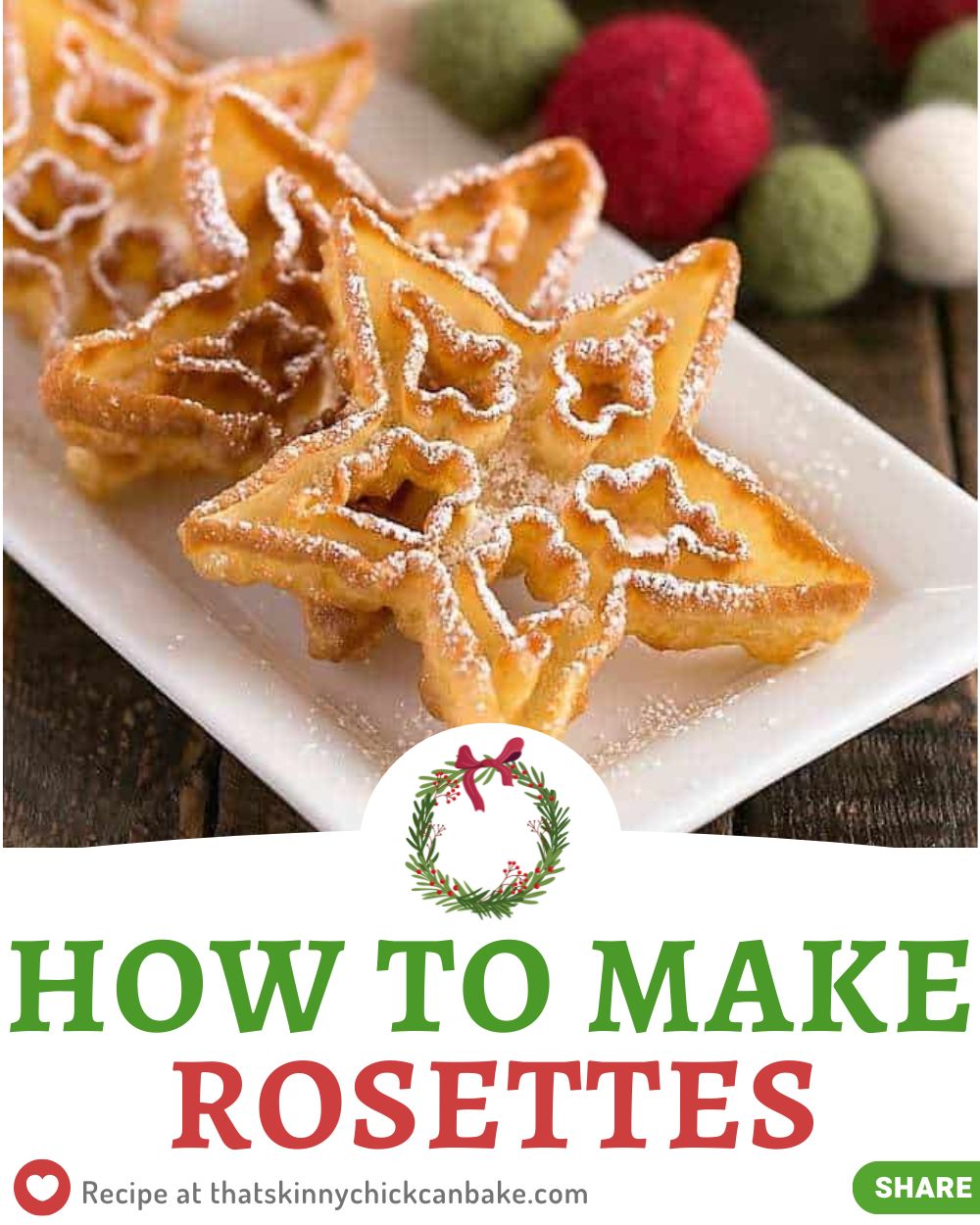
Do not use a batter that is too thick. If it’s the consistency of pancake batter, it will create a thick, doughy rosette instead of a lacy, delicate one. It should be quite thin. If your first rosette is too thick, whisk a tablespoon more milk into the batter. Test and adjust as you go.
Skipping the batter rest is a mistake. I was eager and tried to fry right after mixing. Tiny flour lumps caused uneven cooking, and the batter was too elastic, making the rosettes tough instead of crisp. That 30-minute rest relaxes the gluten and is the secret to the most delicate texture.
Finally, do not overcrowd the pot. Fry one, maybe two rosettes at a time. Adding too many at once crashes the oil temperature, leading to oily cookies. It also makes it hard to monitor each one. This is a slow, mindful process. Embrace the rhythm—it’s part of the charm.
Serving Suggestions
I love presenting rosettes piled high on a vintage cake stand or arranged in a spiral on a large, plain platter. Their intricate shapes are the decoration. They are stunning alongside a cup of strong coffee or tea, perfect for an afternoon treat or an elegant end to a dinner party.
For the holidays, I’ll drizzle some with melted chocolate or dip the edges in chocolate and then festive sprinkles. They make beautiful edible ornaments that can be hung on a cookie tree (using a dab of icing to attach a ribbon) or packaged as exquisite gifts in clear boxes.
They are a fantastic, light dessert after a rich meal. I sometimes serve them with a scoop of fruit sorbet or a dollop of lightly sweetened whipped cream and fresh berries. The crisp cookie pairs wonderfully with soft, cool elements.
Variations & Customizations
For a spiced version, add ½ teaspoon of ground cardamom or cinnamon to the flour before sifting. It gives a warm, aromatic flavor that’s perfect for the holidays. You can also add a teaspoon of citrus zest (like orange or lemon) to the batter for a bright note.
Instead of powdered sugar, try rolling the warm rosettes in a cinnamon-sugar mixture. For a savory twist (great with soups!), omit the sugar and vanilla from the batter and add a pinch of herbs like rosemary or thyme. Dust the fried crackers with grated Parmesan cheese.
Experiment with the shapes! If your iron set came with different molds, try the snowflake, star, or butterfly. They all use the same batter and technique. It’s fun to create an assorted platter of different delicate shapes.
How to Store, Freeze & Reheat
Store completely cooled rosettes in an airtight container at room temperature, with parchment paper between layers. They will stay crisp for up to 1 week. Do not refrigerate, as moisture will make them soggy. If they lose a little crispness, you can refresh them in a 300°F oven for 3-5 minutes.
You can freeze the unfried rosettes! Place the cooled, dusted cookies in a single layer in a freezer-safe container, separated by parchment. They will keep for up to 2 months. Thaw at room temperature, uncovered, for about 15 minutes. They retain their crispness beautifully.
To reheat and re-crisp, place room-temperature rosettes on a baking sheet in a 300°F oven for 3-4 minutes. Watch them closely, as they can burn quickly. Let them cool for a minute before serving. Do not microwave, as it will make them chewy and ruin their delicate texture.
Conclusion
Mastering rosettes has been one of my most rewarding kitchen journeys. They taught me patience, precision, and the joy of creating something breathtakingly beautiful from a few simple ingredients. I hope this recipe gives you the confidence to try, to embrace a little fried magic, and to create your own plate of delicate, edible lace. Now, find that iron, heat that oil, and get ready for a truly special baking adventure.