
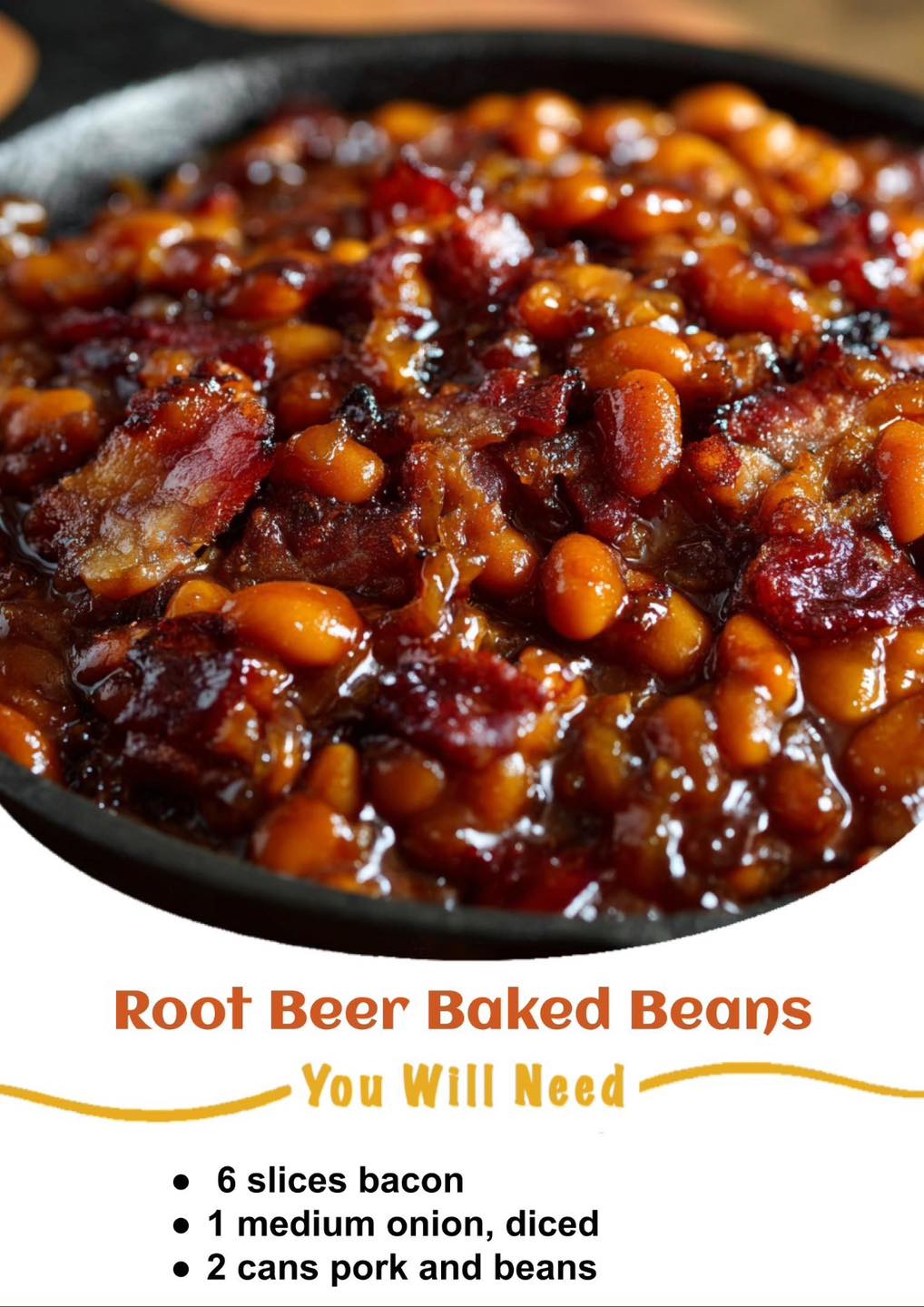
Using diet root beer was another early mistake of mine. Without the real sugar, the sauce never properly reduced and caramelized. It stayed thin, watery, and had an odd artificial sweetness. The full sugar is essential for the chemistry of the dish, creating that perfect sticky glaze.
Draining the cans of beans is a common error. The starchy liquid in the can is part of the sauce base and helps thicken the final dish. If you drain them, you’ll start with too little liquid and the beans can dry out or burn before the flavors have a chance to develop.
Finally, skipping the step of crisping the bacon separately and using the rendered fat to cook the onions is a missed opportunity for layering flavor. If you just dump raw bacon pieces in with the beans, they’ll steam and become rubbery, and you lose the chance to infuse the onions with that smoky bacon essence. Take the extra five minutes—it’s worth it.
Serving Suggestions
I love serving these beans straight from the Dutch oven at the table. They are the quintessential side dish for any grilled meat: piled next to juicy burgers, smoky ribs, or simple grilled chicken breasts. The sweet, savory, smoky beans complement charred flavors perfectly.
For a classic backyard picnic or potluck, I transfer them to a colorful, rustic serving dish. They hold heat beautifully and are always a hit. I like to garnish with an extra sprinkle of fresh chopped parsley or green onion right before serving to add a pop of color and a fresh note.
While they’re a side dish superstar, these beans are also fantastic as a main event over a baked potato or a sweet potato. Just spoon a generous helping over a split, fluffy potato and top with a dollop of sour cream and some shredded cheddar for the ultimate comforting meal.
Variations & Customizations
For a “Bourbon” version, replace 1/4 cup of the root beer with bourbon. Add it when you add the other liquids and let it simmer on the stovetop for a few minutes before baking to cook off the alcohol, leaving behind a wonderful oaky warmth.
If you like a kick, add a tablespoon of diced chipotle peppers in adobo sauce or a teaspoon of cayenne pepper to the pot with the other sauces. The spicy heat plays wonderfully against the sweet root beer and brown sugar. You can also add a drained can of kidney beans or black beans for more texture and color.
For a meatier version, brown 1/2 pound of ground beef or crumbled breakfast sausage with the bacon. Drain any excess grease before adding the onions. This turns the side dish into a incredibly hearty, almost meal-in-itself cowboy-style beans that are perfect for feeding a hungry crowd.
How to Store, Freeze & Reheat
Once cooled, I store leftover beans in an airtight container in the refrigerator for up to 5 days. The flavors continue to develop, making them even better the next day. They will thicken significantly when cold.
These beans freeze exceptionally well. I cool them completely, then portion them into freezer-safe containers or heavy-duty zip-top bags, leaving a little room for expansion. They will keep for up to 3 months. This is a fantastic way to make a big batch for future cookouts.
To reheat, I thaw frozen beans overnight in the fridge. I then warm them gently in a saucepan over low heat, stirring often and adding a small splash of water, root beer, or broth to loosen the sauce back to its perfect consistency. You can also reheat them in the oven, covered, at 325°F until bubbly. Avoid the microwave on high power, as it can make the beans mealy.
Conclusion
Root Beer Baked Beans are my not-so-secret weapon for turning an ordinary side dish into the talk of the table. They’ve taught me that the most memorable recipes often come from a single, surprising twist on a classic. I hope you’ll give this incredibly easy, flavor-packed recipe a try at your next gathering. Just be prepared to share the recipe—because once people taste them, they’ll definitely ask. Happy cooking