
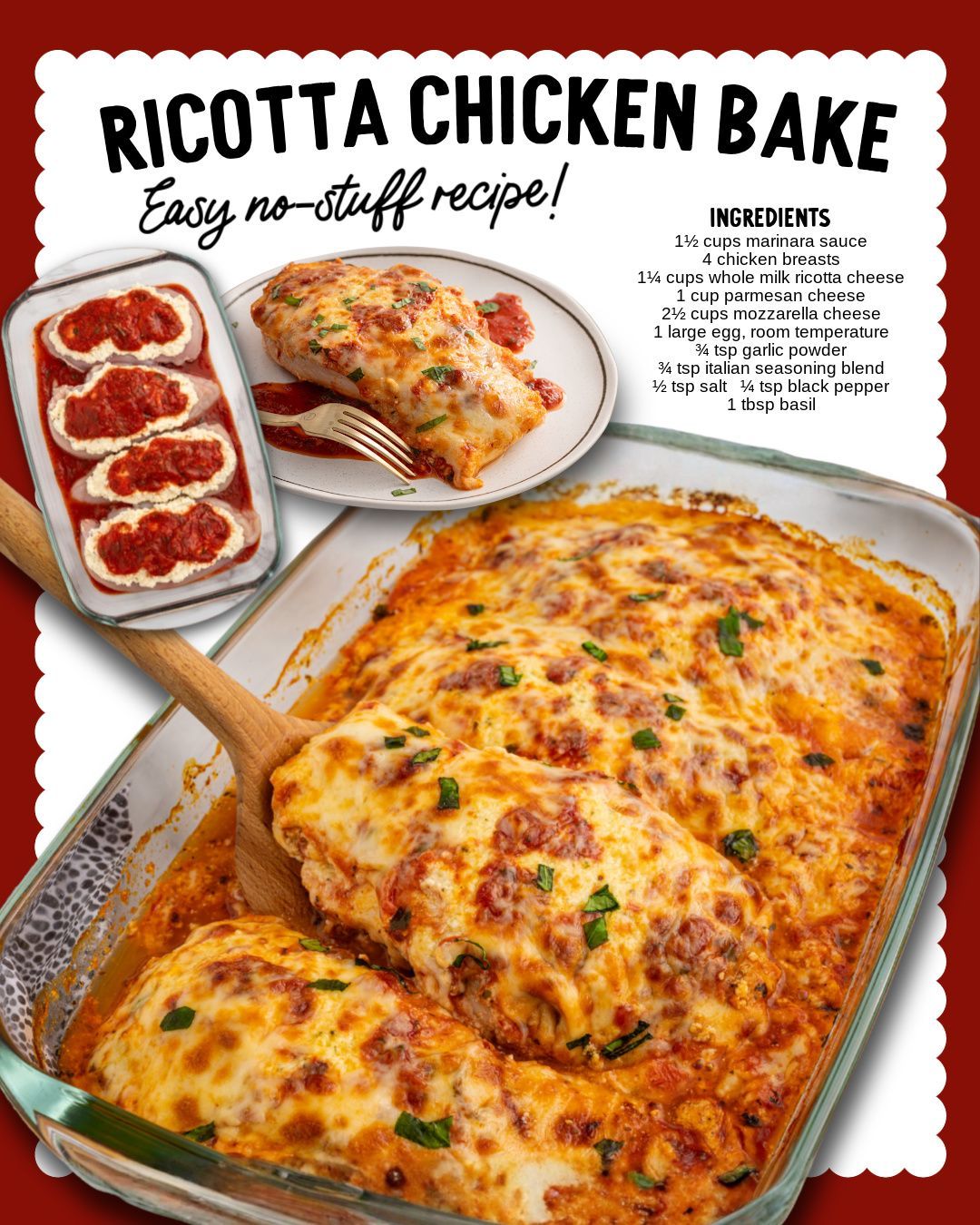
After everything is layered, I bake the dish uncovered for about 35–40 minutes. When the oven timer goes off, I check to make sure the chicken reaches an internal temperature of 165°F. The top should be melted, bubbly, and beautifully golden brown. I like to let the dish rest for a few minutes before serving because the cheese settles and thickens slightly, making it easier to plate. This also gives the sauce time to soak into the bottom layer of the ricotta topping, creating that irresistible creamy-tomato fusion.
Pro Tips for Best Results
One of the biggest tips I learned while testing this dish is to use room-temperature ricotta and egg. Cold dairy straight from the refrigerator doesn’t blend as smoothly and can cause the mixture to bake unevenly. Letting everything sit out for about 20 minutes before mixing makes a noticeable difference in the final texture. Your ricotta topping will be silkier and more uniform when it bakes.
Another important tip is seasoning your chicken before layering on the ricotta. Even though the ricotta mixture has salt and spices, a light sprinkle of salt and pepper directly on the chicken breasts helps ensure every bite is flavorful. I tried skipping this step once, and the chicken tasted a little flat beneath all the cheese. Just a quick sprinkle makes all the difference.
I also recommend choosing a marinara sauce you really enjoy. This recipe has simple components, so each ingredient shines. A sauce that’s too thin or too acidic can throw off the balance. I prefer a hearty, thicker marinara because it reduces slightly while baking and creates that lush layer under the chicken instead of becoming watery.
Finally, for an extra gooey and golden top, broil the dish for the last 2 minutes of baking. I’ve done this many times, and watching the mozzarella bubble and brown is incredibly satisfying. Just keep a close eye on it—broiling can turn perfect cheese into burnt cheese in seconds.
Common Mistakes to Avoid
One mistake I made the first time was not draining any excess liquid from the ricotta. Some brands are wetter than others, and if your ricotta is very loose, the mixture may become runny while baking. If you notice your ricotta is unusually moist, you can quickly blot it with a paper towel or let it sit in a fine mesh strainer for a few minutes.(See the next page below to continue…)