
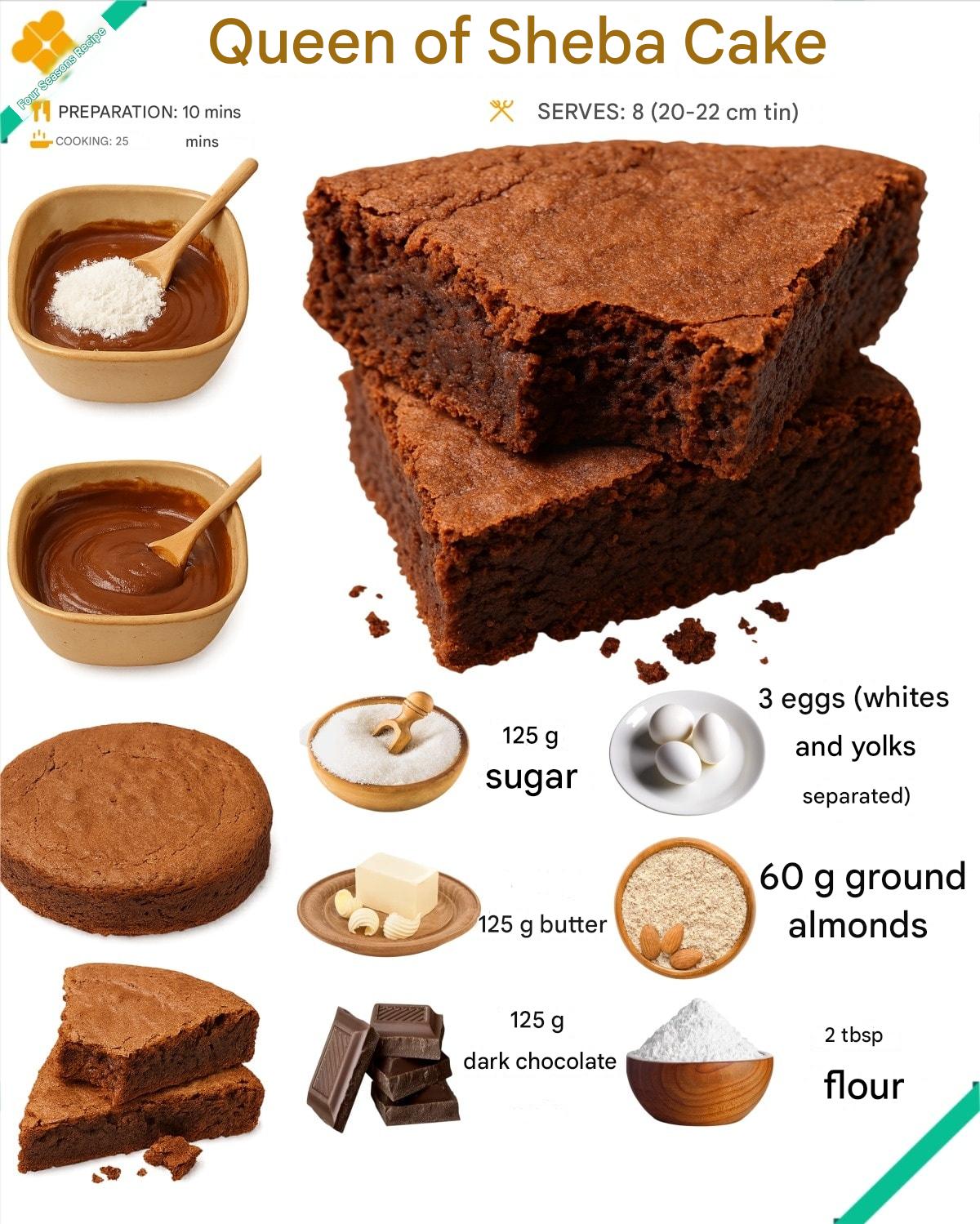
Finally, I gently fold the egg whites into the batter in stages, pour it into a lined pan, and smooth the surface. I bake until the top is set but still tender, knowing it will continue to firm up as it cools. That balance is what makes this cake unforgettable.
Pro Tips for Best Results
I tested this cake with several types of chocolate, and I quickly learned that quality matters more here than almost any other dessert I make. A well-balanced dark chocolate creates depth without bitterness, while cheaper options flatten the flavor and overwhelm the delicate almond notes.
Separating the eggs properly is another lesson I learned the hard way. Even a trace of yolk in the whites can prevent proper whipping, so I now separate them carefully and slowly. It’s a small step, but it dramatically improves the final texture.
I also discovered that letting the chocolate mixture cool slightly before adding the eggs prevents curdling. Adding eggs to hot chocolate creates graininess, and once that happens, it’s nearly impossible to fix. A little patience saves the entire batter.
Finally, I’ve learned to trust my instincts when baking time approaches. Slightly underbaking is far better than overbaking. The cake should feel set but soft, almost shy in the center, because it firms up beautifully as it rests.
Common Mistakes to Avoid
The biggest mistake I made the first time was overbaking the cake because I expected it to feel firm all the way through. This cake is not meant to be dry or crumbly, and leaving it in too long strips away its signature tenderness and rich interior.
Another common mistake is overmixing the batter after adding the egg whites. I’ve done this when distracted, and the result was a dense, heavy cake. Gentle folding preserves the air you worked so hard to incorporate and keeps the texture light.
Using cold eggs straight from the refrigerator is another error I learned to avoid. Cold eggs don’t blend smoothly into the batter and can affect the emulsion. Letting them reach room temperature ensures a smoother, more stable mixture from start to finish.(See the next page below to continue…)