
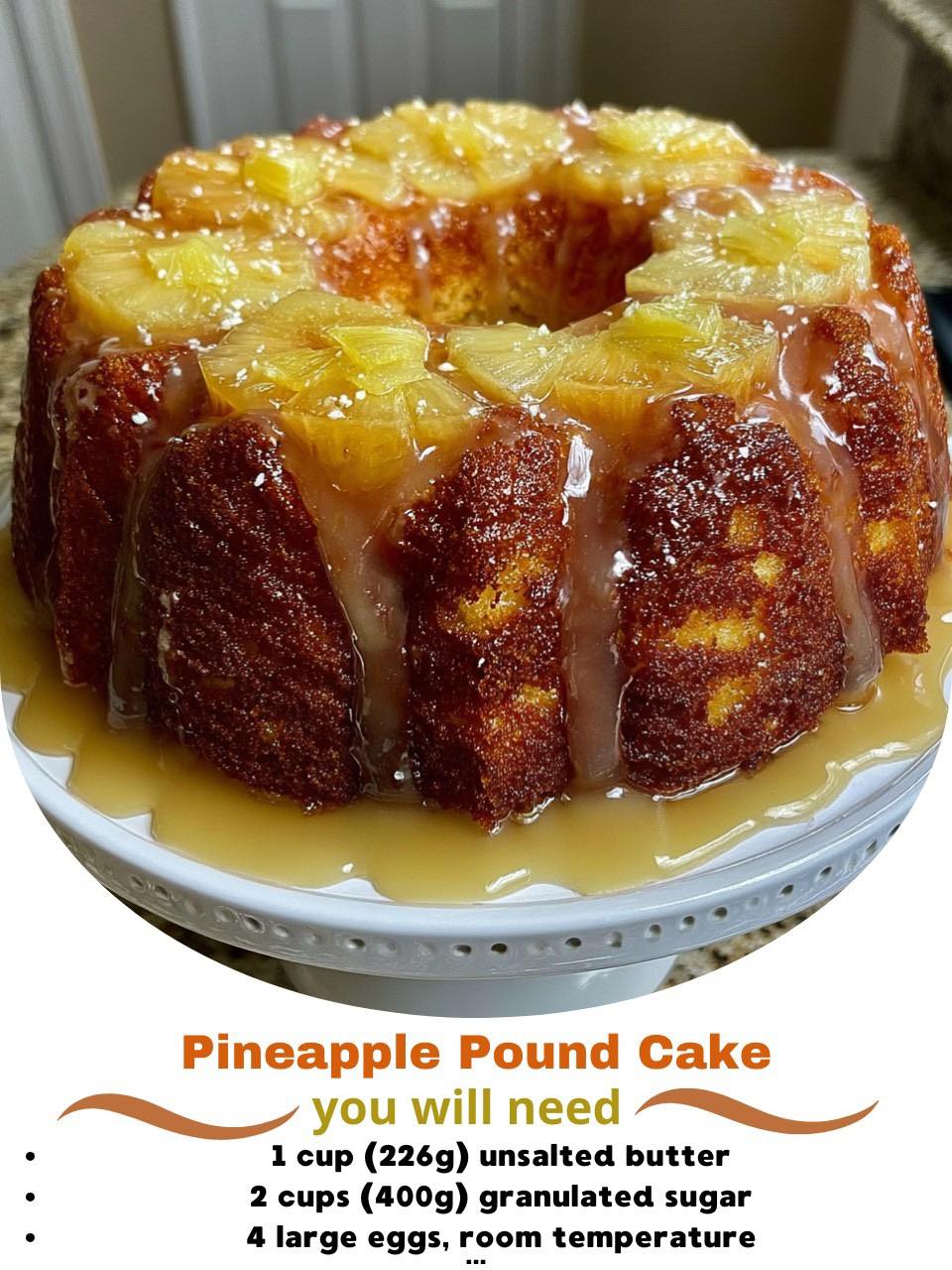
Pineapple Pound Cake is a buttery, velvety loaf (or Bundt) cake with a sunny pop of tropical flavor in every bite. Crushed pineapple gets folded into a classic pound cake batter, adding moisture and gentle fruitiness without turning the crumb heavy or wet. Finished with a simple pineapple glaze, this cake is perfect for potlucks, brunches, holidays, or anytime you want an old-fashioned, shareable dessert that slices beautifully.
Equipment You Will Need
- 10–12 cup Bundt pan or large loaf pan
- Mixing bowls (one large, one medium)
- Hand mixer or stand mixer
- Whisk
- Rubber spatula
- Measuring cups and spoons
- Fine-mesh strainer (for draining pineapple)
- Wire cooling rack
Ingredients List
For the pineapple pound cake
- 1 cup (2 sticks) unsalted butter, softened
- 2 cups granulated sugar
- 4 large eggs, room temperature
- 2 teaspoons vanilla extract
- 2½ cups all-purpose flour
- 1½ teaspoons baking powder
- ½ teaspoon salt
- ½ cup sour cream or buttermilk, room temperature
- 1 cup crushed pineapple, well drained (reserve juice for glaze)
For the pineapple glaze
- 1½ cups powdered sugar
- 2–4 tablespoons reserved pineapple juice
- ½ teaspoon vanilla extract (optional)
Step-by-Step Instructions
Preheat your oven to 325°F (165°C). Generously grease and flour a Bundt pan or large loaf pan, making sure to get into every nook and cranny so the cake releases cleanly. Place the crushed pineapple in a fine-mesh strainer set over a bowl and press gently with the back of a spoon to remove as much juice as possible, reserving the liquid for the glaze.
In a medium bowl, whisk together the flour, baking powder, and salt. Set aside. In a large mixing bowl, beat the softened butter and granulated sugar together with a mixer on medium speed until very light and fluffy, about 3–5 minutes. Proper creaming at this stage gives the pound cake its fine, tender crumb. Scrape down the sides of the bowl as needed.
Add the eggs one at a time, beating well after each addition until fully incorporated. Mix in the vanilla extract. The batter should look smooth, thick, and creamy. With the mixer on low speed, add about one-third of the flour mixture, then half of the sour cream or buttermilk. Repeat, alternating dry ingredients with sour cream, and finish with the remaining flour mixture, mixing just until combined after each addition.
Gently fold in the well-drained crushed pineapple with a spatula, distributing it evenly through the batter without overmixing. The batter will be thick but spreadable. Spoon it into the prepared pan and smooth the top with a spatula, tapping the pan lightly on the counter to release any large air bubbles.
Bake at 325°F for 60–75 minutes, depending on your pan and oven, until the top is golden and a toothpick or skewer inserted into the center comes out clean or with just a few moist crumbs. If the cake is browning too quickly toward the end, tent it loosely with foil and continue baking until done.
Once baked, remove the cake from the oven and place it on a wire rack. Let it cool in the pan for about 15–20 minutes so it can firm up and pull slightly from the sides. Run a thin knife gently around the edges if needed, then carefully invert the cake onto the cooling rack or serving platter. Let it cool until just barely warm before glazing.
To make the glaze, whisk the powdered sugar, 2 tablespoons of reserved pineapple juice, and vanilla (if using) in a bowl until smooth. Add more juice a teaspoon at a time until you reach a thick but pourable consistency that will slowly run down the sides of the cake. Drizzle the glaze generously over the cooled (or just slightly warm) cake, letting it drip naturally. Allow the glaze to set for at least 20–30 minutes before slicing.
Expert Tips for Success
Bring butter, eggs, and sour cream to room temperature so they blend smoothly and create a uniform batter. Cold ingredients can cause curdling or uneven texture. Cream the butter and sugar long enough to become pale and fluffy; this step traps air and helps the dense pound cake rise evenly without tunneling.
Drain the pineapple very well so the extra moisture doesn’t weigh down the crumb. Press gently in the strainer but don’t mash it into puree; small bits of pineapple give nice texture. If your batter looks very loose after adding pineapple, you can fold in an extra tablespoon or two of flour to balance it.
Check doneness in several spots since Bundt cakes can bake unevenly. The cake should feel springy on top and pull slightly from the sides of the pan. Letting it cool briefly in the pan (but not fully) helps it release without sticking or breaking.
Variations and Substitutions
For a stronger tropical flavor, add ½–1 teaspoon of pineapple extract along with the vanilla, or replace some vanilla entirely. You can also fold in ½–1 cup of sweetened shredded coconut with the pineapple for a piña colada twist, and top the glazed cake with toasted coconut flakes.
If you like a nutty crunch, add ½–¾ cup of finely chopped pecans or macadamia nuts to the batter, or sprinkle them over the glaze before it sets. For a tangier cake, use buttermilk instead of sour cream, or add a teaspoon of lemon zest to brighten the flavor.
You can also bake the batter in two loaf pans (adjusting baking time down slightly) or as mini loaves or bundtlets for gifting; just keep an eye on them and start checking much earlier, since smaller cakes bake faster.
Serving Suggestions
Serve Pineapple Pound Cake at room temperature, sliced thickly with coffee or tea for an afternoon treat or brunch dessert. It pairs beautifully with fresh fruit—especially berries or extra pineapple chunks—and a dollop of lightly sweetened whipped cream.
For a more decadent dessert, plate slices with a scoop of vanilla or coconut ice cream and a drizzle of caramel or extra pineapple juice reduction. The cake also works well as part of a dessert table, since it holds its shape, slices cleanly, and looks impressive with its glossy glaze.
Storage, Freezing, and Make-Ahead Tips
Once the glaze has set, cover the cake tightly with plastic wrap or store it in an airtight cake container at room temperature for up to 3 days. If your kitchen is very warm, you can refrigerate it; let slices come to room temperature before serving for the best texture and flavor.
To freeze, wrap the whole cooled (unglazed or lightly glazed) cake or individual slices tightly in plastic wrap, then in foil or a freezer bag. Freeze for up to 2–3 months. Thaw overnight in the refrigerator or at room temperature, then refresh with a new drizzle of glaze if desired before serving.