
Avoid using cold cream cheese. I’ve tried to soften it quickly in the microwave, and it created hot spots that melted into the batter, resulting in an oily, separated filling. True room-temperature softening is the only way. If you’re short on time, cut the blocks into small cubes; they’ll soften in 20-30 minutes.
Do not overbake the cheesecakes. They continue to cook from residual heat as they cool. If you bake them until the centers are completely firm, they will be dry and crumbly once chilled. The centers should still have a slight wobble when you gently shake the pan. They will set up perfectly in the fridge.
And finally, don’t skip the cupcake liners, even if your pan is non-stick. The pecan filling can stick and make removal a nightmare. Liners guarantee a clean release and make serving effortless. I prefer foil liners as they peel away more cleanly than paper ones.
Serving Suggestions
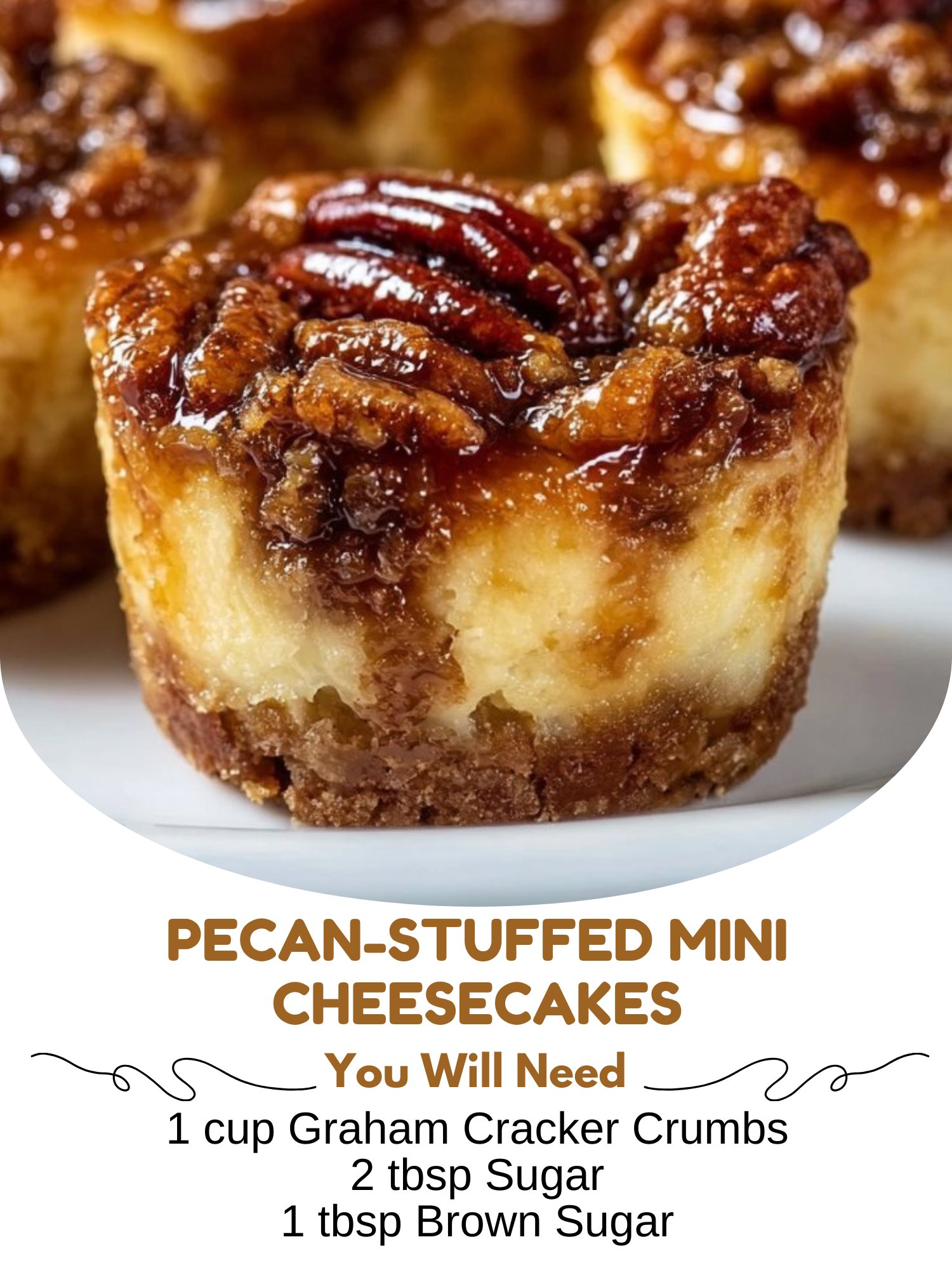
I love serving these straight from the fridge, garnished simply. A single perfect pecan half placed on top of each cheesecake right before serving looks elegant. A tiny dollop of freshly whipped cream and a light drizzle of salted caramel or chocolate sauce turns them into a restaurant-quality dessert.
For a party, I arrange them on a tiered cake stand. They’re the perfect finger food for a dessert table—no plates or forks needed, just pure, portable indulgence. I sometimes offer small bowls of different toppings on the side, like hot fudge, berry compote, or extra candied pecans, so guests can customize their bite.
They also make a wonderful homemade gift. Once chilled, I place them in decorative mini cupcake boxes or arrange them in a pretty pastry box lined with parchment. They’re a thoughtful, impressive gift for teachers, neighbors, or hosts that shows you went the extra mile.
Variations & Customizations
The pecan filling is wonderfully adaptable. For a “Turtle” version, I mix mini chocolate chips into the pecan filling and drizzle the finished cheesecakes with chocolate and caramel. You can also swap the pecans for chopped, toasted walnuts or almonds for a different flavor profile.
Try changing up the crust! Instead of graham crackers, use crushed vanilla wafers, gingersnaps (for a fall spice twist), or even chocolate wafer cookies. The process is exactly the same. For a nuttier crust, you can replace a quarter of the graham cracker crumbs with finely ground pecans.
For the filling, you can infuse it with different flavors. Add a tablespoon of lemon zest for brightness, a tablespoon of instant espresso powder for a mocha touch, or swap the vanilla for almond extract. You can even fold a swirl of fruit puree, like raspberry, into the batter before adding the pecan core.
How to Store, Freeze & Reheat
Store these mini cheesecakes covered in the refrigerator. They will keep beautifully for up to 5 days. The flavors actually improve after a day, making them a fantastic make-ahead dessert. Just wait to add any whipped cream or fresh garnishes until right before serving.
They freeze exceptionally well for long-term storage. Once completely chilled, freeze them solid on a baking sheet, then transfer to an airtight container or freezer bag with parchment between layers. They will keep for up to 2 months. Thaw overnight in the refrigerator.
There is no need to reheat these cheesecakes; they are meant to be served chilled. If you’ve frozen them, simply let them thaw in the fridge. Serving them cold ensures the perfect firm-yet-creamy texture that makes them so irresistible.
Conclusion
These Pecan-Stuffed Mini Cheesecakes are a celebration in a bite—proof that a little hidden surprise can turn a classic dessert into something unforgettable. They’ve brought so much delight to my table and to those I’ve shared them with. I hope this recipe inspires you to create your own little moments of sweet magic. Now, go toast those pecans, soften that cream cheese, and get ready to bake a batch of these perfectly portioned, secretly stuffed treasures.