
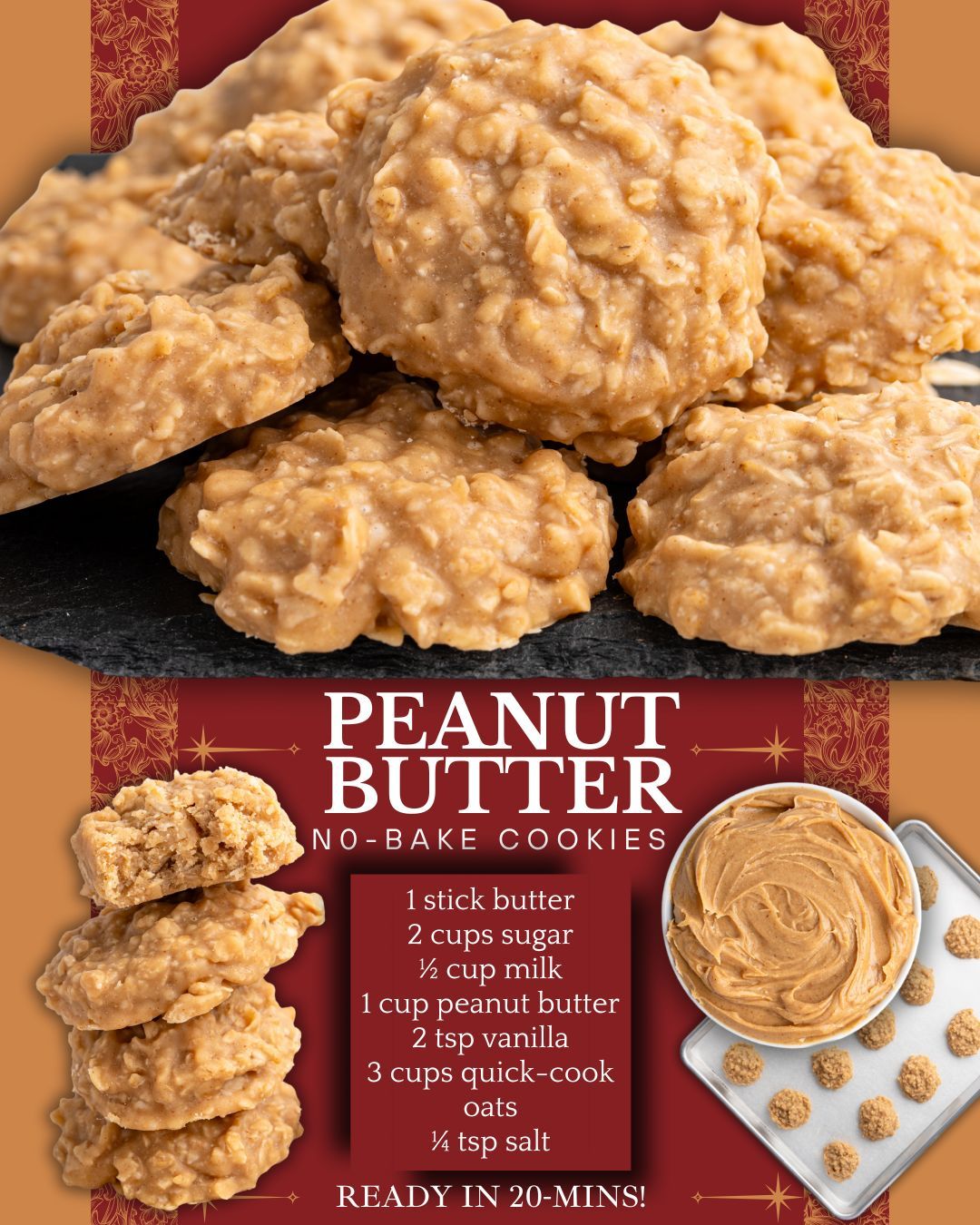
At this point, I work quickly using a cookie scoop to drop little mounds onto the parchment paper. The mixture sets fast, so you don’t want to hesitate. If it starts thickening too much toward the end, I sometimes use my hands (carefully, once it cools slightly) to press the last bits into cookie form. Then I just let them cool for about 20 to 30 minutes until firm.
Pro Tips for Best Results
One of the biggest things I’ve learned is that boiling time is everything. I tested the timing so many times—30 seconds, 45 seconds, 90 seconds—and the only one that consistently works is exactly one minute at a rolling boil. If you start the timer before it reaches a full boil, your cookies will stay gooey forever. If you let it go too long, they end up dry. Once you nail this timing, the rest of the recipe becomes foolproof.
Another tip that made a huge difference for me is preparing the peanut butter ahead of time. I measure it and leave it right next to the stove so that the moment the mixture is done boiling, I can dump it right in. Peanut butter melts very quickly, but your mixture starts cooling the moment it’s off the heat, so you want to work fast to keep everything smooth and workable.
I also found that using quick oats instead of old-fashioned oats isn’t optional if you want the classic texture. Quick oats absorb the mixture better, giving you a cookie that holds together beautifully. Every time I tried old-fashioned oats “just to see,” I ended up with loose, chunky cookies that never felt quite right.
Finally, don’t be afraid to adjust the size of your cookies. Sometimes I make them tiny if I’m feeding a crowd, and sometimes I scoop them larger for a more indulgent dessert. The setting time may vary slightly, but both sizes work wonderfully.
Common Mistakes to Avoid
The first mistake I ever made with no-bakes was stirring constantly while the sugar mixture boiled. I thought I was helping it, but all I did was prevent it from coming to the proper temperature. Once you see a rolling boil—big, steady bubbles—you let it be and just start your timer.
Another common issue is using natural peanut butter. I love natural peanut butter for toast, but for these cookies, it simply doesn’t work the same way. Natural peanut butter separates, creating oily cookies that don’t set well. Stick with the classic creamy stuff, and everything will turn out right.
A mistake I had to learn the hard way was dropping the cookies onto a warm or humid surface. If you place them on a warm countertop or stack them too soon after setting, they can stick together or remain soft. Let them cool completely on parchment paper and resist stacking them until they’re fully firm.
And lastly, don’t eyeball the oats. I did this once thinking, “Eh, three cups looks about right,” and the cookies were far too dry. Precise measuring gives you that perfect chewy texture every single time.
Serving Suggestions
I personally love serving these cookies slightly warm, just after they’ve set but while they still have a little softness in the center. They almost melt in your mouth that way. If I’m bringing them to a gathering, I arrange them on a board with some peanut butter cups because the combination always gets attention.(See the next page below to continue…)