
Don’t let the mixture boil too aggressively. A rapid boil can scorch the sugar or cause it to darken. You want a steady, bubbling simmer—nothing too wild. Sugar burns easily, and burnt fudge has a bitterness you can’t mask.
And finally, avoid using cold peanut butter. If your peanut butter is straight from the fridge, it cools the mixture too quickly, making it difficult to stir smooth. Always use room-temperature peanut butter for silky results.
Serving Suggestions
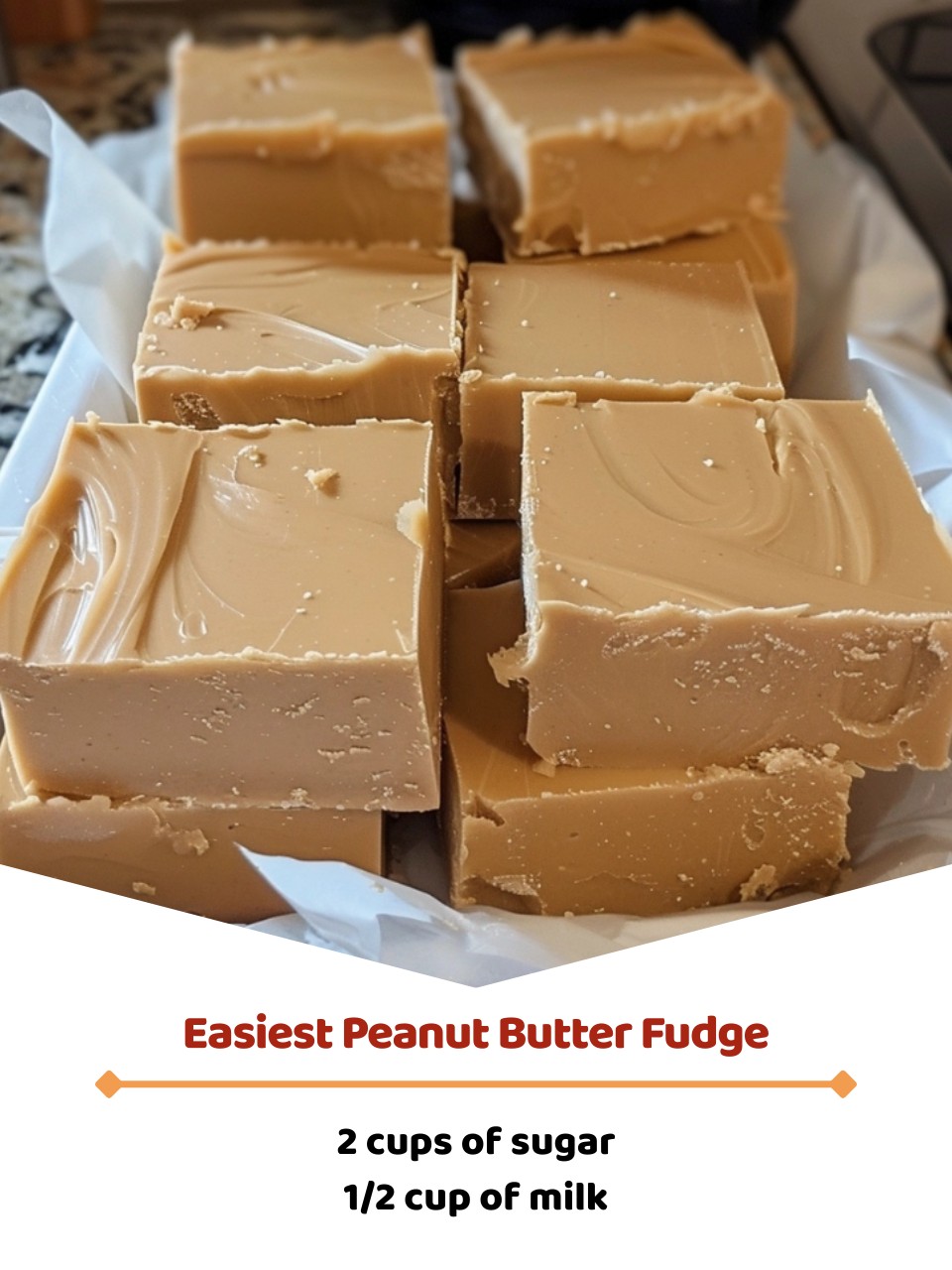
I love serving this Peanut Butter Fudge in clean, even squares on a festive platter. Because the fudge cuts so beautifully, the presentation always looks elegant without any extra effort. A sprinkle of flaky sea salt on top adds a gourmet touch and balances the sweetness perfectly.
Another serving idea is to layer the fudge pieces in small treat boxes lined with parchment. It makes a beautiful edible gift, especially during the holidays. I’ve even seen people wrap individual squares like candies for party favors—adorable and delicious.
For dessert boards, I pair this fudge with chocolate-dipped pretzels, fresh fruit, and little bites of caramel. The creamy peanut butter flavor works well with so many textures and colors.
If you’re serving kids, tiny bite-sized cubes are a hit. Something about mini fudge pieces keeps them coming back for more, and adults secretly love the tiny bites too.
Variations & Customizations
One variation I love is adding a swirl of melted chocolate on top before the fudge sets. Peanut butter and chocolate are soulmates, and a delicate swirl looks gorgeous. Just drizzle and run a toothpick through it.
Another fun twist is mixing in crushed graham crackers. It creates a flavor reminiscent of peanut butter pie, adding a subtle crunchy texture that breaks up the creaminess.
If you prefer sweeter fudge, add an extra tablespoon of vanilla or mix in mini marshmallows. They melt slightly and create a creamy-marshmallow ripple.
For a salty-sweet variation, fold in chopped salted peanuts or pretzel pieces. The contrast between the silky fudge and the crunchy, salty mix-ins is pure bliss.
How to Store, Freeze & Reheat
This fudge stores exceptionally well. I usually keep it in an airtight container at room temperature, where it stays fresh and smooth for up to a week. Storing it at room temperature preserves the creamy texture best.
If you prefer to refrigerate it, you can—but wrap it tightly to prevent the exterior from drying out. The fudge becomes firmer in the fridge but still tasty.
Freezing works beautifully. Slice the fudge first, then separate the pieces with parchment and place them in a freezer bag. They thaw quickly at room temperature—usually within 20 minutes—and taste exactly like freshly made fudge.
This recipe doesn’t require reheating, but if you want a softer texture, letting chilled fudge sit out for a few minutes works perfectly.
Nutrition Information
Peanut Butter Fudge is definitely a treat, but what I love about this recipe is how simple and straightforward the ingredients are. No preservatives, no mysterious syrups—just sugar, milk, peanut butter, and vanilla. That simplicity makes it feel less like candy and more like an old-fashioned homemade sweet.
Peanut butter adds protein and healthy fats, which give the fudge a satisfying richness. Because the recipe contains no butter, the peanut butter provides all the creaminess. The sugar content is high—as expected with fudge—but the balance of flavors makes each piece feel indulgent without needing to eat a large amount.
If you want a slightly lighter option, you can reduce the sugar by ¼ cup, though the texture becomes slightly softer. Or you can use a natural peanut butter with no added sugar, though that changes the consistency as well.
Overall, it’s a nostalgic dessert made with real, familiar ingredients—perfect for occasional sweet cravings or special gatherings.
FAQ Section
Can I use crunchy peanut butter?
Yes, but it changes the texture. Crunchy peanut butter creates a more rustic fudge with small peanut pieces throughout. If you want a smooth, creamy texture, stick with traditional creamy peanut butter.
Do I need a candy thermometer?
No, and that’s what makes this recipe so approachable. The simmering stage is forgiving, and timing it is perfectly reliable. A steady bubble for about 3 minutes does the trick.
My fudge didn’t set—what happened?
It likely needed a longer simmer, or the sugar didn’t dissolve fully. Undercooking is the most common reason for soft fudge. Try simmering a little longer next time.
Can I double the recipe?
Absolutely. Just use a larger saucepan, and increase the pan size to a 9×13 dish. The simmer time stays close to the same—maybe just a touch longer.
Why is my fudge grainy?
Graininess comes from stirring too much after the sugar mixture begins to bubble or from sugar crystals forming on the sides of the pan. Stir gently and avoid scraping crystallized bits into the mixture.
Conclusion
This Peanut Butter Fudge has become one of my go-to recipes not only because it’s fast and foolproof, but because it captures the kind of comfort only old-fashioned sweets can bring. Every time I slice into that smooth, creamy slab, I’m reminded of how beautifully simple ingredients can create something unbelievably delicious. Whether you’re making it for a celebration, gifting it to someone special, or enjoying a quiet moment in the kitchen, this fudge delivers joy in every bite. If you love effortless desserts with big flavor, this recipe will quickly become a favorite in your home too.