
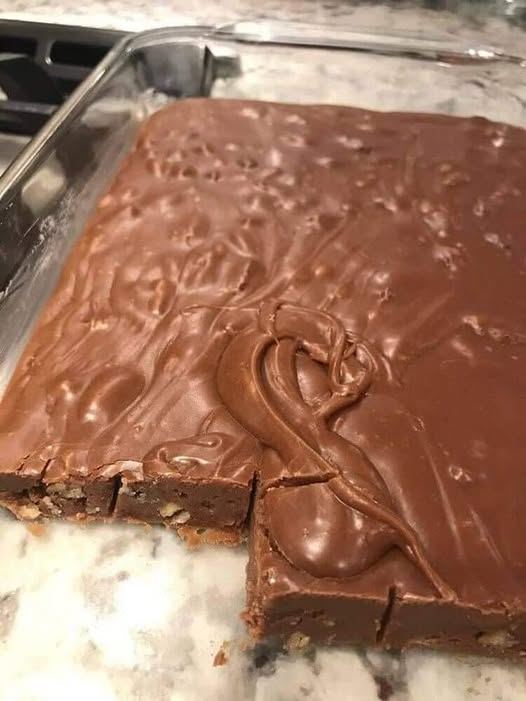
Do not turn up the heat to melt the chocolate faster. Impatience here is the enemy. High heat will cause the butter to separate and the chocolate to scorch on the bottom of the pan, giving your fudge a nasty, burnt undertone. Low and slow is the only way.
Undermixing after adding the sugar is a common pitfall. When you first add the sugar, it looks like a disaster—dry and un-mixable. Keep stirring with faith! The heat and moisture from the chocolate mixture will eventually incorporate it. Stopping too soon leaves you with powdery, dry streaks in your finished fudge.
Using old or lumpy confectioners’ sugar is a silent fudge-killer. If your sugar has been in the pantry for a while, it compactifies. Even if you sift it, the flavor can be a bit off. For best results, use a fresh box or bag of confectioners’ sugar. This ensures the purest sweetness and the silkiest texture.
Serving Suggestions
I like serving this fudge cut into small, elegant squares on a simple white platter. It’s so rich that small pieces are perfect. For the holidays, I sometimes dust the top lightly with edible gold dust or sprinkle a little flaky sea salt over the top before it sets for a gourmet touch.
It makes a phenomenal gift. I stack pieces in small, clear treat bags tied with a ribbon, or use small holiday tins lined with parchment. Because it’s so sturdy and doesn’t need refrigeration, it travels and ships beautifully. It’s the most appreciated homemade gift I give.
For a dessert platter, I pair it with something light and tart, like fresh raspberries or orange segments. The bright acidity of the fruit cuts through the intense richness of the chocolate and makes the whole experience feel more balanced and sophisticated.
Variations & Customizations
For a delightful twist, I’ve swapped the vanilla extract for 1/2 teaspoon of peppermint extract and folded in crushed candy canes. It’s a festive, wintery delight that always disappears first at cookie exchanges. Just add the extract with the vanilla and fold in the crushed candy with (or instead of) the nuts.
You can easily make this with different chips. I’ve had great success with dark chocolate chips for a more intense, less sweet bar, and even with butterscotch chips for a totally different, caramel-like flavor. The method remains exactly the same.
Mix-ins are where you can get creative. Instead of nuts, try folding in 1/2 cup of chopped dried cherries, cranberries, or even mini marshmallows and a handful of graham cracker crumbs for a “s’mores” fudge. Just ensure any add-ins are at room temperature so they don’t cause the fudge to set too quickly.
How to Store, Freeze & Reheat
This fudge stores brilliantly at room temperature. I keep it in an airtight container, layered between sheets of parchment paper, in a cool, dry spot. It stays perfectly creamy and delicious for up to two weeks. There’s no need to refrigerate it, and doing so can actually cause it to dry out or pick up other odors.
Yes, you can freeze it! Wrap the whole slab or individual pieces tightly in plastic wrap, then place them in a heavy-duty freezer bag. It will keep for up to 3 months. This is my secret for always having a ready-made dessert. Thaw it overnight in the refrigerator or for a few hours at room temperature.
There is no need to reheat this fudge. It is meant to be enjoyed at room temperature for that ideal, soft-yet-firm texture. Microwaving it will just melt it back into a gooey state. If it ever seems too hard straight from the fridge, simply let it sit on the counter for 30 minutes to soften up perfectly.
Conclusion
Paula Deen’s 5-Minute Fudge is more than a recipe; it’s a confidence-builder and a joy-bringer. It proved to me that spectacular homemade candy doesn’t require special skills or equipment, just a good recipe and a little faith during the stirring. I hope this recipe becomes your secret weapon for effortless generosity and instant chocolate satisfaction, just as it has for me. Now, go make some magic—you’re five minutes away from fudge perfection.