
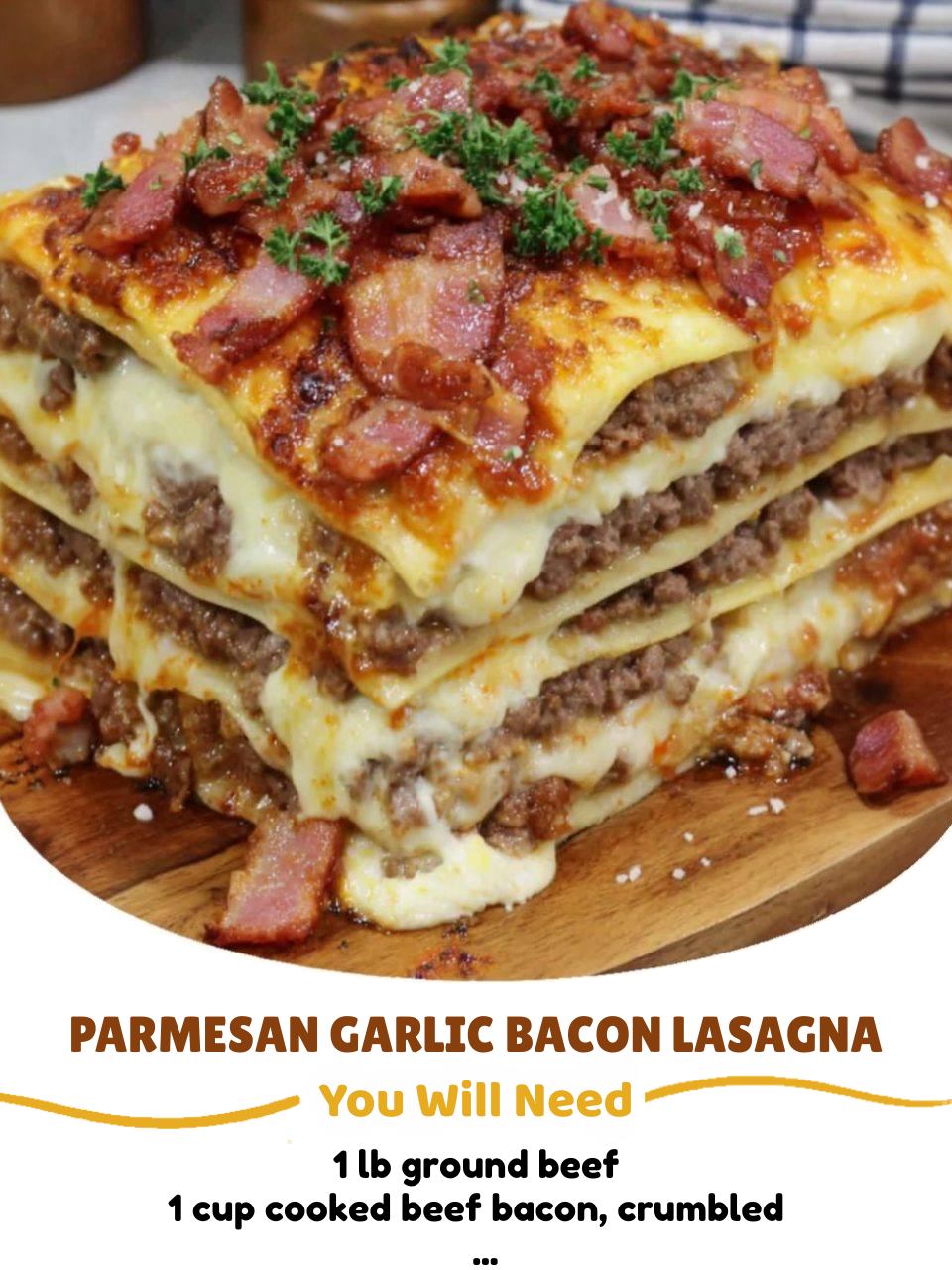
Parmesan Garlic Bacon Lasagna is the kind of indulgent, irresistible comfort food that brings everyone running to the table the moment it leaves the oven. With layers of tender lasagna noodles, juicy ground beef, smoky crumbled bacon, and a rich parmesan–garlic cream sauce that melts into every corner, this dish is a savory dream come true.
Unlike traditional red-sauce lasagna, this version leans fully into creamy, cheesy decadence, creating a velvety texture in each forkful. It’s layered tall, baked until golden and bubbling, and finished with a generous crown of bacon that adds salty crunch and bold flavor. Whether you’re serving it for Sunday dinner, special occasions, or weeknight comfort, this lasagna is pure cozy perfection.
Equipment You Will Need
- 9×13-inch baking dish
- Large skillet
- Medium saucepan
- Mixing bowls
- Whisk
- Wooden spoon or spatula
- Large pot for boiling noodles
- Colander
- Measuring cups and spoons
- Knife and cutting board
- Aluminum foil
Ingredients List
- Beef Layer
- 1 lb ground beef
- 1 medium onion, diced
- 3 cloves garlic, minced
- 1 tsp salt
- 1 tsp black pepper
- 1 tsp garlic powder
- 1 tsp onion powder
- 1 tbsp Worcestershire sauce
- Parmesan Garlic Cream Sauce
- 4 tbsp butter
- 4 tbsp all-purpose flour
- 3 cups whole milk
- 1 cup heavy cream
- 1 ½ cups grated parmesan cheese
- 1 tsp garlic powder
- ½ tsp Italian seasoning
- ½ tsp salt
- ½ tsp black pepper
- Lasagna Layers
- 12 lasagna noodles, cooked and drained
- 2 cups shredded mozzarella
- 1 cup shredded provolone (optional)
- 1 cup ricotta cheese (optional but recommended)
- Bacon Topping
- 1 cup cooked bacon, crumbled
- Fresh parsley for garnish
Step-by-Step Instructions
Begin by cooking the noodles. Bring a large pot of salted water to a boil and add the lasagna noodles. Cook until al dente, then drain and lay the noodles flat on parchment to prevent sticking. While the noodles cook, heat a large skillet over medium-high heat and add the ground beef and diced onion.
Break apart the beef as it browns, allowing it to caramelize slightly for deeper flavor. Add garlic, salt, pepper, garlic powder, onion powder, and Worcestershire sauce. Cook until the onions are soft and the beef is fully browned. Remove excess grease if necessary, then set the mixture aside.
In a medium saucepan, melt the butter over medium heat. Whisk in the flour and cook for one minute to create a smooth roux. Slowly pour in the milk and cream, whisking constantly to prevent lumps. Let the sauce thicken and begin to gently bubble.
Add the parmesan cheese, garlic powder, Italian seasoning, salt, and pepper. Continue whisking until the sauce becomes creamy, silky, and thoroughly infused with garlic and parmesan flavor. Remove from heat and allow the sauce to cool slightly as you prepare to layer the lasagna.
Preheat your oven to 375°F (190°C). Spread a small amount of parmesan garlic sauce across the bottom of your baking dish. Lay three lasagna noodles across the sauce. Spoon a portion of the beef mixture evenly over the noodles, then drizzle with a generous layer of sauce.
Sprinkle with mozzarella and provolone. Add a few dollops of ricotta if using—it melts into the layers and adds luscious creaminess. Repeat this process until all noodles and fillings are used, ending with a final layer of noodles topped heavily with cream sauce and cheese.
Cover the dish with foil and bake for 25 minutes. Remove the foil and sprinkle crumbled bacon evenly across the surface. Return the lasagna to the oven uncovered for an additional 15–20 minutes, or until the cheese is golden, the bacon is sizzling, and the sauce is bubbling around the edges. Let the lasagna rest for 10–15 minutes before slicing to allow the layers to set beautifully. Garnish with fresh parsley and serve warm.
Expert Tips for Success
Sear the beef long enough to achieve caramelization—it brings out deeper flavor and prevents the filling from tasting bland. Cooking the roux for a full minute eliminates the flour taste and ensures the cream sauce thickens smoothly.
When adding milk and cream, whisk continuously to prevent lumps and create a velvety sauce. Letting the sauce sit for a few minutes thickens it slightly, making it perfect for layering without becoming too runny.
Lasagna noodles can stick easily once drained; laying them on parchment or lightly oiling them prevents frustration during assembly. When layering, spread the fillings to the edges so every slice is rich and even. Adding ricotta creates a softer, more luxurious texture, though the dish is still fully indulgent without it.
Resting the lasagna after baking is crucial—cutting too early causes the layers to slide apart, while a short rest ensures beautiful, clean slices.
Variations and Substitutions
Replace ground beef with Italian sausage or turkey for a different flavor profile, adjusting seasonings accordingly. Substitute parmesan with Romano cheese for a sharper, saltier finish. For added richness, mix crispy bacon directly into the cheese layers instead of just sprinkling it on top.
A three-cheese version combining mozzarella, provolone, and gouda creates an extra-melty, smoky flavor that complements the bacon beautifully.
Add sautéed mushrooms, spinach, or caramelized onions between layers for a vegetable-forward variation. For a spicy twist, incorporate crushed red pepper flakes or diced jalapeños into the cream sauce.
If you’re craving even more garlic, roast a head of garlic and mash it into the sauce before layering. A low-carb version can be made by replacing noodles with thinly sliced zucchini or eggplant.
Serving Suggestions and Pairings
Serve this decadent lasagna with a crisp green salad to balance the richness—simple vinaigrettes work best to cut through the creamy layers. Warm garlic bread or soft dinner rolls complement the dish beautifully and help scoop up any leftover sauce.
Roasted vegetables like broccoli, asparagus, or carrots add lightness and color to the meal. A side of sautéed green beans or spinach also pairs well without overpowering the main dish.
For gatherings, slice the lasagna into square portions and serve on a large platter with extra bacon sprinkled on top.
Pair with iced tea, sparkling water, or zesty lemonade to refresh the palate. Wine lovers will appreciate pairing this dish with chardonnay or pinot noir, both of which balance the creaminess. For a comforting finish, offer light desserts like fruit crisp or lemon bars to round out the meal.
Storage, Freezing, and Reheating
Store leftover lasagna in an airtight container in the refrigerator for up to four days. The flavors deepen over time, making reheated slices even more delicious. To reheat, place slices in the oven at 350°F until warmed through, or microwave individual pieces in short intervals. Add a splash of milk or cream if the pasta seems dry to restore creaminess.
For freezing, wrap individual slices or the entire dish tightly in foil and plastic wrap. Freeze for up to two months. Thaw overnight in the refrigerator for best results. Reheat frozen slices in the oven, covered with foil to retain moisture, until hot throughout. Adding a sprinkle of fresh cheese during reheating enhances the flavor and appearance. With proper storage, this lasagna remains comforting and delicious long after the first serving.
Frequently Asked Questions
Can I prepare this lasagna ahead of time?
Yes—assemble it, refrigerate overnight, then bake when ready.
Do I have to use ricotta?
No, but it adds creaminess; you can skip it or replace with cottage cheese.
Can I add vegetables?
Absolutely—mushrooms, spinach, and onions work beautifully.
Why is my sauce too thin?
It may need a longer simmer or a slightly larger flour-to-butter ratio.