
Once the chicken is added, I gently fold everything together with a spatula or my hands. I’ve made the mistake of mixing too aggressively, and the meatloaf turned dense instead of tender. A light touch keeps the texture perfect. When the mixture comes together, I shape it into a loaf. Sometimes I bake it in a pan, and sometimes I shape it freeform on a lined sheet tray—both methods work, but the freeform loaf gives you more browned edges.
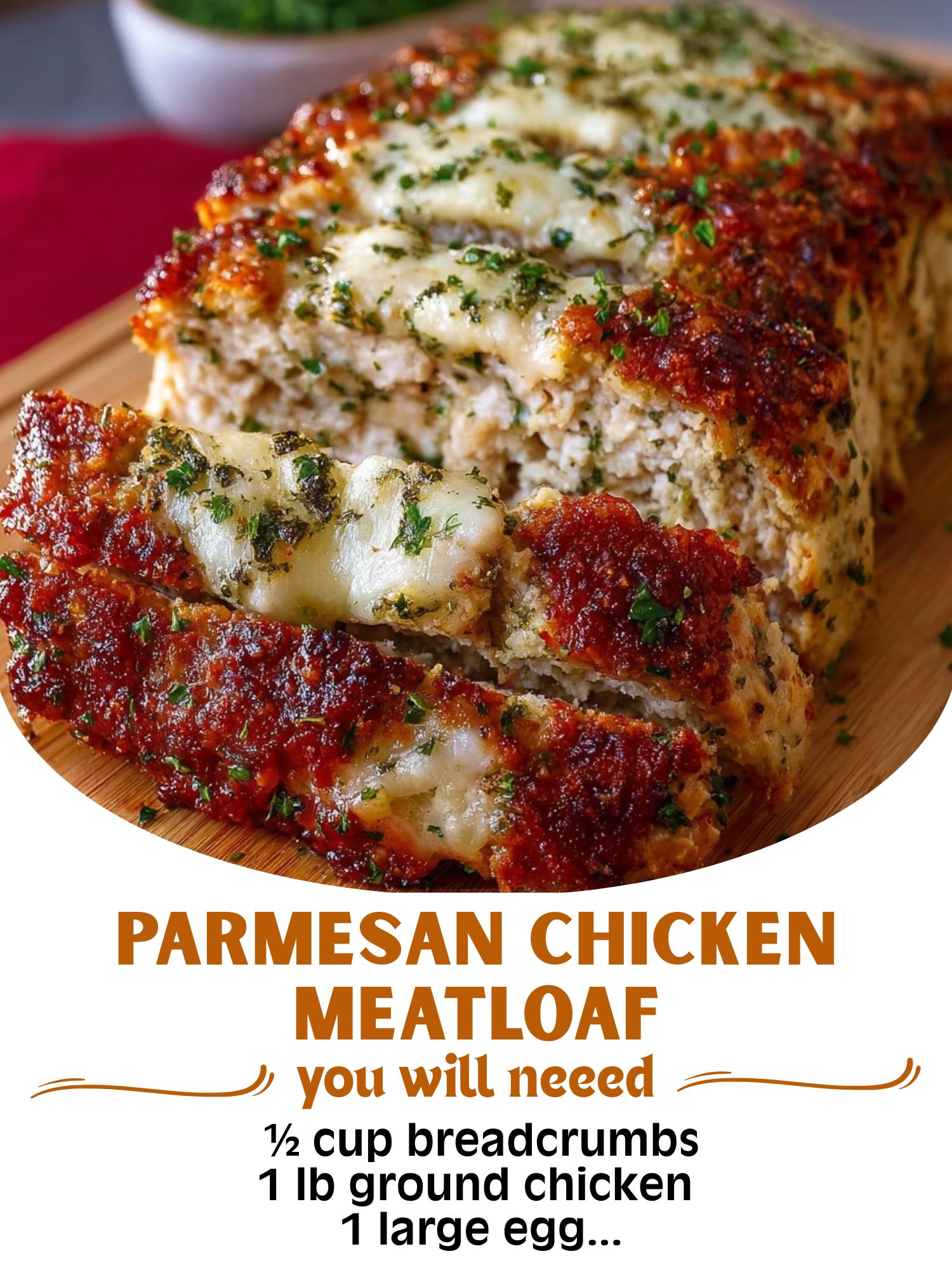
As the meatloaf bakes, I prepare the topping. About halfway through cooking, I spoon marinara sauce over the top. The first time I tried this, I added the sauce too early and it dried out before the meatloaf finished baking. Waiting until the halfway point keeps the marinara glossy and vibrant. After the sauce goes on, I sprinkle mozzarella and Parmesan over the top, and this is where the magic happens: the cheese melts beautifully, creating that irresistible golden crust.
When the meatloaf comes out of the oven, I always let it rest for at least 10 minutes. Resting makes a huge difference—cutting too early causes the juices to run out, but giving it time helps everything set. The smell during this wait is pure torture in the best possible way: melted cheese, herbs, roasted marinara, and the savory scent of garlic all mingling in the air. Once sliced, each piece reveals a moist, tender interior with pockets of melted cheese on top.
Pro Tips for Best Results
I tested this recipe three different ways—adding more milk, less milk, and no milk—and trust me, the ¼ cup measurement is the perfect amount for moisture without making the meatloaf mushy. Ground chicken is lean, so even a little extra liquid makes a big difference. Too much milk led to a softer texture that didn’t slice as neatly.
One of the best tips I learned is to avoid compacting the loaf too tightly. When I pressed it too firmly into the pan, the meatloaf became dense and slightly rubbery. Instead, shaping it loosely allows steam to escape and keeps the texture light. Treat it almost like forming a giant meatball—just enough pressure to hold it together.
I also discovered that using freshly grated Parmesan is worth it. Pre-grated Parmesan doesn’t melt the same way and tends to dry out faster. Fresh cheese blends more smoothly into the meat mixture and helps create that wonderful savory flavor throughout. If you only have pre-grated on hand, it still works—just expect a slightly firmer texture.
Lastly, broiling the meatloaf for 2–3 minutes at the end creates a gorgeous golden crust. I was nervous the first time I tried this, thinking I might burn the cheese, but watching it carefully resulted in the most beautiful bubbly top. Just don’t walk away from the oven during this step—broilers go from perfect to scorched fast.
Common Mistakes to Avoid
I made this mistake the first time—using extra-lean ground chicken. Although it seems like a healthier choice, it led to a dry, crumbly meatloaf. Regular 93% lean chicken is the sweet spot: lean enough to be light but still moist enough to stay tender. Avoid anything labeled 99% fat-free.
Another mistake is skipping the resting period. I know it’s tempting to slice right into the meatloaf when it comes out of the oven, but not waiting results in slices that fall apart and lose moisture. Even a short rest helps the juices redistribute beautifully.(See the next page below to continue…)