
Skipping the step of pounding the steak (if it’s not pre-cubed) is a mistake. The purpose isn’t just to thin it, but to physically break down the muscle fibers. Without it, even a long braise might not achieve that perfect, yielding texture. Take a few minutes to pound—it’s therapeutic and effective!
Adding the garlic too early with the onions is a common error. Garlic burns easily and becomes bitter. Always add it last, just for a minute, to wake up its flavor without scorching it. The same goes for the dried thyme—adding it to the liquid prevents it from burning in the dry pot.
Finally, using a cut of meat that’s already tender, like sirloin, is counterproductive. You need a tough, collagen-rich cut like round or chuck. The long, moist cooking process is what makes it tender. A tender cut will just become dry and stringy. Embrace the right cut for the right job.
Serving Suggestions
I love serving Swiss steak right from the Dutch oven, spooning plenty of that rich gravy over the top. The classic, perfect pairing is a big mound of creamy mashed potatoes or buttery egg noodles. They are essential for soaking up every last drop of that incredible sauce. A side of simple steamed green beans or glazed carrots adds a fresh, sweet contrast.
For a lighter option, I’ll serve it over a bed of fluffy white rice or creamy polenta. The polenta, in particular, is a fantastic alternative to potatoes, creating a wonderfully cozy and satisfying base. A slice of crusty bread on the side is also non-negotiable in my house for gravy-mopping duties.
Leftovers are arguably even better the next day, as the flavors continue to meld. I often shred any remaining meat and mix it back into the gravy, turning it into a delicious filling for hot sandwiches on a toasted bun, or a topping for baked potatoes for an easy second meal.
Variations & Customizations
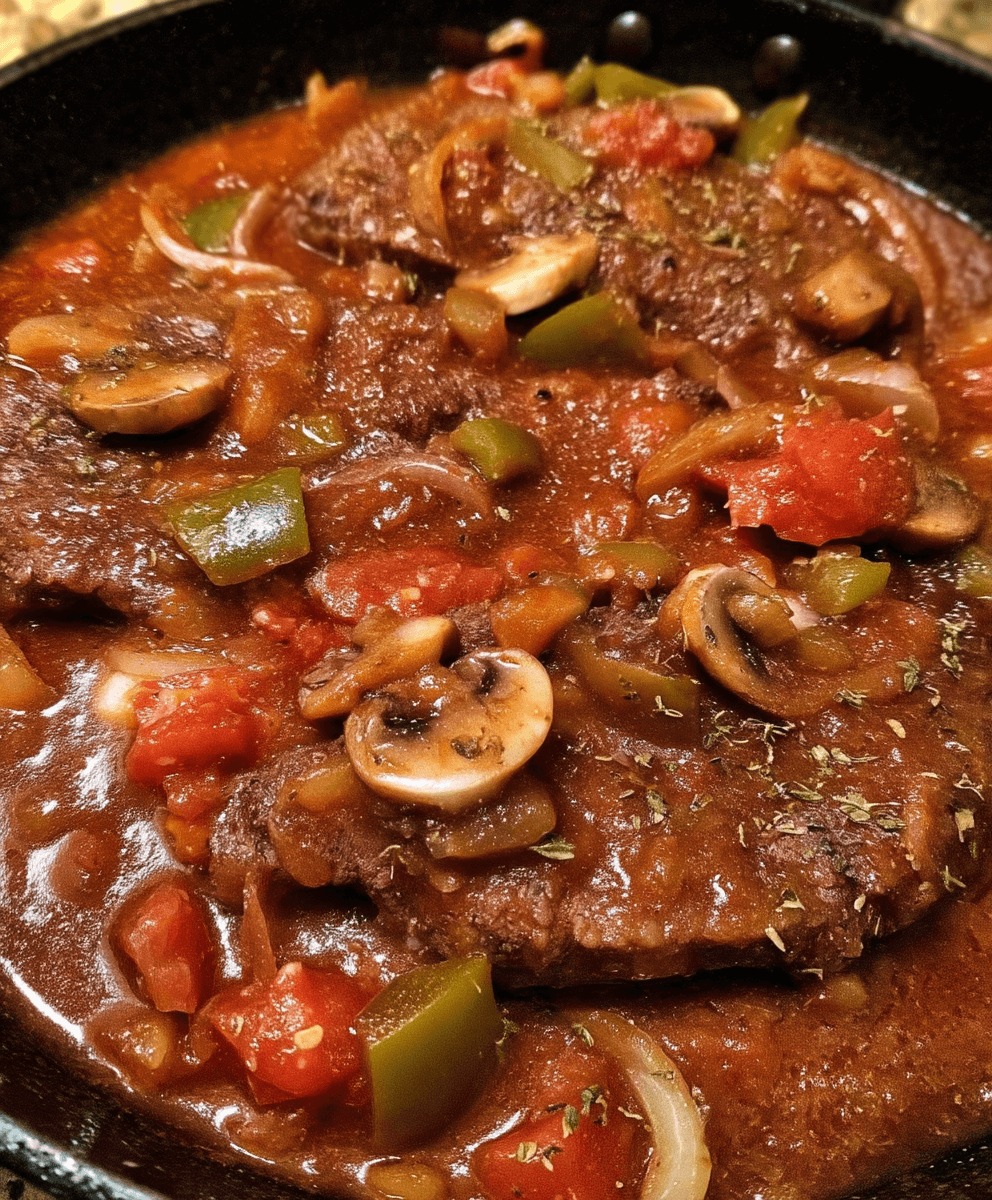
For a “Smothered” version, add 8 ounces of sliced mushrooms to the pot when you sauté the onions and celery. Their earthy flavor deepens the gravy beautifully. A bell pepper, diced and added with the onions, is another great addition for a little sweetness and color.
If you like a hint of sweetness to balance the tomatoes, stir in a tablespoon of brown sugar or a drizzle of balsamic vinegar with the sauce ingredients. It doesn’t make it sweet, just perfectly rounded. For a kick, add a pinch of red pepper flakes or a dash of hot sauce.
You can also make this in a slow cooker with fantastic results. After browning the meat and sautéing the veggies on the stovetop, transfer everything to your slow cooker and cook on LOW for 6-8 hours. It’s the ultimate hands-off comfort food dinner.
How to Store, Freeze & Reheat
Once cooled, I store leftovers in an airtight container in the refrigerator for up to 4 days. The flavors improve overnight, making it a fantastic make-ahead meal. I store the meat and gravy together to keep everything moist.
This dish freezes exceptionally well. I portion it into freezer-safe containers or bags once completely cool. It will keep for up to 3 months. It’s a lifesaver to have a container of this in the freezer for a night when you need a comforting meal without any work.
To reheat, I thaw it overnight in the fridge if frozen. Then, I warm it gently in a covered saucepan over low heat on the stove, adding a splash of beef broth or water if the gravy has thickened too much. You can also reheat it in the microwave, stirring every minute until hot through. Avoid high heat to prevent the meat from becoming tough.
Conclusion
Old-Fashioned Swiss Steak is more than a recipe; it’s a lesson in patience and the transformative power of slow cooking. It has taught me that the most satisfying meals often come from the simplest techniques and the humblest ingredients. I hope you’ll bring this classic into your kitchen and let its wonderful aromas and deep, comforting flavors become a part of your own family’s story. It’s a timeless dish that never fails to nourish both body and soul.