
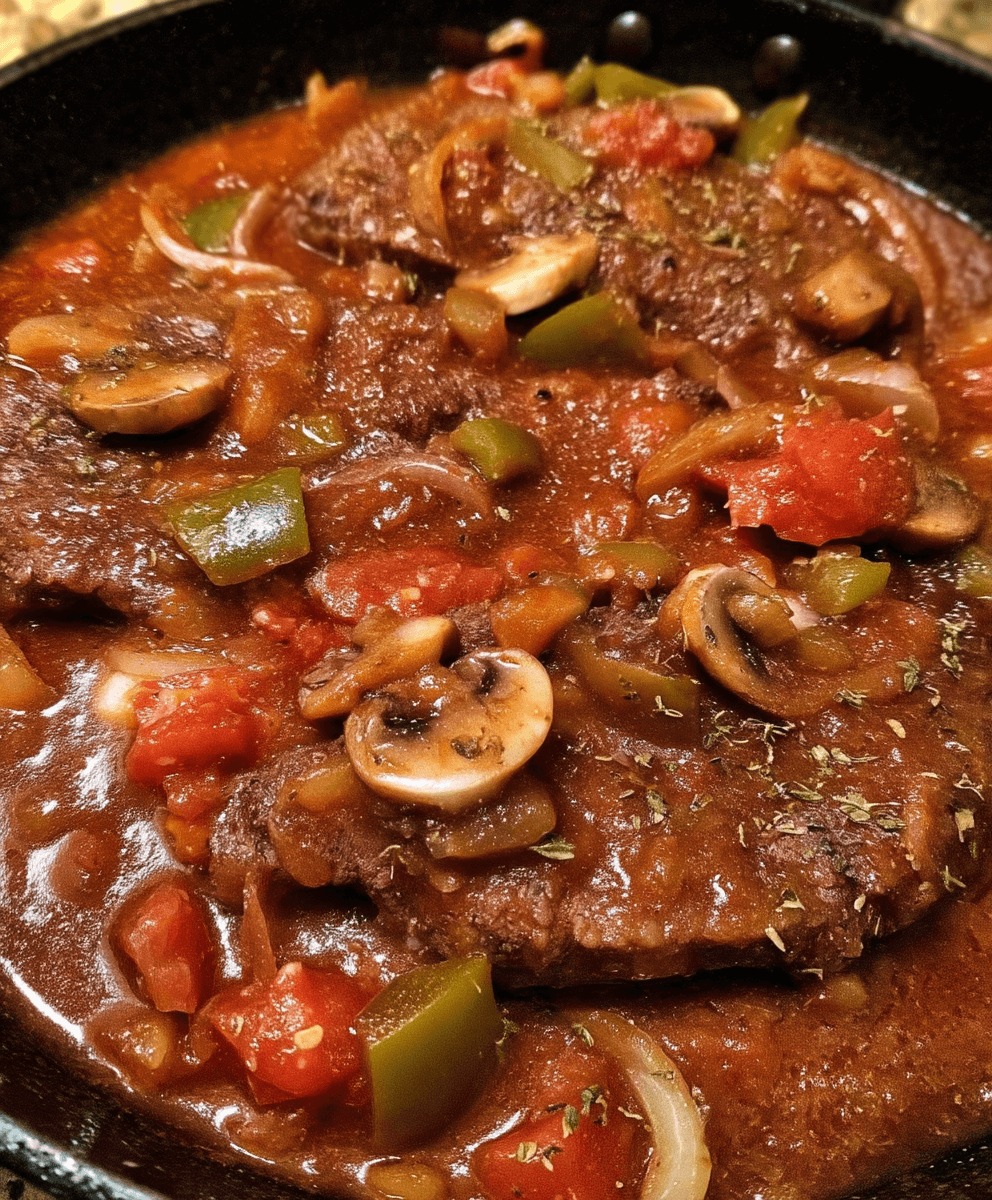
I return the browned steaks to the pot, nestling them into the sauce and spooning some over the top. The liquid should come about halfway up the sides of the meat. I reduce the heat to low, cover the pot with a tight-fitting lid, and let it simmer gently. This is where the magic happens. I let it braise for 1 1/2 to 2 hours, checking occasionally. The meat is done when it’s fork-tender and practically falling apart. In the last 30 minutes, I remove the lid to allow the sauce to reduce and thicken into a perfect, rich gravy. I fish out and discard the bay leaves before serving.
Pro Tips for Best Results
Low and slow is the only way. A vigorous boil will toughen the meat. You want the barest whisper of a simmer—just a few bubbles breaking the surface every now and then. I keep my burner on the lowest setting that maintains this gentle simmer. This patient cooking breaks down the tough connective tissues into gelatin, creating that unbelievable tenderness.
Don’t rush the browning step. Getting a good, deep sear on the floured steak is what builds the foundational flavor for the entire dish and the gravy. If you try to flip it too soon, it will stick and tear. Let it develop a proper crust that releases naturally from the pot. That crust equals flavor.
For an even richer, deeper gravy, I sometimes deglaze the pot with a splash of red wine or a bit more beef broth after sautéing the vegetables and before adding the tomatoes. Let it simmer for a minute to cook off the alcohol. I’ve tested this three different ways, and that splash of wine adds a wonderful layer of complexity.
Common Mistakes to Avoid
The first time I made this, I used a pot that was too thin. The bottom scorched, giving the entire sauce a bitter flavor. A heavy, enameled Dutch oven is your best friend here. It distributes heat evenly and prevents hot spots that can burn your fond and ruin the dish.(See the next page below to continue…)