
I also learned not to overheat the almond bark. If you microwave it too long, it seizes and becomes gritty. Always melt slowly, stirring in between. Patience really pays off in the smoothness of the coating.
Finally, don’t skip adding the salt. It seems tiny and optional, but trust me, it balances the sweetness perfectly. The one time I forgot it, the candies tasted overwhelmingly sugary instead of pleasantly sweet.
Serving Suggestions
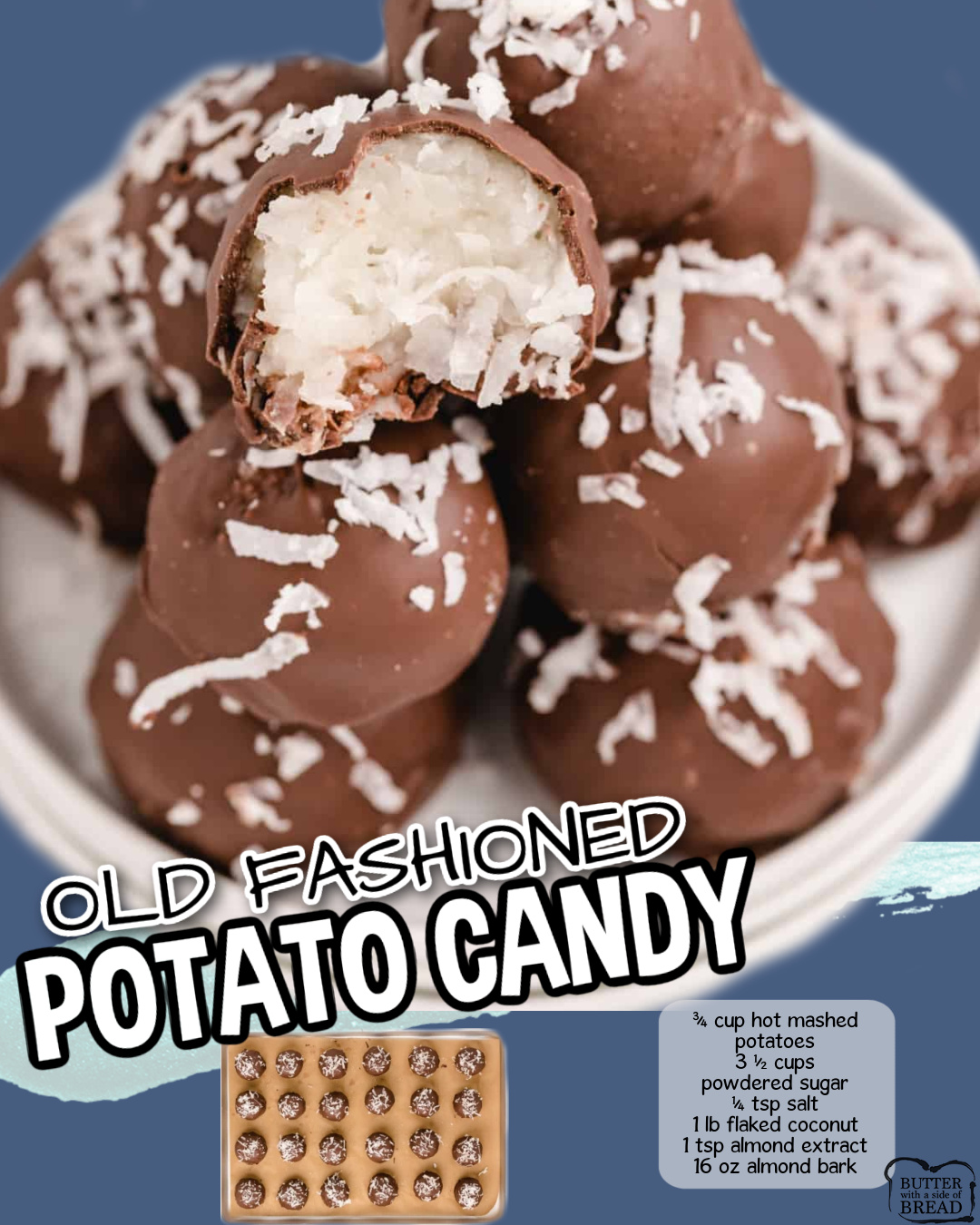
I like serving these potato candies on a big vintage platter lined with parchment or doilies—it gives them that nostalgic, old-fashioned look that matches their story. The contrast of the white coconut flakes against the chocolate coating always makes people swoon before they even take a bite.
If I’m making them for a party, I arrange them in small paper candy cups, almost like truffles. It keeps fingers clean and gives the candy a more polished presentation. Guests always think they came from a fancy chocolate shop, and I secretly love that moment of surprise when I tell them they’re made from potatoes.
For a holiday dessert table, I mix them with other homemade sweets like fudge, peppermint bark, or sugar cookies. The variety of textures makes for such a satisfying lineup. These candies tend to disappear first because they’re just the right combination of sweet, creamy, and bite-sized.
I’ve also packaged them in tins or small boxes as homemade gifts. As long as the weather isn’t too warm, they travel beautifully. A sprinkle of extra coconut inside the box makes everything look snowy and festive, which I adore during winter months.
Variations & Customizations
One of my favorite variations is adding a handful of finely chopped almonds or pecans to the mixture. It gives the candies a wonderful crunch and pairs beautifully with the almond extract. I’ve even rolled them in chopped nuts before dipping for extra texture.
If you want to go more classic-candy-shop style, you can swap almond bark for dark chocolate or white chocolate. I tried a white chocolate version once, and the creamy sweetness with the coconut filling tasted like a snowy dream. Dark chocolate gives the candy a more sophisticated flavor.
Another fun twist is adding a teaspoon of vanilla extract or coconut extract in addition to or instead of almond. Coconut extract intensifies the tropical flavor, while vanilla makes the candy taste more like old-fashioned church-basement treats. Both are lovely depending on the mood.
You can even shape the candy into small bars instead of balls. I pressed the mixture into a parchment-lined pan once, chilled it, cut it into rectangles, and dipped each one. The result was like homemade coconut bars—almost like a vintage version of a Mounds bar.
How to Store, Freeze & Reheat
To store these candies, I always keep them in an airtight container in a cool spot. If your house tends to be warm, the fridge is a safer option to prevent the chocolate from softening. They stay fresh for about a week, though they rarely last that long in my house.
These candies freeze beautifully. I freeze them in single layers separated by parchment paper to keep them from sticking. When I want to serve them, I simply move them to the fridge to thaw slowly. If you thaw them at room temperature too fast, sometimes the chocolate can crack or sweat.
If you need to re-melt chocolate for touch-ups, melt just a little extra almond bark and drizzle it over candies that may have cracked during storage. It hides imperfections and gives them a fresh look. I’ve done this many times before gifting them.
The candy itself doesn’t need reheating, of course, but if the chocolate softens too much during storage, popping them in the fridge for a few minutes firms them right up again. They return to perfect texture without any loss of flavor.
Nutrition Information
Even though these candies feel indulgent, I like knowing exactly what goes into them—just simple pantry staples and no artificial ingredients. They’re sweet, yes, but they’re made from real food, which always feels better than store-bought candy loaded with preservatives.
Potatoes might seem like an odd base for candy, but they add moisture and creaminess without extra fat. They help bind the sugar and coconut into that dreamy texture while keeping the ingredient list short and wholesome.
Coconut adds dietary fiber and healthy fats, giving the candy a bit of richness. The almond bark is the sweetest part, but you can control the coating thickness if you want to lighten things up a bit.
In moderation, these make a delightful treat—rich enough that one or two candies usually satisfy even the strongest sweet cravings. And honestly, part of the charm is treating them like the old-fashioned dessert they are: a little special, a little nostalgic, and enjoyed slowly.
FAQ Section
Can I use leftover mashed potatoes?
I’ve tried, and it doesn’t work well. Leftover potatoes often contain milk, butter, or seasoning, which throws the texture off completely. Stick with plain, freshly mashed potatoes for perfect candy.
Can I replace almond bark with chocolate chips?
Yes! I’ve done it many times. Just melt the chocolate chips with a teaspoon of coconut oil to keep the coating smooth and easier to dip.
What if my dough is too sticky?
Add more powdered sugar, a little at a time. I’ve had batches where humidity made the dough softer, and extra sugar fixed it beautifully.
Can I skip the coconut?
Unfortunately, the coconut is essential for structure and flavor. Without it, the candy won’t hold together. You could try very finely chopped nuts as a substitute, but it becomes a different candy entirely.
How long do these candies last?
Stored properly, they last about a week in the fridge or up to three months in the freezer. I’ve frozen them many times, and they thaw beautifully.
Conclusion
Every time I make Old Fashioned Potato Candy, it reminds me why I adore vintage recipes—they’re resourceful, charming, and unexpectedly delicious. There’s something so satisfying about turning a simple potato into a sweet little confection that surprises everyone who tries it. I hope this recipe brings as much joy to your kitchen as it does to mine, and that you’ll find yourself sharing these nostalgic treats with the people you love most.