
Common Mistakes to Avoid
I made the mistake once of stirring the brittle too much after adding the baking soda. Over-stirring knocks out the bubbles and creates a dense, hard texture. Just fold everything together gently and pour it out immediately.
Another common mistake is using roasted or salted peanuts. I tried salted once without thinking, and the finished brittle tasted overwhelmingly salty. The peanuts roast perfectly in the syrup, so always start raw. It makes a huge difference in both flavor and color.
A third mistake is not dissolving the sugar completely at the beginning. Undissolved sugar crystals can cause the entire batch to crystallize, turning the brittle grainy instead of smooth. I always stir until the mixture is completely clear before letting it boil.
Lastly, handling the candy without care can lead to burns; the mixture reaches extremely high temperatures. Early on, I accidentally touched a drip of hot brittle while cleaning up, and it stuck to my skin like glue. Oven mitts and careful movements are critical here.
Serving Suggestions
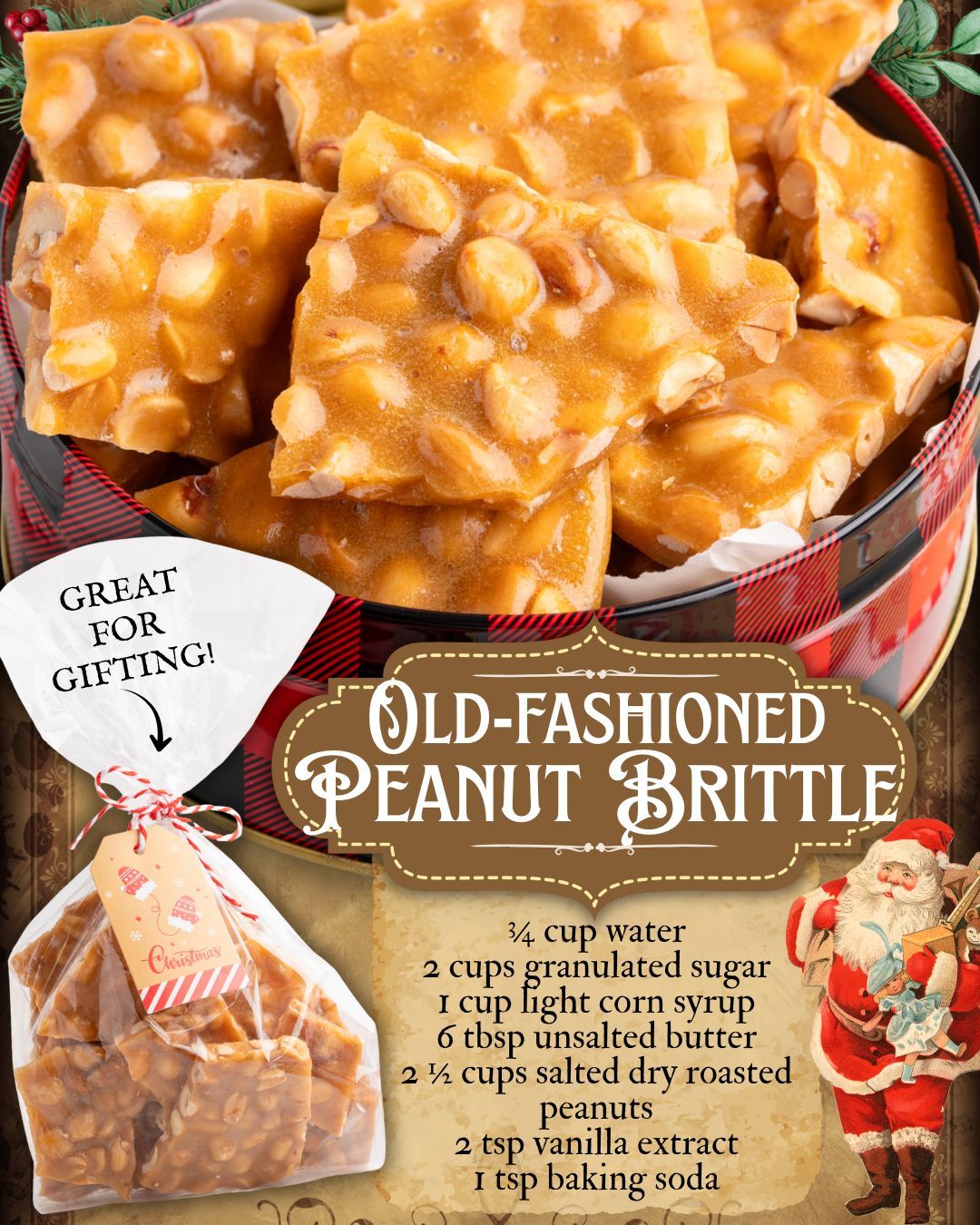
I love serving OLD-FASHIONED PEANUT BRITTLE in little bowls during holiday gatherings. The shiny golden pieces catch the light beautifully, and guests always reach for them as soon as they sit down. The crunch is addictive, and the sweet-and-salty flavor makes it hard to stop at just one piece.
Another way I like serving it is alongside chocolate desserts. Peanut brittle pairs beautifully with dark chocolate truffles or brownies. The contrast of crunchy brittle and soft chocolate is unbelievably satisfying. I’ve even crushed brittle and sprinkled it over ice cream—it adds the perfect buttery crunch.
Peanut brittle also makes wonderful edible gifts. I pack it into decorative tins or clear cellophane bags tied with ribbon. It keeps well for weeks, so it’s ideal for holiday gifting. Friends and family always comment on how “old-fashioned” and nostalgic it feels.
For a fun twist, I sometimes chop it into smaller chunks and mix it into cookie dough. The brittle melts slightly while baking, creating caramelized pockets throughout the cookies. It’s unexpected and delicious.
Variations & Customizations
One variation I enjoy is adding a pinch of cinnamon to the mixture right after adding the vanilla. Cinnamon gives the brittle a warm, cozy flavor that feels perfect in the fall and winter. I tried it once on a whim and loved how it brought a subtle spiced note.
Another fun twist is using different nuts. Almond brittle, cashew brittle, or mixed-nut brittle all work beautifully. I’ve made almond brittle several times, and it feels a bit more elegant with its smooth, mellow flavor. Cashew brittle is buttery and rich.
For a spicy version, I’ve added a tiny pinch of cayenne pepper. It may sound unusual, but the heat blends with the sweetness in a way that’s bold and exciting. Just don’t overdo it—a little goes a long way.
You can also drizzle melted chocolate over the top of the finished brittle. Dark chocolate works especially well and turns the brittle into a show-stopping dessert. I sometimes drizzle white chocolate for a festive look.
How to Store, Freeze & Reheat
Storing peanut brittle is incredibly easy. I keep it in an airtight container at room temperature, and it stays fresh and crisp for up to three weeks. Moisture is the enemy of brittle, so make sure the lid is tight. I never store it in the refrigerator because the humidity causes it to soften.
Freezing peanut brittle is possible, but only if you wrap it extremely well. I wrap it in parchment, then foil, then place it in a freezer-safe container. It keeps for up to two months this way. To thaw, I simply bring it to room temperature while still wrapped so condensation doesn’t form on the candy.
If the brittle softens slightly over time due to humidity, there’s an easy fix: place it in a warm (not hot) oven for a few minutes. I’ve done this several times when the weather was particularly damp, and the brittle crisps right back up.
Peanut brittle shouldn’t be reheated for serving because it’s meant to be eaten at room temperature. But if you’re using it in baking—say, chopped into cookies or on top of brownies—room-temperature pieces work perfectly.
Nutrition Information
OLD-FASHIONED PEANUT BRITTLE is definitely a treat, but it’s also surprisingly satisfying. The peanuts add protein and healthy fats, which balance the sweetness and make each piece feel more filling than many candies. I find that just a small piece satisfies my sweet craving.
The sugar, corn syrup, and butter create the classic caramel flavor, and while they’re indulgent, they’re also what make this brittle so irresistible. I see this candy as a seasonal delight—a little sugary, a little nostalgic, and absolutely worth enjoying in moderation.
What I appreciate is that peanut brittle is portion-friendly. Because it’s rich and crunchy, you naturally eat it slowly and savor each bite. I often enjoy it with a cup of tea or coffee, and one or two small pieces is plenty.
And unlike many modern sweets, homemade brittle has no preservatives or artificial flavors—just simple, old-fashioned ingredients coming together to create something timeless.
FAQ Section
1. Can I make peanut brittle without a thermometer?
You can, but I don’t recommend it. I’ve tried guessing the temperature before, and the results were inconsistent. A thermometer makes the process stress-free.
2. Why did my brittle turn grainy?
That usually means the sugar crystallized. Make sure all sugar is dissolved early on and avoid stirring once the mixture starts boiling.
3. Can I use roasted peanuts?
I don’t recommend it. They darken too quickly and can burn. Raw peanuts toast perfectly in the syrup.
4. Why didn’t my brittle harden?
It didn’t reach the hard crack temperature of 300°F. I’ve made this mistake before—temperature matters more than anything in this recipe.
5. Can I double the recipe?
Yes, but use a large pot and work quickly. I’ve doubled it before, and it turned out great as long as I spread it fast enough.
Conclusion
OLD-FASHIONED PEANUT BRITTLE has become one of my favorite nostalgic candies to make because it’s simple, crunchy, and full of that classic caramel-peanut flavor—and every time I break apart a fresh batch, I’m reminded how incredibly rewarding it is to turn basic ingredients into something so delightful and timeless.