
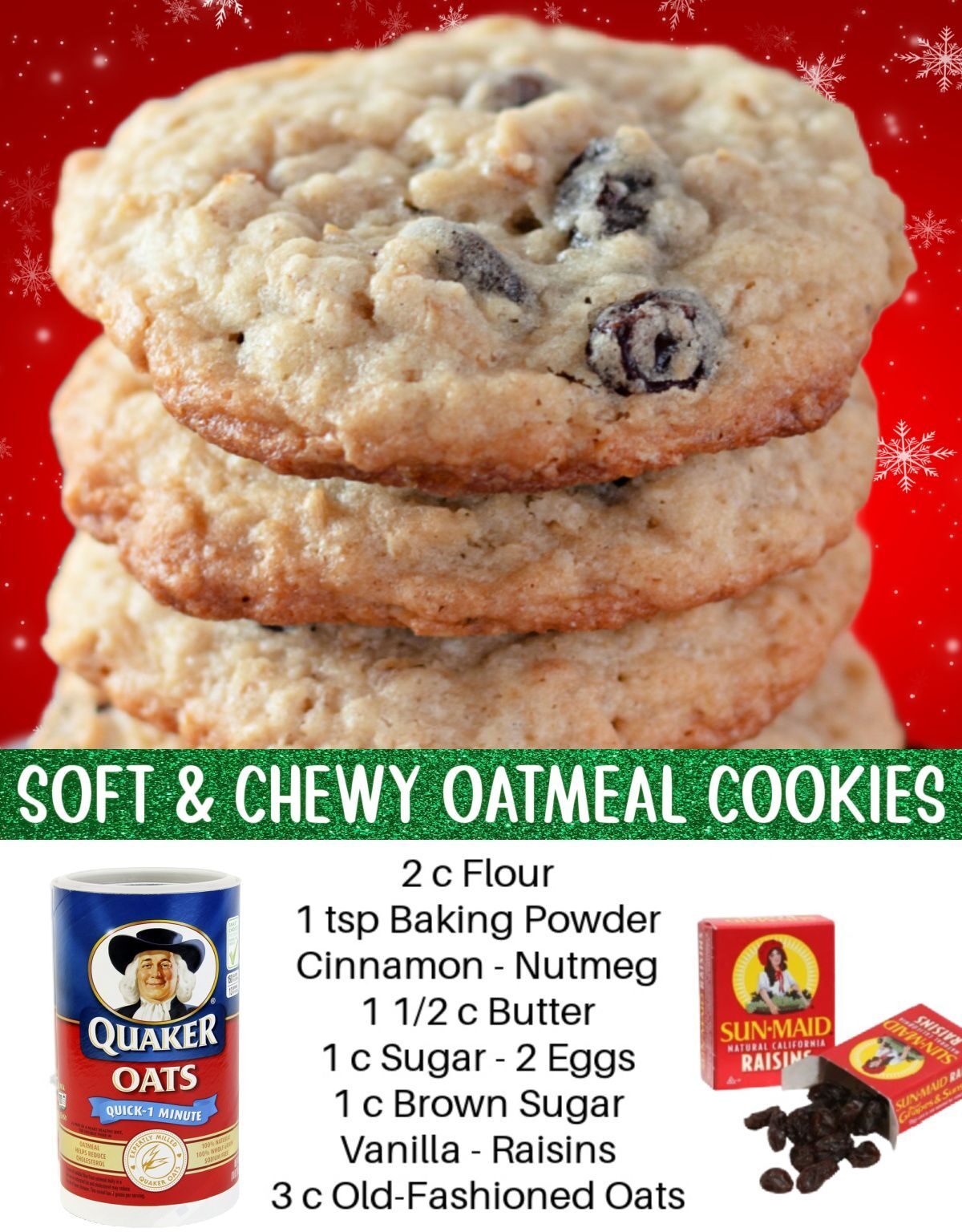
Good oatmeal raisin cookies balance texture and flavor: the oats give them heartiness and chew, brown sugar and butter make them rich and tender, and cinnamon plus vanilla add a warm, comforting aroma. Raisins are folded in at the end so they dot each cookie with little pockets of sweetness; some bakers soak the raisins first in warm water (or even a bit of rum or vanilla) so they stay extra plump and juicy after baking.
Most modern recipes aim for soft-and-chewy rather than thin and crispy. That texture comes from a few key choices: using mostly brown sugar, choosing old-fashioned rolled oats, not overbaking, and sometimes chilling the dough so the cookies bake up thick. The result is a cookie that feels substantial and satisfying, perfect with a glass of milk or a mug of coffee, and sturdy enough to pack in lunchboxes or tins.
Equipment
- Large mixing bowl for creaming butter and sugars and combining the dough
- Hand mixer or stand mixer with paddle attachment to cream butter and sugar until light and fluffy
- Medium bowl for whisking dry ingredients (flour, leavening, salt, spices)
- Measuring cups and spoons for flour, oats, sugars, and spices
- Rubber spatula for scraping the bowl and folding in oats and raisins
- Baking sheets lined with parchment paper or silicone baking mats
- Cookie scoop or tablespoon for portioning uniform dough balls
- Wire cooling racks to cool cookies and prevent soggy bottoms
Optional but helpful:
- Small bowl for soaking raisins in warm water or liquid to plump them
- Kitchen scale for precise flour and oat measurements to avoid dense cookies
Ingredients
Different bakers tweak the ratios, but most soft and chewy oatmeal raisin cookie recipes look very similar.
A classic, no-chill, soft oatmeal raisin cookie formula:
- ¾ cup (1½ sticks / 170 g) salted butter, softened
- 1¼ cups (packed) light brown sugar
- 2 large eggs, at room temperature
- 1 cup (120 g) all-purpose flour, spooned and leveled
- 1 teaspoon baking soda
- ¼ teaspoon baking powder
- ¾ teaspoon ground cinnamon
- ¼ teaspoon allspice (optional, adds warm spice complexity)
- 2½ cups rolled oats (old-fashioned oats, not instant)
- ¾ cup raisins
- ½ cup chopped walnuts (optional)
A more traditional soft & chewy base with more butter and a bit of white sugar:
- 1 cup (2 sticks / 226 g) unsalted butter, softened
- 1 cup (200 g) packed light brown sugar
- ¼–½ cup (50–100 g) granulated sugar
- 2 large eggs
- 1–2 teaspoons vanilla extract
- 1½ cups (190–195 g) all-purpose flour
- ½–1 teaspoon ground cinnamon
- ½ teaspoon baking soda or baking powder (some soft recipes prefer baking powder)
- ½ teaspoon salt
- 2–3 cups old-fashioned rolled oats
- 1–1½ cups raisins (depending on how studded you like them)
Optional mix-ins:
- Chopped nuts (walnuts or pecans) for extra crunch
- Extra spices such as nutmeg, cloves, or allspice for a more “spiced” cookie
- Chocolate chips or white chocolate chips for a chocolate-oatmeal-raisin hybrid
Step-by-step instructions
Most oatmeal raisin cookie recipes use the standard creaming method. Butter and sugars are combined first, which builds structure and incorporates air, before the eggs and dry ingredients are added.
The process usually begins by preheating the oven to around 350°F (175°C) and lining baking sheets with parchment or silicone mats. If you plan to plump your raisins, this is also the time to cover them with warm water or another warm liquid and let them sit for 10–15 minutes, then drain and pat dry.
In a medium bowl, the dry ingredients are whisked together: flour, baking soda or baking powder, salt, and cinnamon (plus allspice or other spices if using). Whisking evenly distributes the leavening and spices so there are no pockets of baking soda or streaks of cinnamon.
In a large mixing bowl, softened butter is beaten with brown sugar and granulated sugar (if using any white sugar) until the mixture becomes lighter in color and fluffy, usually 2–5 minutes depending on the mixer. This step is key: properly creamed butter and sugar will trap tiny air bubbles that help the cookies rise slightly and stay soft. Eggs are then added one at a time, beating well after each addition, followed by vanilla extract, mixing until everything is fully combined.
Once the wet base is ready, the dry flour mixture is added. Many recipes tell you to add the dry ingredients in one or two additions and mix on low speed just until you no longer see streaks of flour. Overmixing at this stage can develop gluten and lead to tougher cookies, so stopping as soon as the dough comes together is important.
Next come the oats and raisins. Old-fashioned rolled oats and the raisins (and nuts, if using) are added to the bowl and folded in with a spatula or mixed on low speed until evenly distributed. The dough will be thick and somewhat sticky; this is normal for oatmeal cookies.
Some recipes, such as those that use a high proportion of butter and brown sugar, recommend chilling the dough for 30–60 minutes. Chilling helps firm up the fat so the cookies spread less and bake up thicker with a chewier center. Other recipes, like the Princess Pinky Girl version, are formulated so that no chilling is necessary and the dough can go straight from the bowl to the baking sheet without spreading too much.
Dough is then portioned onto prepared baking sheets using a cookie scoop or spoon, usually in mounds of about 1–2 tablespoons each, spaced a couple of inches apart to allow for spreading. Some bakers like to gently press the tops down slightly for a more uniform, round cookie, while others leave them as rough mounds for a more rustic look.
Baking time typically ranges from 8–12 minutes depending on cookie size and oven temperature. For soft and chewy cookies, it’s better to underbake slightly rather than wait for them to turn golden brown all over. Most recipes say the cookies are done when the edges are set and lightly golden, but the centers still look soft and a bit underdone; they will continue to cook and firm up as they cool on the hot baking sheet.
After coming out of the oven, cookies rest on the baking sheet for about 5 minutes before being transferred to a wire rack to cool completely. This helps prevent them from breaking and also lets the centers set to the perfect chewy texture. Once cool, they can be stored in an airtight container at room temperature, where they usually stay soft for several days.
Texture tips: soft, chewy, and thick
If the goal is bakery-style soft and chewy oatmeal raisin cookies, a few technique and ingredient details matter. Using a higher ratio of brown sugar to white sugar increases moisture and chew, since brown sugar contains molasses. Butter adds flavor and tenderness, but too much can cause excessive spreading; balancing butter with enough flour and oats keeps the cookies thick.
Choosing old-fashioned rolled oats instead of quick oats or instant oats is important for texture. Rolled oats hold their shape and provide a satisfying chew, while quick oats can make cookies denser and more uniform, and instant oats often lead to a gummy texture. Measuring flour correctly—either by weight or by spooning and leveling—helps avoid heavy cookies; packing flour directly into a cup can add too much and make cookies dry.
Chilling the dough is optional but helpful if cookies spread too much. A 30–60 minute chill firms the butter and lets the oats hydrate in the dough, which can lead to thicker cookies that stay chewy. Finally, pulling the cookies from the oven when the centers still look slightly underbaked ensures they set up chewy rather than crisp or dry.
Variations and mix-ins
Oatmeal raisin cookies are versatile, and small changes yield lots of different flavor profiles. Some recipes lean heavily into warm spices—adding more cinnamon, plus nutmeg, cloves, or allspice—to create a cookie that tastes almost like a spice cookie with oats and raisins. Others opt for a lighter hand with spice, letting the butter and brown sugar take center stage.
Nuts are a common addition. Walnuts and pecans are the most popular, adding crunch and a slightly bitter, toasty note that balances the sweetness of the raisins. Some bakers toast the nuts first to intensify their flavor.
Swapping raisins for other dried fruit—like dried cranberries, chopped dates, or chopped dried apricots—adds variety and can make the cookies feel a bit fresher and more tart.
Chocolate lovers often replace some or all of the raisins with chocolate chips or white chocolate chips, creating oatmeal chocolate chip cookies with a similar base. A mix of raisins and chocolate chips gives the best of both worlds. Iced oatmeal variations add a simple powdered sugar glaze over cooled cookies for extra sweetness and a pretty finish.
Health-conscious takes might reduce the sugar slightly, use whole wheat flour for part of the all-purpose flour, or incorporate add-ins like flaxseed or chia seeds. Some recipes use coconut oil instead of butter or add shredded coconut for a different texture and flavor. Even with these tweaks, the core remains the same: oats, some sweetness, a touch of spice, and chewy dried fruit.
Make-ahead, storage, and freezing
Oatmeal raisin cookies are excellent make-ahead candidates. The dough can be made in advance and refrigerated for up to 2 days before baking; in fact, resting the dough overnight can enhance the flavor as the oats hydrate and the spices bloom. When ready to bake, letting the chilled dough sit at room temperature for a short while makes scooping easier.
Dough balls also freeze well. Scooped dough can be placed on a tray, frozen until solid, then transferred to a freezer bag for up to a few months. Cookies can then be baked from frozen, usually needing an extra minute or two in the oven. This is a convenient way to have fresh-baked cookies on demand without making a full batch each time.
Baked cookies should be cooled completely and stored in an airtight container at room temperature. Many recipes report they stay soft and chewy for several days, especially if a slice of bread is added to the container to help retain moisture. For longer storage, baked cookies can be frozen; separating layers with parchment helps prevent sticking, and they thaw quickly at room temperature.
Serving ideas and pairing
Oatmeal raisin cookies are naturally at home in lunchboxes, after-school snacks, and cookie jars. Their heartier texture makes them satisfying on their own, but they also pair well with drinks like milk, coffee, hot tea, or hot chocolate. Because they are less fragile than some delicate cookies, they travel well in tins and are a popular choice for cookie exchanges and holiday platters.
For dessert, a few cookies served warm alongside vanilla ice cream or a scoop of cinnamon ice cream make a simple but cozy plated dessert. Crumbled oatmeal raisin cookies can also be used as a topping for yogurt parfaits, fruit crisps, or even as a base layer in trifles for added texture.
Whether kept classic or dressed up with extra spices and add-ins, the oatmeal raisin cookie format delivers a reliable, approachable recipe style: pantry staples, straightforward mixing, flexible make-ahead options, and a timeless flavor that feels like home.