
Lastly, using low-fat milk changes the texture noticeably. Whole milk adds richness and softness. I’ve tested both, and whole milk wins every time.
Serving Suggestions
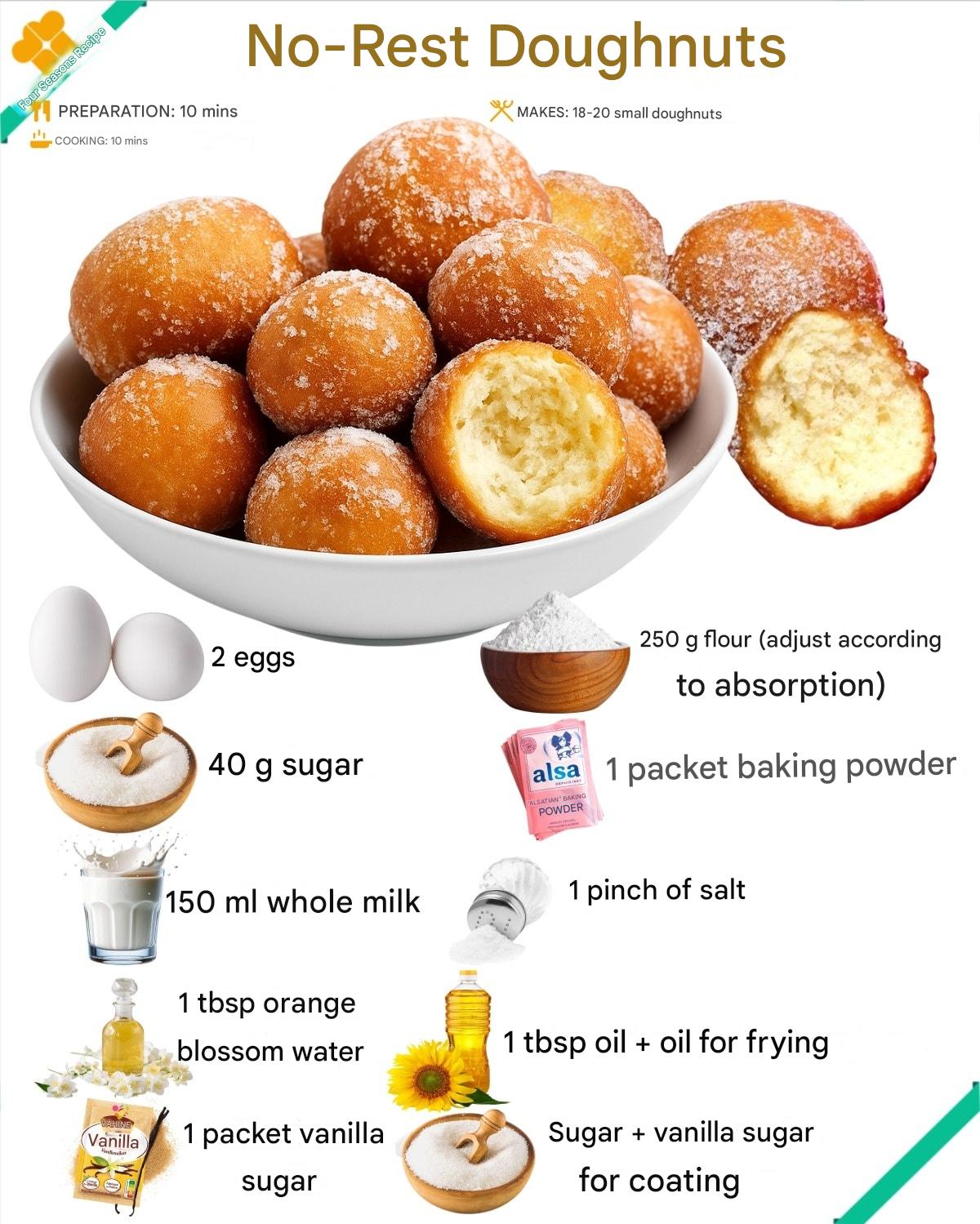
I love serving these doughnuts fresh, still slightly warm, with a cup of coffee or tea. The contrast between the crisp sugar coating and fluffy interior is best right after frying.
For guests, I pile them onto a platter and dust lightly with extra vanilla sugar. They disappear fast, especially when served warm, and people always ask how long they took to make.
Sometimes I serve them with a side of chocolate sauce or fruit jam for dipping. It turns a simple doughnut into a more indulgent dessert without much extra effort.
On cozy evenings, I serve them plain and let the aroma speak for itself. They’re comforting enough on their own and don’t need heavy toppings.
Variations & Customizations
I’ve added lemon zest to the batter before, and it gave the doughnuts a bright, fresh note that worked beautifully. Citrus flavors pair especially well with the vanilla sugar coating.
For a spiced version, I mix cinnamon into the sugar coating. This is one of my favorite variations during colder months and makes the doughnuts feel extra cozy.
I’ve also filled these doughnuts by piping jam inside after frying. It takes a bit more effort, but the result feels bakery-worthy and very satisfying.
For a dairy-free version, I’ve successfully used plant-based milk with similar results. The texture changes slightly, but they still stay soft and enjoyable.
How to Store, Freeze & Reheat
These doughnuts are best eaten fresh, but I’ve stored leftovers in an airtight container for one day. They soften slightly but remain tasty.
Freezing is possible, though I only do it occasionally. I freeze them uncoated, then reheat and roll in sugar afterward for better texture.
When reheating, I avoid the microwave because it makes them rubbery. A few minutes in a low oven works much better and restores softness.
If I know I’ll have leftovers, I slightly under-fry them, so reheating finishes the cooking without drying them out.
Nutrition Information
These doughnuts are indulgent, but I enjoy them mindfully. They provide carbohydrates for quick energy and protein from the eggs and milk.
Because they’re smaller than traditional doughnuts, portion control feels easier. I find that one or two is usually enough to satisfy a craving.
The lack of yeast and long fermentation makes them lighter in flavor, which I personally enjoy. They feel less heavy than classic doughnuts.
I treat these as an occasional comfort food, meant to be enjoyed slowly with good company rather than rushed or overindulged.
FAQ Section
Can I make the batter ahead of time?
I don’t recommend it. From my experience, the batter performs best when used immediately, as the baking powder activates quickly.
Why are my doughnuts greasy?
This usually means the oil was too cool. Make sure the oil is properly heated before frying each batch.
Can I skip the orange blossom water?
Yes, but I highly recommend keeping it. I’ve tried both ways, and it adds a subtle bakery-style aroma that’s hard to replace.
Can I bake these instead of frying?
I tested baking once, and the texture wasn’t the same. Frying gives the signature crisp outside and fluffy inside.
What oil works best for frying?
I use neutral oils like sunflower or vegetable oil. Strong-flavored oils overpower the delicate doughnut flavor.
Conclusion
These no-rest doughnuts are one of my favorite examples of how simple ingredients and smart technique can create something truly comforting. They’re quick, forgiving, and incredibly satisfying to make and eat. If you follow the steps, respect the batter texture, and don’t rush the frying, you’ll end up with soft, golden doughnuts that feel like a small homemade victory every single time.