
Next, I add the flour, salt, and olive oil to the bowl. I mix everything together using a spoon until it forms a sticky dough. It doesn’t look like traditional dough, and that’s completely normal. The first time I made it, I thought I had done something wrong, but the sticky texture is exactly what you want.
Then I cover the bowl with a towel or plastic wrap and let the dough rest at room temperature for about 1–2 hours, or until it doubles in size. During this time, the dough becomes airy and full of bubbles, which is what gives the bread its soft texture.
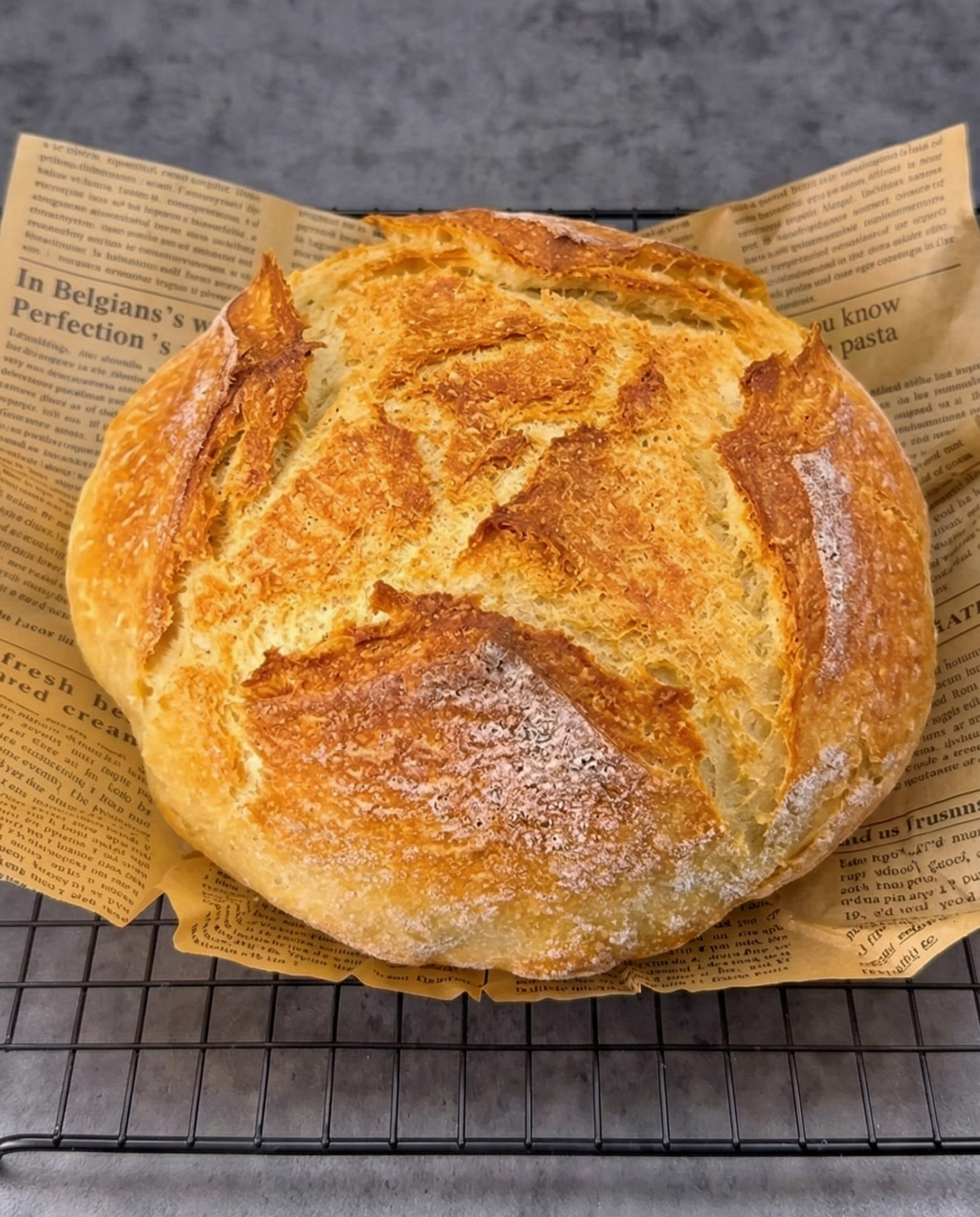
Finally, I transfer the dough into a preheated Dutch oven and bake it at 220°C (430°F) for about 30–40 minutes. I remove the lid for the last 10–15 minutes to let the crust turn golden and crispy. When it comes out, the smell is absolutely irresistible.
Pro Tips for Best Results
One thing I learned after making this bread a few times is that using warm—not hot—water is key. If the water is too hot, it can kill the yeast.
Another tip is to let the dough rest long enough. I’ve tried baking it too early, and the bread didn’t rise as well. Giving it enough time makes a big difference.
I also recommend preheating the Dutch oven before adding the dough. This helps create that crispy, bakery-style crust.
Common Mistakes to Avoid
The first mistake I made when making no-knead bread was adding too much flour. I thought the dough was too sticky, but adding extra flour made the bread dense.
Another mistake is skipping the resting time. The dough needs time to develop structure and flavor. (See the next page below to continue…)