
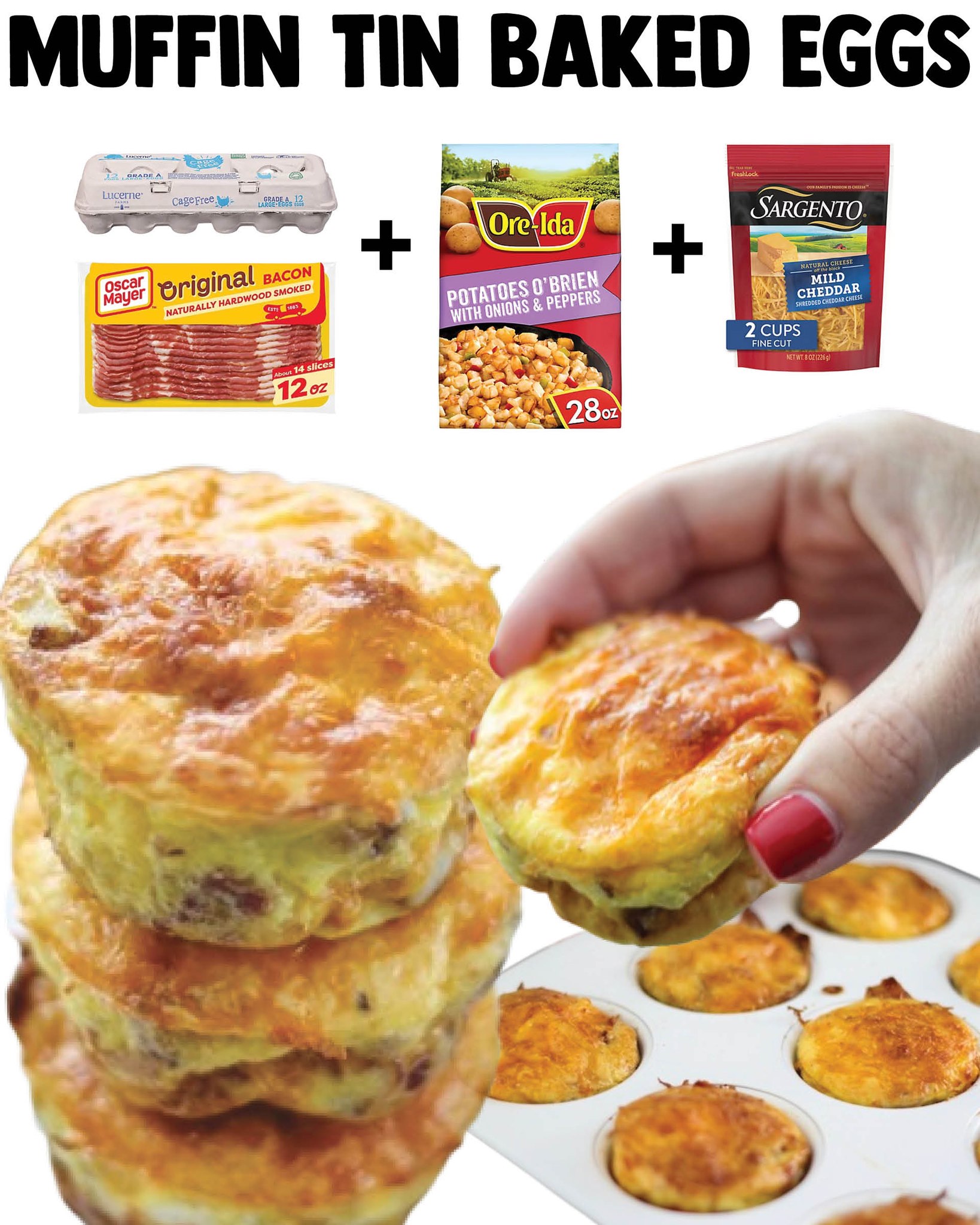
After preparing the filling, I coat my muffin tin generously with nonstick spray. I’ve learned from experience that eggs baked in a dry muffin tin require a chisel to remove—so don’t skip this step, and be thorough. I pour the egg mixture evenly into the 12 cups, filling them about three-quarters full to give them room to rise. It’s always so satisfying to see each cup full of colorful bits of bacon, potatoes, and cheese, ready to bake into something delicious.
I bake them in a 375°F oven for about 18–22 minutes, depending on how firm I want the centers. You’ll see the tops puff up slightly and turn a lovely light golden brown. When I pull the muffin tin out of the oven, the kitchen smells warm, savory, and inviting. I always allow them to cool for a few minutes before removing them so they don’t break apart. Each little baked egg cup lifts out beautifully, holding its shape like a tiny handheld omelet.
Pro Tips for Best Results
I tested this recipe several different ways, and the biggest secret to fluffy eggs is whisking longer than you think you need to. When I whisked for just 10 seconds, the eggs were denser, but when I whisked for 30–40 seconds, the baked eggs were unbelievably soft and airy. It’s a small detail that makes a noticeable difference.
Another tip: don’t skip drying your potatoes. Once, I forgot to pat them dry, and the extra moisture made the baked eggs steam instead of bake. The texture was softer than I wanted—not bad, but not the perfect fluffy result I’ve grown used to. A quick pat with a paper towel keeps the final texture just right.
If you’re using a metal muffin tin, line it with silicone muffin cups or spray heavily. I learned the hard way that even good pans can cling to eggs. Silicone liners ensure the eggs pop out cleanly every time, and they make washing up so much easier.
Lastly, if you want an extra burst of flavor, sprinkle a little cheese on top before baking. It melts into a golden crust that gives each muffin a beautiful finish. I do this especially when serving these baked eggs for guests—it makes them look even more appetizing.
Common Mistakes to Avoid
The first time I made these, I baked them too long because I expected them to look completely firm in the oven. But they actually finish setting as they cool, so pulling them out when the centers are just barely set gives you a much better texture. Overbaking makes them rubbery, so be careful not to leave them in too long.
Another mistake is adding too many toppings. I once added extra potatoes, extra cheese, and a lot more bacon because I thought “more is more,” and the eggs didn’t bind properly. They were still tasty, but they fell apart easily. Stick to the measurements so the eggs stay structured and easy to hold.(See the next page below to continue…)