
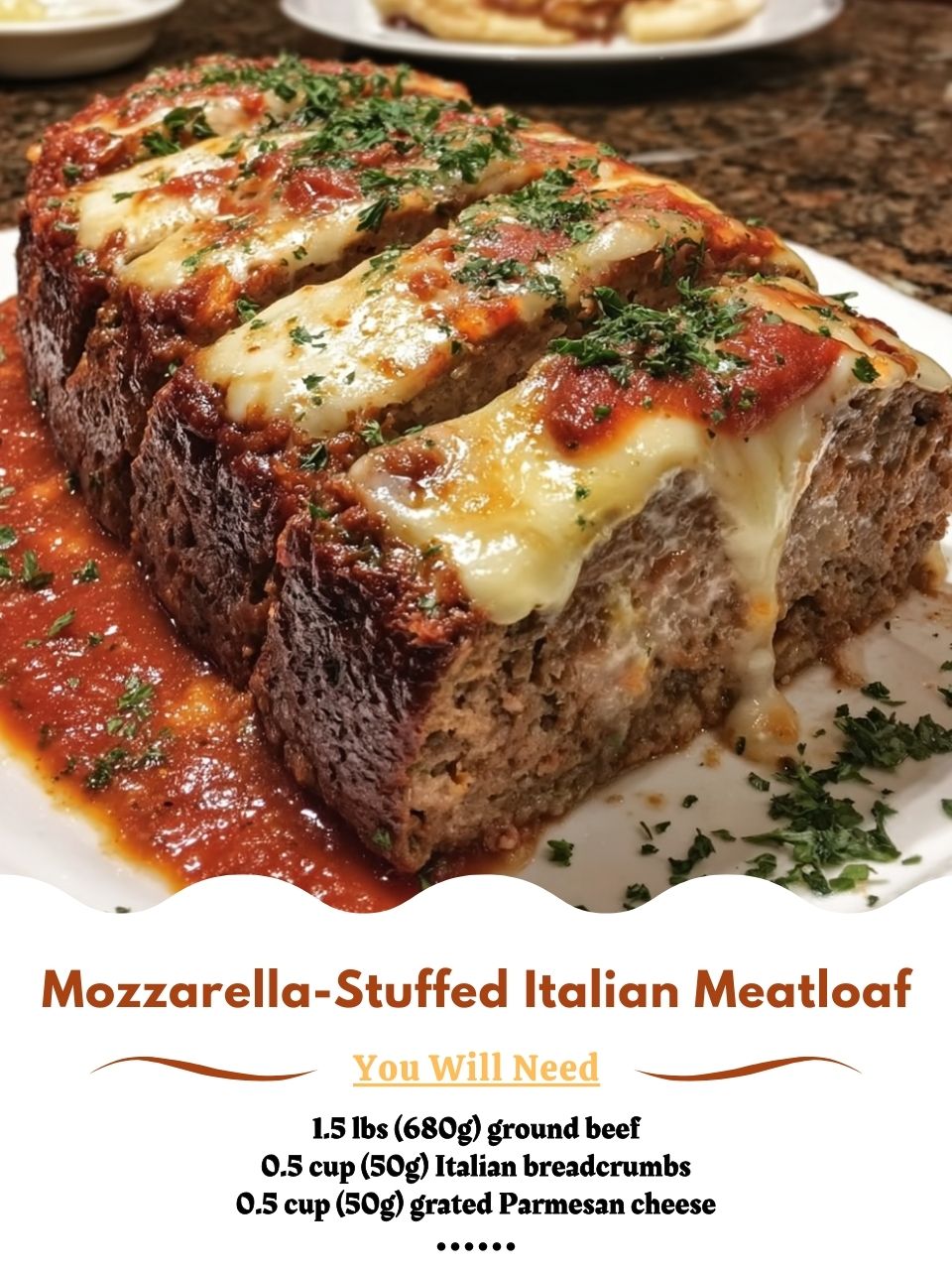
I place the loaf on the center rack and bake it for 40 minutes. While it bakes, I whisk together the glaze in a small bowl: ketchup, tomato paste, brown sugar, and Italian seasoning. After 40 minutes, I pull the loaf out—it will have started to brown nicely. I carefully brush or spoon all of that glossy glaze over the top and sides. I return it to the oven for another 20-25 minutes. The loaf is done when the internal temperature, measured in the meat (not the cheese center), reaches 160°F. I then let it rest on the pan for a full 10 minutes. This rest is non-negotiable; it lets the juices redistribute and the cheese settle, so it doesn’t all gush out on the first cut.
Pro Tips for Best Results
The single best tip I can give is to use an instant-read thermometer. Guessing doneness is a gamble. Underdone is unsafe, overdone is dry. I pull my meatloaf when the thermometer reads 160°F in the meaty part. The cheese will be perfectly molten at that temperature. Letting it rest for 10 minutes afterward is just as important as the baking time; it makes slicing clean and keeps the juices in.
Sealing the cheese properly is an art. I tested this by making the top layer too thin, and the cheese burst through in a volcanic eruption. Using a full third of the mixture for the top lid and making sure the edges are well-pinched together creates a strong seal. Pressing the loaf firmly into shape before inverting it onto the baking sheet also helps compact everything, leaving fewer avenues for escape.
Baking free-form on a sheet pan, rather than in the loaf pan, was a game-changer I learned the hard way. My first attempt, baked entirely in the loaf pan, steamed in its own juices and had a soggy bottom and pale sides. The crust wasn’t right. Baking it on a sheet allows for caramelization on all sides, which adds tremendous flavor and texture. That golden, glazed crust is what makes it feel special.
Common Mistakes to Avoid
Using only your hands to mix is essential, but overmixing is a common error. I used to knead the meat mixture like bread dough, thinking I had to make it perfectly uniform. This develops the proteins too much, resulting in a dense, tough, almost rubbery texture. Now, I use a light touch and mix just until everything is incorporated. A few stray bits of onion are just fine.(See the next page below to continue…)