
Equipment Needed
- Medium and large saucepans
- Wooden spoon or sturdy spatula
- Stand mixer or hand mixer
- Piping bags
- Large round piping tip (like Ateco 806 or 808) and a small round tip (like Wilton #230 or a bismarck tip)
- Baking sheets
- Parchment paper or silicone mats
- Whisk
- Fine-mesh sieve
- Baking thermometer (optional but helpful)
Step-by-Step Instructions
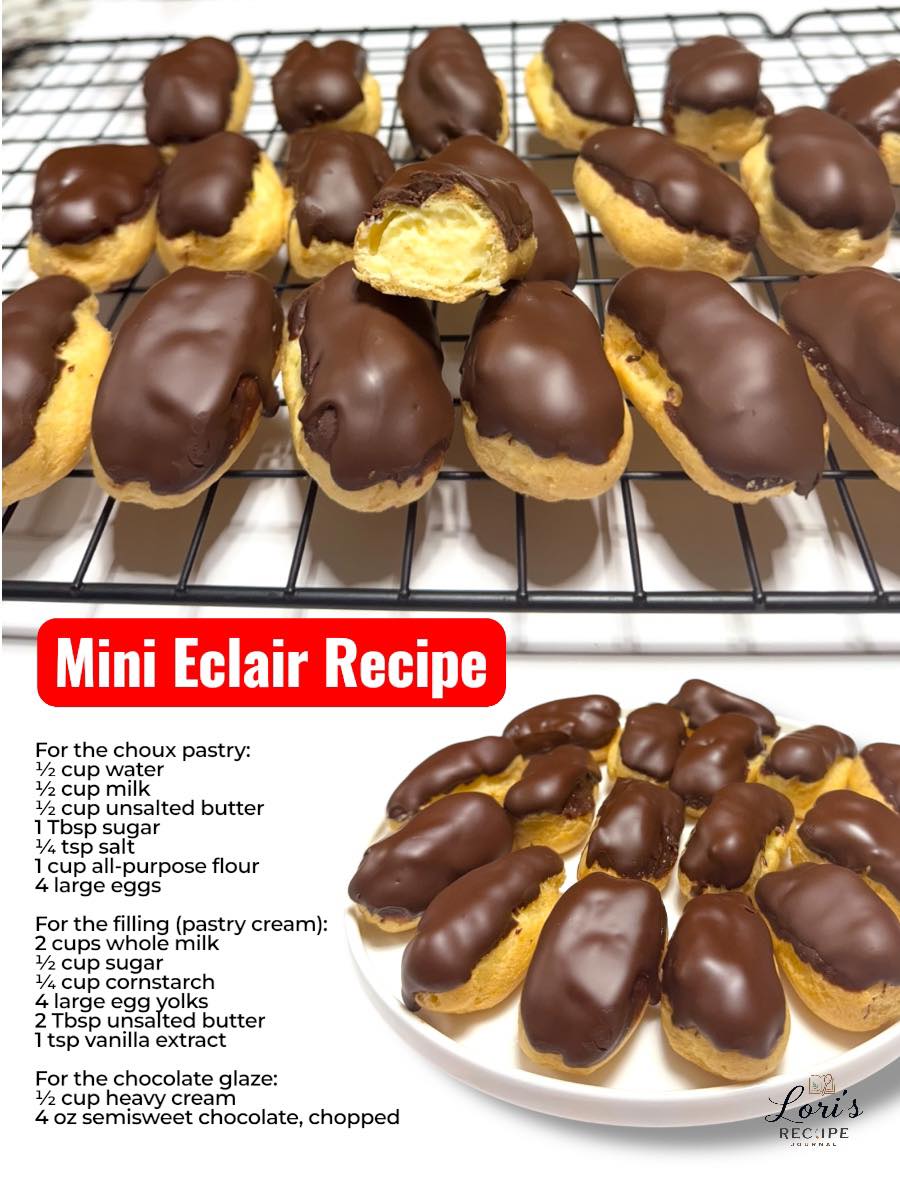
I always start with the pastry cream so it has plenty of time to chill. In a medium saucepan, I heat the 2 cups of milk until it just begins to simmer. While it heats, I whisk together the sugar, cornstarch, and egg yolks in a separate bowl until the mixture is pale, thick, and smooth—this takes a good minute of vigorous whisking. Once the milk is steaming, I slowly pour about half of it into the egg mixture while whisking constantly (this is called tempering and prevents scrambled eggs). Then, I pour the entire mixture back into the saucepan. I cook it over medium heat, whisking non-stop, until it thickens into a lush, pudding-like consistency and large bubbles break the surface. I immediately remove it from the heat, whisk in the butter and vanilla, then press it through a fine-mesh sieve into a bowl. I cover it directly with plastic wrap (pressing it onto the surface to prevent a skin) and refrigerate it for at least 3 hours.
Now, for the choux pastry, the fun part! I preheat my oven to 425°F (220°C) and line my baking sheets with parchment. In a large saucepan, I combine the water, milk, butter, sugar, and salt. I bring it to a rolling boil over medium-high heat, stirring until the butter is fully melted. The moment it boils, I remove it from the heat and dump in all the sifted flour at once. I stir vigorously with my wooden spoon. It will look messy, then suddenly come together into a smooth, glossy ball that pulls away from the sides of the pan. This is the “panade.” I spread it out in the pan and let it cool for 5 minutes—this is crucial so the eggs don’t cook when added.
Next, I transfer the warm dough to my stand mixer bowl. With the paddle attachment on medium-low, I add the room-temperature eggs one at a time, beating thoroughly after each addition. The dough will go from slippery to separated, then magically come back together into a smooth, sticky, pipeable paste that holds a “V” shape when you lift the beater. This is the perfect consistency. I fit a piping bag with my large round tip, fill it with the dough, and pipe 3-inch lines onto the baking sheets, leaving 2 inches between them. I smooth any pointed tips with a damp finger. Then, into the hot oven they go!(See the next page below to continue…)