
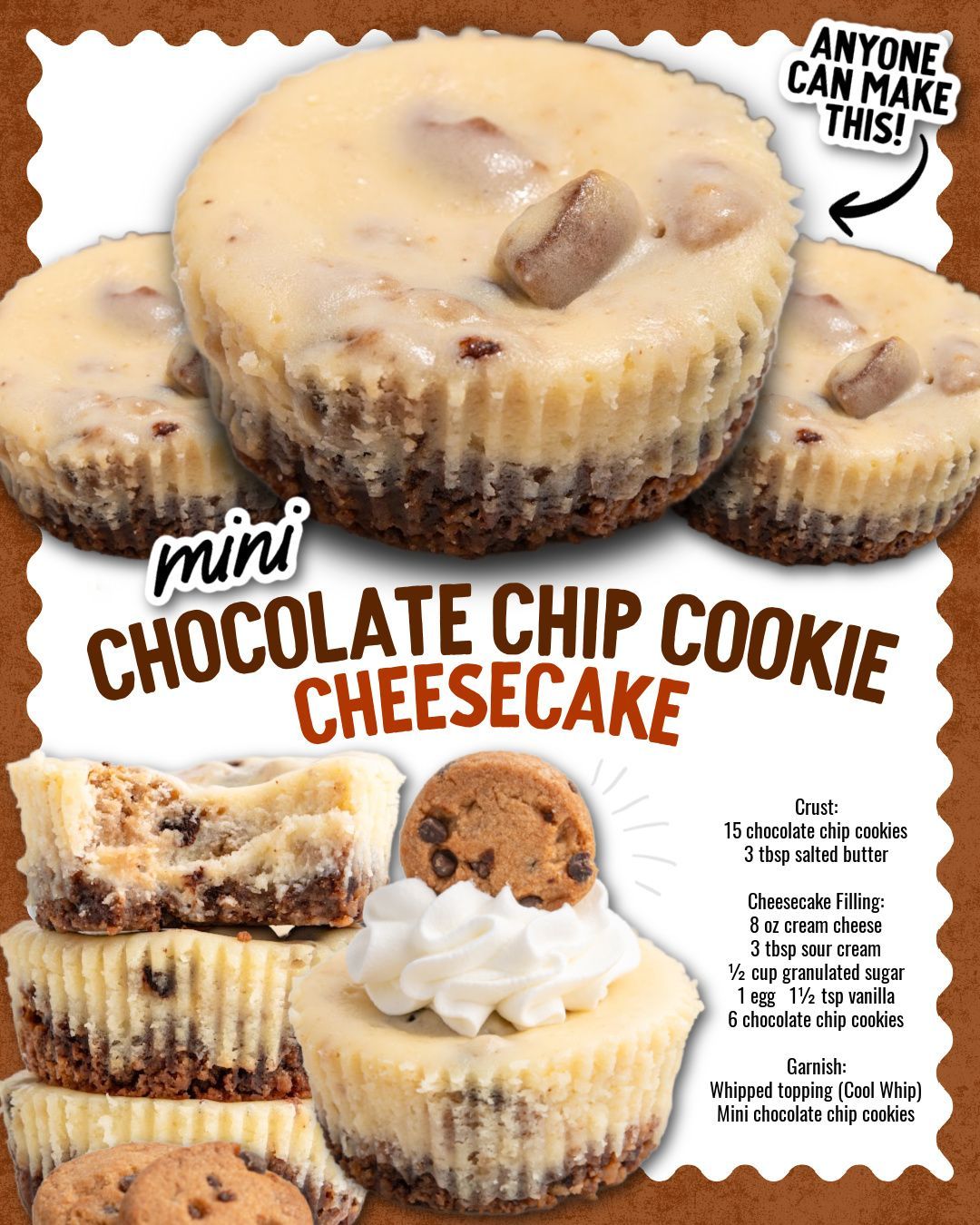
When everything is ready, I fill each liner about three-quarters full. The cheesecakes bake for around 18–22 minutes, but I go by appearance rather than the clock. The centers should still jiggle slightly—just like setting Jell-O—but not look wet. Overbaking causes cracks, dryness, and a rubbery texture, so I always err on the side of underbaking. As soon as they come out of the oven, I let them cool in the pan for about 10 minutes before transferring them to a cooling rack. They finish setting in the fridge for at least 2 hours, though overnight chilling gives the smoothest texture.
Once they’re completely chilled, I add the garnish. I pipe or dollop whipped topping on each mini cheesecake and pop a mini chocolate chip cookie into the swirl. The first time I made them, I didn’t wait for them to chill fully and my whipped topping melted instantly—so don’t be like me. Cold cheesecakes will hold their garnish beautifully, and this is the part where they start looking like bakery-style mini desserts rather than something you tossed together on a Wednesday night.
Pro Tips for Best Results
One thing I learned early on is that temperature control makes all the difference. When cream cheese and eggs are at room temperature, the batter mixes without lumps and the texture stays creamy. I tried rushing it once by microwaving the cream cheese, but it softened unevenly and created tiny pockets that baked into strange textures. So trust me—let your ingredients warm up naturally.
Another tip is to crush the cookies finely for the crust but leave the cookies for the filling slightly chunkier. That difference in texture gives you a crust that holds its shape and a filling with little pops of cookie goodness throughout. If you crush everything too finely, the filling becomes too uniform and loses that fun cookie-and-cream effect.
Baking low and slow is also essential. I’ve tried baking these at 350°F when I was impatient, and they puffed up like mini soufflés before collapsing dramatically into wrinkly, sad craters. Keeping the temperature at 325°F gives them time to cook evenly without rising too quickly.
And finally, don’t skip the chill time. I know it’s tempting to dive in early (I’ve done it), but the flavor deepens and the texture firms perfectly after a few hours in the fridge. These are even better the next day, which makes them ideal for prepping ahead for parties or gatherings.
Common Mistakes to Avoid
One mistake I made the first time was not pressing the crust firmly enough. If the crust is too loose, it crumbles when you remove the liner and the cheesecake loses its structure. You want it firmly compacted—like pressing graham cracker crumbs into a pie dish.(See the next page below to continue…)