
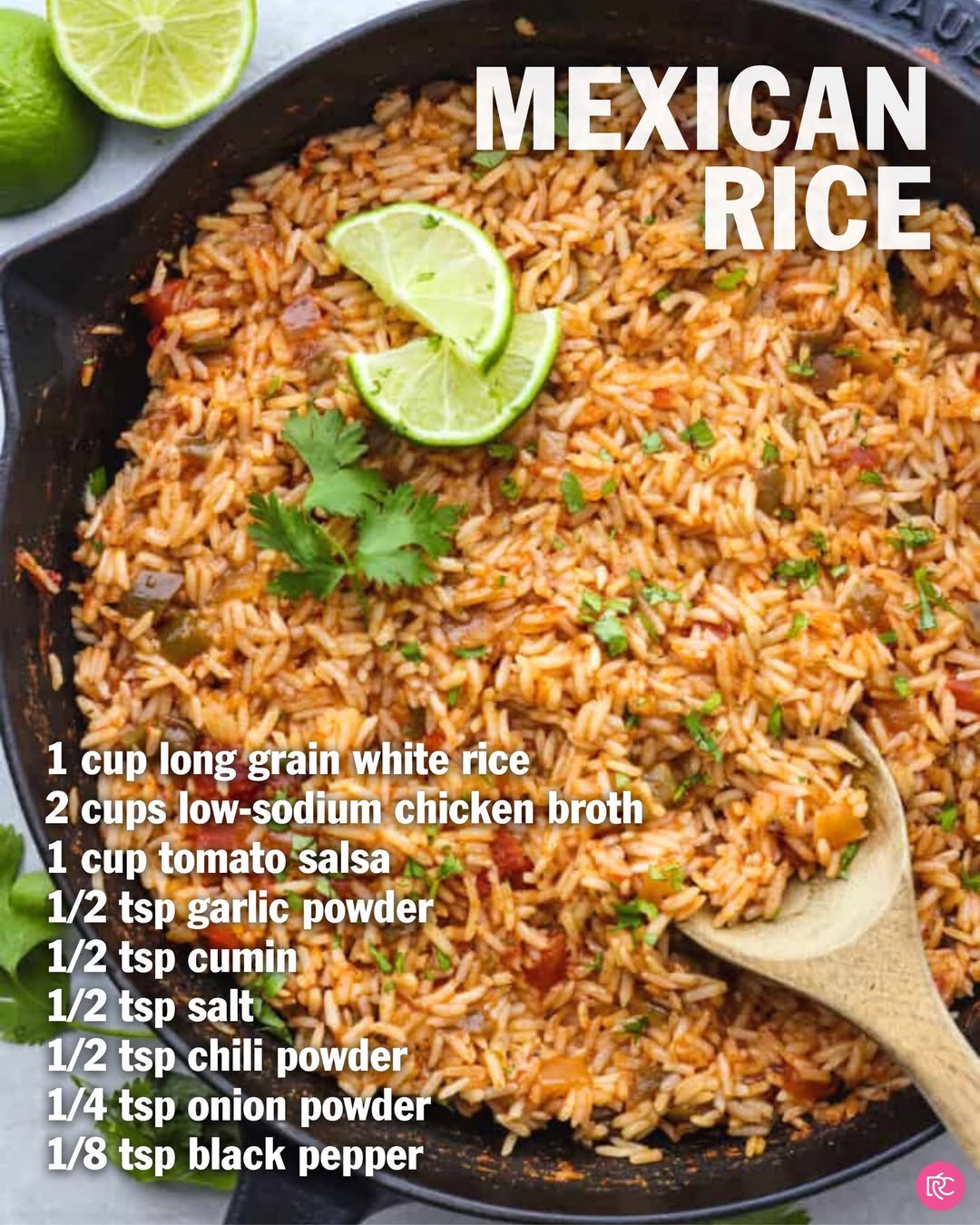
Mexican rice, also known as arroz rojo, is a fluffy, tomato‑scented rice cooked with onion, garlic, broth, and simple seasonings until each grain is tender, separate, and lightly coated in red color. It is the staple side you see on restaurant combo plates, served alongside beans, tacos, enchiladas, and grilled meats, and it’s beloved because it tastes rich and savory without feeling heavy or saucy.
What is Mexican rice?
At its core, Mexican rice is long‑grain white rice that’s first toasted in oil until lightly golden, then simmered in a seasoned tomato broth until all the liquid is absorbed and the rice steams to a fluffy finish. The tomato component can be canned tomato sauce, blended fresh Roma tomatoes, tomato paste, or a mix, and it is usually combined with chicken or vegetable broth plus bouillon to give depth. Aromatics like onion and garlic are sautéed with the rice, and many home cooks add a whole jalapeño and a few cilantro sprigs on top while it cooks to infuse a subtle chile and herb aroma without making the rice very spicy.
The key hallmark is texture: properly made Mexican rice should be fluffy, tender, and not sticky, with each grain distinct and lightly coated in tomato and oil. It often includes peas and carrots, especially in “restaurant style” versions, while simple home recipes may be just rice, tomato, onion, garlic, bouillon, and water. Because it is neutral but flavorful, it works with a wide range of main dishes and is a building block for bowls and casseroles.
Equipment
- Medium or large saucepan (3–4 quart) with a tight‑fitting lid
- Fine mesh strainer for rinsing rice
- Blender or food processor to puree tomatoes, onion, and garlic if using fresh tomato base
- Measuring cups and spoons for rice, liquid, tomato, bouillon, and spices
- Cutting board and knife for chopping onion, garlic, cilantro, and optional vegetables
- Wooden spoon or spatula for stirring rice while toasting and combining with tomato
- Fork for fluffing finished rice
Ingredients
A restaurant‑style, tomato‑bouillon Mexican rice generally uses a fairly short list of pantry staples.
- 2 tablespoons neutral oil (vegetable, canola, or light olive oil)
- 1½–2 cups long‑grain white rice, rinsed until water runs clear and drained well
- ½ medium white or yellow onion, very finely diced (or blended into the tomato base)
- 2–3 cloves garlic, minced or blended
- 1 cup tomato component: 8 oz canned tomato sauce OR about 1 cup blended Roma tomatoes OR 2–3 tablespoons tomato paste plus water
- 2½–3 cups chicken or vegetable broth (or water plus bouillon), warmed
- 1–2 teaspoons Caldo de Tomate (tomato bouillon) or chicken bouillon powder
- 1 teaspoon kosher salt, adjusting to taste and accounting for bouillon saltiness
- ½–1 teaspoon ground cumin or mild chili powder (optional, more common in Tex‑Mex “Spanish rice” versions)
- 1 whole jalapeño or serrano chile, left whole or halved, seeds removed if you want mostly aroma
- 2–3 sprigs cilantro (optional, for simmering and garnish)
- ½ cup finely diced carrots and ½ cup peas (optional, typical of restaurant style)
Step-by-step instructions
Mexican rice follows a consistent sequence that’s easy to memorize: rinse, toast, add flavor, add liquid, simmer, rest, fluff. The techniques here are what create the signature restaurant texture.
The rice is usually rinsed first. Long‑grain white rice is placed in a fine mesh strainer and rinsed under cold water, swishing with your hand, until the water runs mostly clear. This washes away surface starch that can glue the grains together. Rinsed rice is then left to drain thoroughly; adding wet rice directly to hot oil can lead to sputtering and uneven toasting.
In a saucepan, oil is heated over medium to medium‑high heat. Once shimmering, the drained rice goes into the pan. It is stirred frequently, toasting for several minutes until it turns from translucent to opaque and some grains show light golden color.
This step is essential not just for nutty flavor, but also because it coats the rice in oil and firms the exterior so the grains stay separate later. If you plan to include diced carrots, some recipes add them during this toasting phase so they soften slightly in the oil alongside the rice.
Onion and garlic are typically added once the rice is partially toasted. Finely chopped onion is stirred into the pan and cooked until softened and fragrant but not browned. Garlic goes in next and cooks for about 30 seconds, just until aromatic. At this point, some cooks also sprinkle in cumin, chili powder, or other spices, toasting the spices briefly with the rice to bloom their flavor.
Once the rice and aromatics are ready, tomato and seasonings are added. If using canned tomato sauce, it is poured directly into the pan and stirred so the rice becomes evenly coated and the tomato cooks briefly, tinting the grains.
If using fresh Roma tomatoes, they are usually blended with onion, garlic, bouillon, and some water or broth into a smooth puree, then poured into the toasted rice. This puree cooks for about 30–60 seconds while you stir, allowing the raw tomato flavor to mellow and preventing the rice from scorching on the bottom.
The liquid is then added. Warm broth or water plus bouillon is poured into the pan at roughly double the volume of rice. Bouillon powders and extra salt, if not already included in the tomato puree, are stirred in at this stage. Some cooks also tuck in a whole jalapeño or serrano pepper and a few cilantro sprigs on top, which will infuse flavor as the rice simmers.
The mixture is brought to a boil over medium‑high heat, giving everything a final gentle stir to ensure no rice is stuck to the bottom. As soon as it reaches a rolling boil, the heat is turned down to low to maintain a gentle simmer. The pot is covered with a tight‑fitting lid and left undisturbed. Cooking times vary slightly, but most recipes call for 15–25 minutes of covered simmering, depending on the type and amount of rice and the exact heat level.
Resisting the urge to lift the lid is emphasized again and again. Each time the lid is removed, steam escapes, and that steam is what cooks the rice evenly. Toward the end of the cooking time, a quick peek or gentle tilt of the pot can be used to check whether the liquid has been fully absorbed. When no visible liquid remains at the bottom and the surface looks set, the pot is removed from the heat.
Rather than fluffing immediately, the rice is left covered off the heat for an additional 5–10 minutes. This rest allows the remaining surface moisture to reabsorb into the grains, helping them firm to a perfect tender‑fluffy texture instead of being wet on the outside and firm in the center. If peas are being used, they can be stirred into the rice just before the lid goes back on for the resting period, so they warm through without overcooking.
After resting, any whole jalapeño and cilantro sprigs are removed and discarded. The rice is then fluffed gently with a fork, lifting and turning rather than stirring vigorously, to separate the grains without smashing them. If some tomato has risen to the top, it can be gently folded through the rice so color and flavor are evenly distributed. Finally, the rice is tasted for salt and adjusted as needed before serving.
Texture and flavor tips
The hallmark of good Mexican rice is that the grains are separate and tender, not sticky or mushy, and that the rice tastes savory and balanced without overwhelming tomato acidity. Rinsing long‑grain rice until the water runs clear removes excess starch that would otherwise make the rice cling together; this is particularly helpful for extra‑long grain varieties used in many authentic recipes.
Thorough toasting in oil until the rice is opaque with some golden specks adds nuttiness and further discourages sticking.
Liquid ratio and heat control are equally crucial. Too much liquid or too long at high heat leads to wet, broken grains, while too little liquid leaves the rice undercooked.
Most successful recipes hover just above the classic 1:2 rice‑to‑liquid ratio, especially when tomato sauce is part of the measurement. Bringing the mixture to a full boil only once and then maintaining the lowest simmer helps ensure even cooking without scorching.
For flavor, many home cooks rely on Caldo de Tomate, a tomato bouillon that brings both salt and concentrated tomato‑chicken flavor, layered on top of the fresh or canned tomato. Using broth instead of plain water gives a richer base, and sautéed onion and garlic provide depth and savoriness. A whole jalapeño and cilantro infuse a gentle, background complexity that makes the rice taste more restaurant‑like, without necessarily making it hot.
If rice turns out slightly too wet, allowing it to rest uncovered for a few minutes after fluffing can let steam escape and firm up the texture. If it’s under‑seasoned, sprinkling a small pinch of bouillon or salt over the fluffed rice and folding gently can correct the seasoning at the end without overworking the grains.
Variations and style options
Within the basic arroz rojo method, a lot of room exists for customization. Restaurant‑style Mexican rice in the U.S. often includes finely diced carrots and peas, and sometimes small cubes of potato, producing a colorful side that mirrors what you get with combo plates.
These vegetables are mild, so they don’t compete with the rice and tomato flavors, but they add sweetness and texture. Carrots generally go in with the rice while toasting, while peas are stirred in toward the end so they stay bright and tender.
Home‑style arroz rojo from many Mexican families tends to be simpler, focused on rice, tomato, onion, garlic, bouillon, and water, plus a chile and cilantro for aroma.
This style is often slightly less saucy and is intended to soak up juices from mains like carne guisada or enchiladas. Tomato may come solely from blended fresh tomatoes, sometimes with a bit of onion and garlic blended in; these recipes rely more on fresh produce and bouillon than canned sauce.
Tex‑Mex “Spanish rice” variations lean more heavily on spices, featuring chili powder, cumin, and sometimes paprika to create a deeper color and a smokier, slightly spicier profile. They may also incorporate diced green chiles or a bit more heat. These versions are especially common in U.S. home kitchens and pair well with Americanized taco fillings and casseroles.
Whole‑grain and appliance‑adapted variations exist as well. Brown‑rice Mexican rice increases cooking time and often boosts liquid slightly since brown rice takes longer to soften. Rice cooker and Instant Pot methods generally start with toasting the rice and aromatics in the pot using sauté mode, then add liquid and cook on the white‑rice setting or a short pressure cycle. These methods preserve the same flavor profile with less hands‑on monitoring.
Make-ahead, storage, and reheating
Mexican rice is an easy dish to make ahead, and it holds up well for several days. Once cooked and fluffed, it can be cooled and stored in airtight containers in the refrigerator for three to four days.
When reheating, adding a small splash of water or broth and covering the rice helps restore moisture and prevents it from drying out. This can be done on the stovetop in a covered skillet over low heat, stirring occasionally, or in the microwave with a damp paper towel over the bowl.
For longer storage, many cooks freeze leftover Mexican rice in portions. After cooling completely, it can be packed into freezer‑safe bags or containers and frozen for about one to two months. Thawing overnight in the refrigerator gives the best texture, but rice can also be reheated from frozen directly in a skillet with a bit of extra liquid, breaking it up as it warms.
If cooking for a crowd, some experienced cooks deliberately undercook the rice by a minute or two, then finish it gently when reheating, which helps avoid mushiness. Fluffing again after reheating helps re‑separate the grains. Because Mexican rice is fairly forgiving, it works well as part of a meal‑prep rotation for taco bowls, burrito fillings, and quick sides throughout the week.
Serving ideas and pairings
Mexican rice is one of the most versatile sides in Mexican and Tex‑Mex cooking, and it slots naturally into many menus. It is almost always paired with beans—refried beans, black beans, or brothy pinto beans—on the side of enchiladas, chimichangas, burritos, tamales, and chile rellenos. It also makes an excellent base for taco bowls, layered with protein, beans, salsa, guacamole, and cheese, turning leftovers into complete meals.
Grilled and roasted meats, such as carne asada, pollo asado, fajitas, and grilled shrimp, are natural matches because the rice soaks up juices and balances salty, charred flavors with its mild tomato savoriness. Soups and stews like pozole, caldo de pollo, or chile verde often share table space with rice, which can be spooned into bowls or eaten on the side for extra heft.
In casseroles, Mexican rice can be layered with cheese, beans, salsa, and meat to make baked dishes, or it can be used as a component in stuffed peppers, enchilada casseroles, and Mexican lasagna‑style bakes. Even outside strictly Mexican menus, it works well as a side for grilled chicken, simple sautéed vegetables, or Tex‑Mex‑inspired sheet‑pan meals.
Overall, Mexican rice is a recipe style that checks all the boxes for modern home cooks: it uses inexpensive pantry ingredients, relies on straightforward stovetop technique, scales easily for families or parties, and delivers a familiar restaurant flavor that upgrades any taco night spread.