
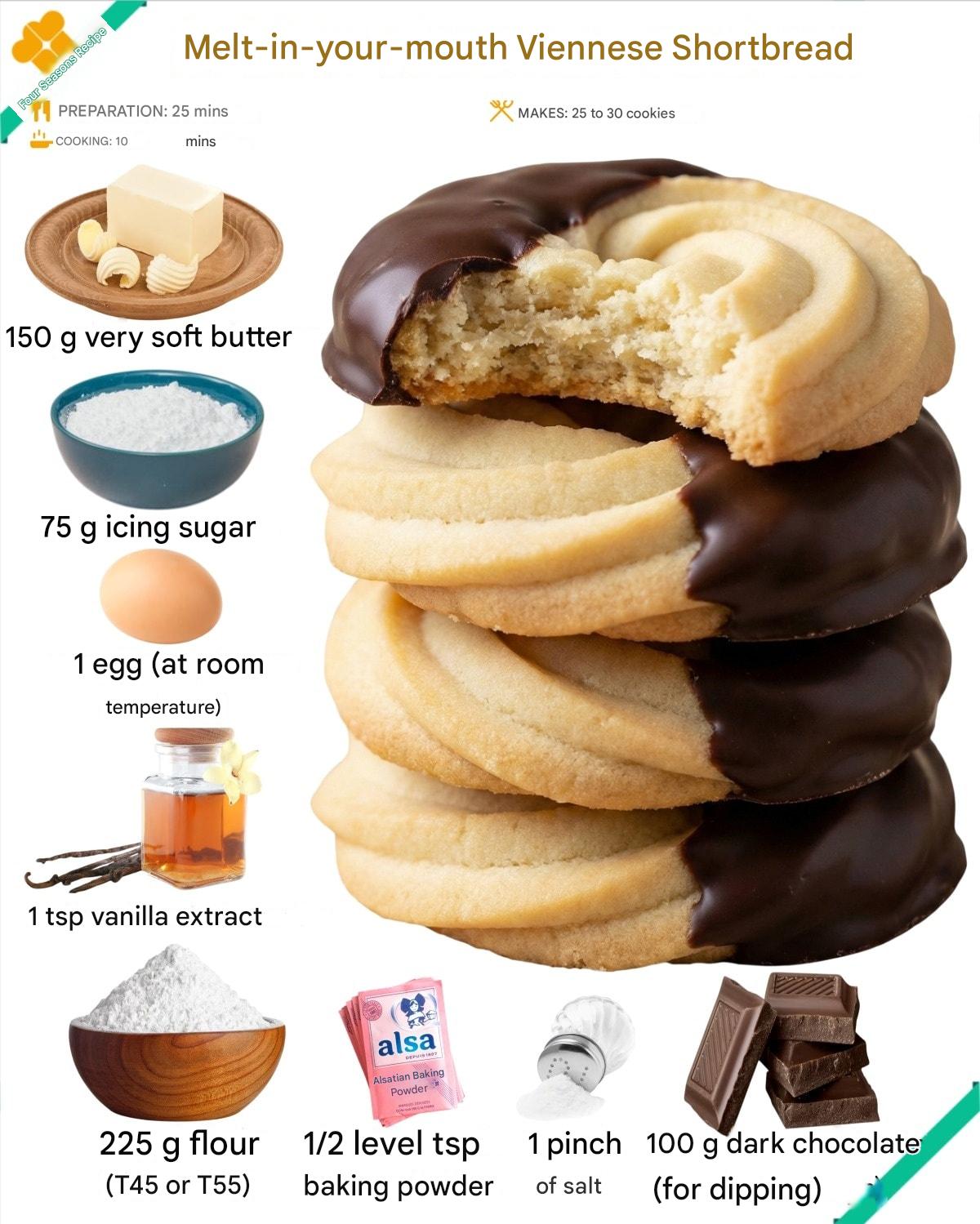
Next, I sift the flour, baking powder, and salt together before adding them to the bowl, and I fold everything in gently with a spatula. I used to mix too vigorously at this stage, and the cookies came out tougher than I wanted, so now I stop the moment the flour disappears. The dough should be soft but pipeable, almost like a thick frosting.
I transfer the dough into a piping bag fitted with a star nozzle and pipe small swirls onto a parchment-lined baking sheet. I’ve found it helps to keep even pressure and make them all roughly the same size so they bake evenly. At this point, I chill the tray briefly if my kitchen feels warm, which helps the cookies keep their shape in the oven.
I bake them in a preheated oven until the edges are just lightly golden, then let them cool completely on a rack. Once cooled, I dip half of each cookie into melted dark chocolate and set them back on parchment to firm up. That final chocolate dip always feels like the reward for my patience.
Pro Tips for Best Results
I tested this recipe with butter at different temperatures, and I can honestly say very soft butter works best, not cold and not melted. When it’s too firm, piping becomes a workout, and when it’s melted, the cookies spread too much. Trust me, letting the butter soften naturally makes everything easier.
Another lesson I learned the hard way was to use icing sugar instead of granulated sugar. I tried swapping it once out of curiosity, and the texture was noticeably grittier and less delicate. The fine sugar dissolves seamlessly into the butter and gives that signature melt-in-your-mouth feel.
I’ve also learned that chilling the piped cookies for even ten minutes can make a difference, especially in warmer kitchens. It helps them hold their shape and gives you those clean, defined ridges after baking. I didn’t think it mattered at first, but side-by-side tests proved me wrong.
Finally, when it comes to chocolate, I always melt it slowly and gently. Overheated chocolate turns dull and grainy, and I’ve ruined a batch or two by being impatient. Low heat and slow stirring give the smooth, glossy finish these cookies deserve.
Common Mistakes to Avoid
The first mistake I made was overbaking these cookies, thinking they needed more color to be done. They don’t. They should stay pale with just a hint of gold at the edges, or they lose their tender texture. Pulling them out early feels risky, but it’s the right call.
Another common mistake is using cold ingredients, especially the egg. I once added a cold egg straight from the fridge, and the dough split slightly, which made it harder to pipe. Letting everything come to room temperature helps the mixture stay smooth and stable.
I’ve also seen people skip the piping step and spoon the dough instead, which technically works, but you lose the classic look and even bake. I tried it once out of convenience and immediately went back to piping, because the texture and appearance were noticeably better.(See the next page below to continue…)