
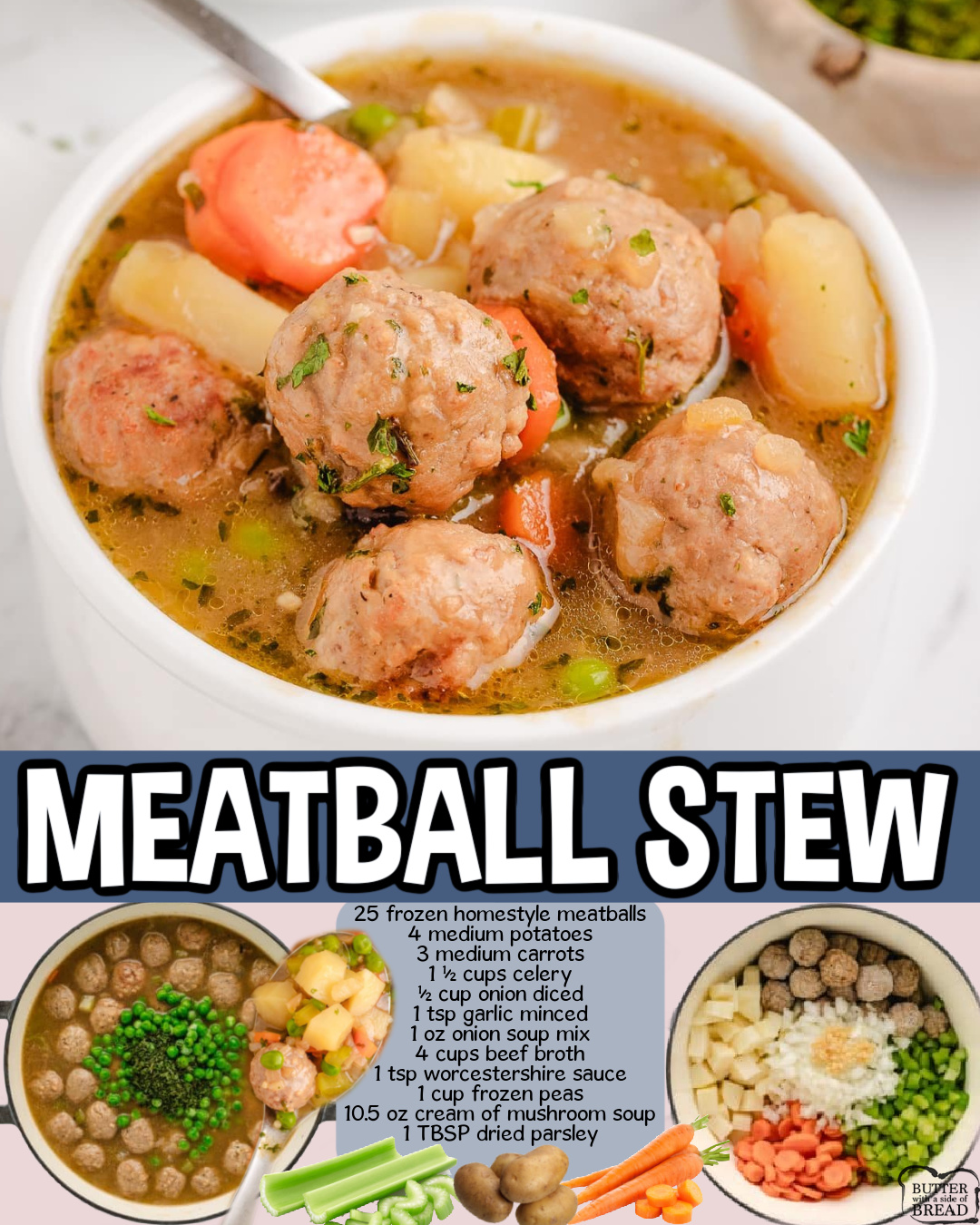
Once the vegetables start to soften, I add the frozen meatballs directly into the pot. You don’t need to thaw them; they’ll cook perfectly as they simmer. I gently push them down into the broth so they’re fully submerged. Stirring gently is important so they stay intact. After about 15 minutes, I stir in the cream of mushroom soup. This is the moment the stew transforms—it turns from a broth-based soup into something luxuriously creamy and hearty.
In the last few minutes, I add the frozen peas and dried parsley. The peas only need a short time to cook, and they keep their bright color beautifully. I let everything simmer together until the stew thickens just the way I like it—creamy but still brothy enough to spoon over biscuits or mashed potatoes. When I ladle it into bowls, the tender vegetables, juicy meatballs, and creamy sauce come together in every bite. It’s comforting in a way few dishes are.
Pro Tips for Best Results
I tested this recipe a few different ways, and I quickly learned that the order of ingredients makes a big difference. Adding the meatballs too early can make them overly soft, so I always wait until the vegetables have cooked most of the way before dropping them in. This keeps them juicy and tender without falling apart. Trust me, the timing matters more than you think.
Another tip I discovered is about the potatoes. If you want them to hold their shape, go with Yukon Gold instead of russet. Russets tend to break down slightly, which can actually help thicken the stew naturally—but if you prefer firmer chunks, Yukon Gold is the way to go. I’ve used both, depending on what I’m craving that day, and each leads to a slightly different texture experience.
Flavor layering is another thing I learned the fun way. If you sauté the onions and garlic before adding the broth, the stew tastes significantly richer. Skipping this doesn’t ruin anything, but the difference is noticeable. It gives the stew that “slow-cooked” taste even though everything comes together quickly. It’s such a small step with such a big payoff.
Finally, don’t be afraid to let the stew simmer longer if you have the time. I’ve rushed it before, and while it was still delicious, letting it cook an extra 20 minutes gives the flavors a chance to deepen beautifully. The vegetables soften nicely, the broth thickens, and everything melds into a cohesive comfort dish.
Common Mistakes to Avoid
The first mistake I ever made with this recipe was cutting the potatoes too small. They cooked too quickly and practically dissolved by the end. You want them chunky enough to stay intact, or your stew will turn more into mashed potatoes with meatballs floating in it. So chop them into hearty pieces, about one-inch cubes.
Another common mistake is adding too much salt. The onion soup mix and broth already contain a good amount, so I always recommend tasting before seasoning. I made the mistake once of adding salt early on, and by the time the stew finished simmering, it was way too salty for my liking. Slow, gradual seasoning is your friend here.(See the next page below to continue…)