
Don’t skip the step of cooking the onions and garlic. I once tried a “shortcut” version where I just mixed raw onion and garlic powder into the sauce. The flavor was flat and one-dimensional, and the raw onion bits were unpleasantly strong. Taking the extra 10 minutes to properly sauté them in the bacon fat caramelizes their natural sugars and creates a sweet, savory base that permeates the whole dish. It’s the soul of the recipe.
Overmixing after adding the sauce is a common error. When you pour the chicken and sauce mixture over the par-cooked potatoes, you want to fold it gently, not stir vigorously. You’re aiming for distribution, not a homogenous paste. Over-stirring can break down the partially cooked potatoes, making them gluey and robbing the casserole of its appealing texture with distinct components.
Using a baking dish that’s too small is a disaster waiting to happen. If the casserole is too deep, the potatoes steam instead of bake, leading to a soggy bottom layer and an undercooked center. The 9×13-inch size is perfect for spreading everything into a layer that’s about 2 inches deep. This ensures even heat distribution and that perfect ratio of crispy top to creamy middle. If you only have a smaller dish, you must reduce the quantities.
Serving Suggestions
This casserole is a hearty meal all on its own, but I love starting the meal with a light, acidic salad to balance the richness. A simple arugula salad with a lemon vinaigrette or a classic wedge salad with a tangy blue cheese dressing works wonderfully. The crisp, fresh greens provide a perfect contrast to the warm, creamy casserole and make the whole meal feel more complete and balanced.
For a truly cozy, family-style spread, I serve it directly from the dish at the table with sides that complement its flavors. Buttered corn on the cob or steamed green beans with almonds are fantastic. A side of warm, buttery dinner rolls is also a hit for sopping up any extra creamy sauce left on the plate. It’s the kind of meal that encourages everyone to linger at the table.
If I’m serving it for a brunch or potluck, I’ll often pair it with simpler, lighter finger foods. A platter of fresh fruit like melon and berries, or a tray of raw veggies with ranch dip, offers a refreshing counterpoint. This way, the casserole remains the indulgent star of the show, and the lighter sides ensure there’s something for everyone.
Leftovers for breakfast are a secret pleasure of mine. A scoop of this casserole, reheated in a skillet until the edges are extra crispy, topped with a fried or poached egg, is absolute heaven. The runny yolk mixes with the cheesy sauce to create the most delicious breakfast bowl. It’s a testament to how versatile and satisfying this dish truly is.
Variations & Customizations
This recipe is a fantastic canvas for what you have on hand. Don’t have or like bacon? Try using diced ham or even cooked, crumbled breakfast sausage for a different savory twist. For a smoky, meatless version, I’ve used a cup of well-drained canned black beans and a teaspoon of liquid smoke with great success. The beans add wonderful texture and protein.
The vegetable additions are endless. Sometimes I’ll add a cup of frozen peas and carrots (thawed) or chopped steamed broccoli florets to the sauce mixture for extra color and nutrition. Sautéed sliced mushrooms mixed in with the onions add a wonderful umami, earthy flavor. If you add watery veggies like zucchini or fresh mushrooms, sauté them first to drive off excess moisture so your casserole doesn’t become soupy.
You can play with the cheese and sauce profiles, too. Swap the cheddar for Pepper Jack for a kick, or use a blend of Gouda and mozzarella for a super-creamy melt. Instead of cream of chicken soup, try cream of mushroom or celery. For a tangier, Southwestern flair, I’ve substituted the sour cream with plain Greek yogurt and added a tablespoon of taco seasoning to the sauce, topping it with crushed tortilla chips instead of extra bacon.
For a lighter version, you can make some swaps, though the texture will change slightly. Using reduced-fat sour cream and cheese, and a lower-fat condensed soup works. You can also use Yukon Gold potatoes, which are naturally creamier and may need slightly less sauce. For a higher-protein boost, use plain Greek yogurt instead of sour cream and add an extra half-cup of shredded chicken.
How to Store, Freeze & Reheat
Leftovers store beautifully. Once completely cooled, I cover the baking dish tightly with plastic wrap or transfer portions to airtight containers. It will keep in the refrigerator for 3-4 days. The potatoes will absorb more of the sauce as it sits, making it even more flavorful, though the crispy top will soften. This is one of those rare dishes that tastes just as good, if not better, the next day.
To freeze, I let the entire baked casserole cool completely. Then, I wrap the whole dish (if freezer-safe) tightly in a layer of plastic wrap, followed by a layer of heavy-duty aluminum foil. I label it with the name and date. You can also portion it into freezer-safe containers. It freezes well for up to 2-3 months. Note that the texture of the potatoes will become more soft and less distinct upon thawing and reheating, but the flavor remains excellent.
To reheat from the fridge, my preferred method is the oven or toaster oven to revive some crispiness. I preheat to 350°F, place a portion in an oven-safe dish, cover it loosely with foil to prevent over-drying, and heat for 15-20 minutes, removing the foil for the last 5 minutes. For a single serving, the microwave works (about 2 minutes on high), but it will keep everything soft.
To reheat from frozen, I recommend thawing it overnight in the refrigerator first. Then, reheat as directed above, adding a few extra minutes if needed. You can reheat from frozen in a pinch: cover tightly with foil and bake at 350°F for 45-60 minutes (for a whole casserole), then uncover to crisp the top. I don’t recommend refreezing previously thawed portions.
Nutrition Information
Let’s approach this with honesty and balance. This Loaded Chicken Potato Casserole is a hearty, nutrient-dense comfort food. A serving provides a substantial amount of protein from the chicken and cheese, and complex carbohydrates from the potatoes, offering lasting energy. The dairy and bacon contribute fat, which carries flavor and promotes satiety. It’s a filling, satisfying meal that fits into the concept of nourishment that includes both physical fuel and emotional satisfaction.
You can view the ingredients as contributing different nutrients: the potatoes (with their skins on) offer potassium and vitamin C, the cheese provides calcium, and the chicken is an excellent source of lean protein. Using a rotisserie chicken adds flavor but can also increase sodium, so if you’re watching your salt intake, you may want to use home-cooked, unseasoned chicken and opt for a low-sodium condensed soup.
Portion awareness is helpful here. Because it’s so delicious and rich, it’s easy to over-serve. I find that cutting the 9×13 pan into 8 generous portions is perfect for a main course. Pairing it with a large, non-starchy vegetable side or salad helps create a balanced plate that is both indulgent and rounded. Listening to your hunger cues is key—this dish is very satisfying, so you may find you’re content with one serving.
In my kitchen, this recipe falls into the category of “wholesome indulgence.” It’s made with real, recognizable ingredients and provides genuine comfort and joy, which is an important part of a healthy relationship with food. I enjoy it as part of a varied diet, appreciating it for the cozy experience it brings to the table as much as for its nutritional profile.
FAQ Section
Can I use raw chicken instead of cooked?
I do not recommend using raw chicken in this casserole. The baking time and temperature are designed to heat through pre-cooked ingredients and cook the potatoes. Raw chicken may not reach a safe internal temperature before the sauce breaks or the potatoes overcook. For safety and best results, always use pre-cooked chicken. It’s the perfect use for leftovers or a rotisserie chicken.
My potatoes are still hard after baking. What can I do?
This usually means the potato cubes were cut too large or weren’t par-cooked long enough. If you find yourself in this situation, cover the dish tightly with foil again and return it to the oven for an additional 15-20 minutes. Check for tenderness with a fork. Next time, ensure your dice is a consistent ½-inch and don’t skip the initial 20-minute roast for the potatoes alone.
Can I assemble this casserole ahead of time?
Absolutely! You can complete all the steps up to adding the final cheese and bacon topping. Cover the unbaked casserole tightly with plastic wrap and refrigerate for up to 24 hours. When ready to bake, let it sit on the counter for 20-30 minutes while the oven preheats, add the topping, and bake. You will likely need to add 5-10 minutes to the covered baking time since it’s starting cold.
Can I make this without the condensed soup?
Yes, but you’ll need to make a simple roux-based sauce. Melt 3 tablespoons of butter in a saucepan, whisk in 3 tablespoons of flour, and cook for 1 minute. Slowly whisk in 1 ¼ cups of chicken broth and ½ cup of milk until thickened. Remove from heat and stir in the sour cream. Use this in place of the canned soup and milk in the recipe. It’s delicious but adds a few more steps.
The top isn’t browning nicely. How can I fix it?
If your top is pale after the final uncovered bake, your oven might run cool or the rack position might be off. Move the dish to the upper third of the oven and switch the oven to broil for the last 2-3 minutes. WATCH IT CONSTANTLY—it can go from golden to burnt in seconds! This quick broil will give you that perfect, appetizing golden-brown finish.
Conclusion
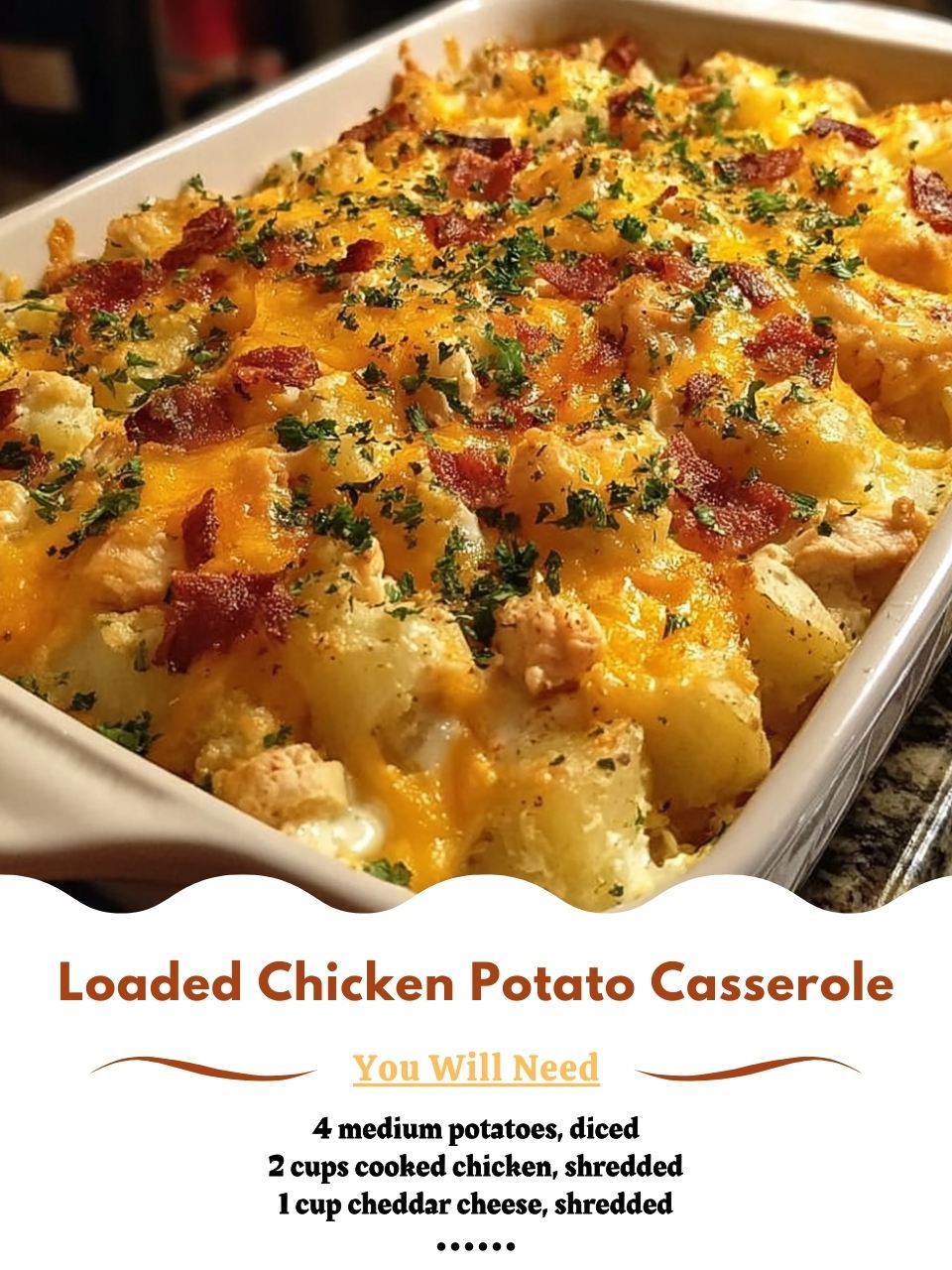
This Loaded Chicken Potato Casserole has become more than a recipe in my home; it’s a reliable source of warmth and happiness. It represents the beautiful simplicity of turning basic ingredients into a meal that gathers people together and fills the room with good smells and even better conversations. I love how forgiving it is, how it welcomes customization, and how it consistently delivers that deep, satisfying comfort we all crave sometimes. So, the next time you need a meal that feels like a hug, gather these simple ingredients and give it a try. I hope it brings as much joy to your table as it has to mine. Happy cooking!