
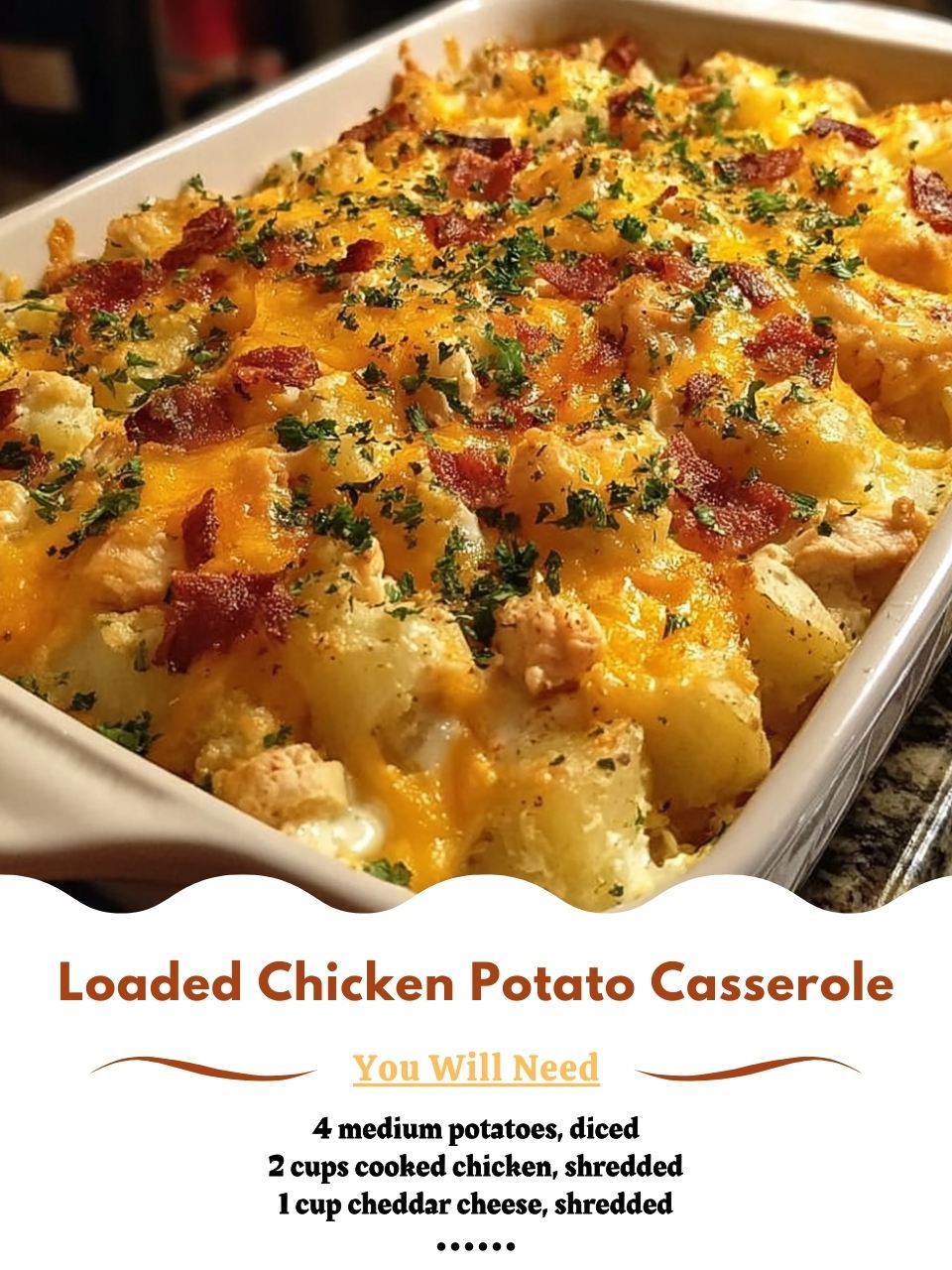
In my medium mixing bowl, I combine the heart of the sauce: the sour cream, condensed soup, and milk. I whisk it until smooth. Then, I stir in the cooked onions and garlic, the shredded chicken, half of the crumbled bacon, and one cup of the cheddar cheese. By now, the potatoes have had their initial roast. I pull the hot dish from the oven and carefully pour the chicken and sauce mixture over the top. I use a spoon to gently fold and distribute everything, trying to get the creamy sauce down into the gaps between the potatoes. It will look like a lot, but it settles in as it bakes.
For the grand finale, I sprinkle the remaining ½ cup of cheddar cheese and the rest of the crumbled bacon evenly over the top. Now, here’s the crucial part for texture: I cover the dish tightly with aluminum foil and bake for 25 minutes. This steams and tenderizes everything perfectly. Then, I remove the foil, crank the oven up to 400°F, and let it bake for another 15-20 minutes, until the top is spectacularly bubbly, golden brown, and the potatoes are tender when pierced with a fork. The sizzle when it comes out is pure music.
Pro Tips for Best Results
Par-cooking the potatoes is my number-one tip for perfect texture. I used to dump raw potatoes in with the sauce and bake it all at once, and I’d often end up with undercooked, crunchy potatoes in a burnt sauce. Giving the diced potatoes a 20-minute head start in the oven, tossed just with oil and seasonings, allows them to begin softening and developing flavor before they get smothered. This ensures they’re fully tender and creamy by the end.
Don’t rush the onion and garlic step. Sautéing the onions in the bacon fat until they’re truly soft and sweet is a flavor investment. If they’re still crunchy when they go into the sauce, they won’t soften much more in the oven. Let them cook low and slow for a full 5-7 minutes. And when you add the garlic, keep it moving! Burnt garlic becomes bitter and can ruin the entire dish. I add it at the very end, just until its fragrance blooms, about 30-60 seconds.
The two-stage baking method—covered, then uncovered at a higher heat—is a game-changer I developed after some experimentation. The covered phase gently cooks the chicken and allows the sauce to permeate the potatoes without drying out. The uncovered, higher-temperature finish is where the magic happens: the sauce thickens, the top cheese forms gorgeous golden bubbles, and the exposed potato edges and bacon bits get deliciously crisp. It creates the ideal contrast of creamy interior and crispy top.
Let it rest before serving. I know it’s tempting to dive right in, but give it 10 minutes after pulling it from the oven. This rest time allows the bubbling sauce to settle and thicken slightly, making it easier to serve neat squares or scoops. It also saves your tongue from a scalding! I use this time to chop fresh chives or green onions for that essential bright, fresh garnish that cuts through the richness.
Common Mistakes to Avoid
The biggest mistake is cutting the potatoes unevenly or too large. If your dice is inconsistent, you’ll have some mushy pieces and some hard, undercooked ones. I aim for a steady ½-inch cube. Using a sharp chef’s knife makes this task quicker and safer. I also avoid using pre-shredded bagged cheese for the mix-in if I can help it. It’s coated in anti-caking agents that can make the sauce a bit grainy and less smooth. Taking two minutes to shred a block of cheddar makes for a much creamier, meltier result.(See the next page below to continue…)