
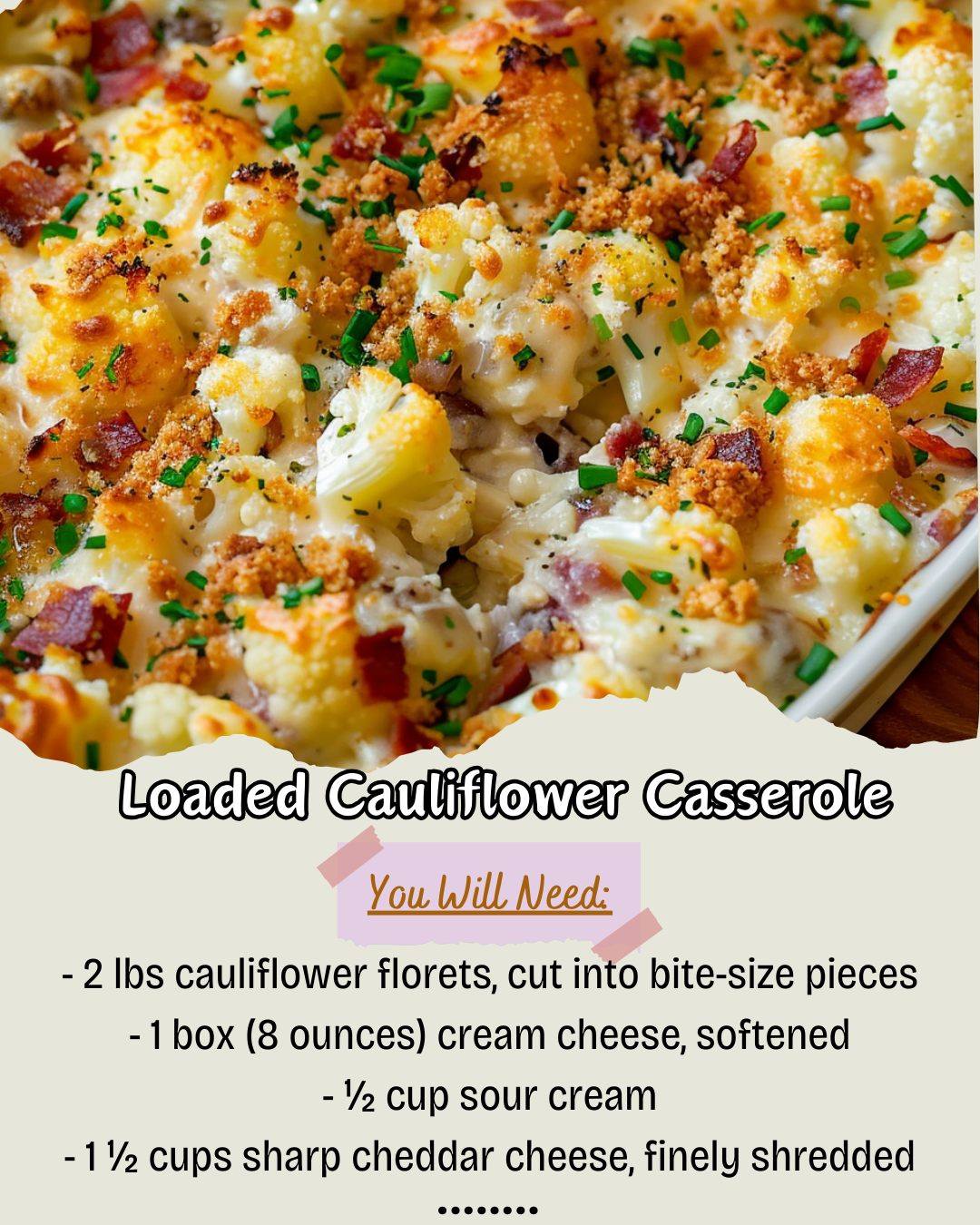
Do not use cold cream cheese straight from the fridge. It will not incorporate smoothly and will leave little lumps throughout your sauce. Let it soften on the counter for a good hour. If you’re in a pinch, you can microwave it (without the foil wrapper!) for 15-second intervals at 50% power until spreadable.
Overcooking the cauliflower during the initial boil is a common pitfall. You want it just tender enough to pierce with a fork. If it’s falling apart before it goes into the baking dish, it will completely disintegrate in the oven, turning your casserole into a textureless puree. A slight bite is what you’re after.
Finally, do not skip the step of separating the white and green parts of the green onions. The white parts get cooked into the sauce, mellowing their flavor, while the fresh green tops are added at the end for a bright, colorful garnish and fresh crunch. Using them all at one stage misses out on this layering of flavor.
Serving Suggestions
I love serving this casserole as the star side dish alongside a simple protein like grilled chicken, pan-seared steak, or baked salmon. The richness of the cauliflower pairs perfectly with simply seasoned meats. It’s a complete and satisfying meal on one plate.
For a hearty vegetarian main course, I’ll sometimes mix in a can of drained and rinsed white beans or chickpeas with the cauliflower for extra protein. Served with a big green salad, it’s a fantastically comforting meatless Monday option.
Leftovers are amazing for breakfast! I reheat a portion in a skillet and top it with a fried egg. The runny yolk mixed with the cheesy cauliflower is an unexpectedly delicious way to start the day.
Variations & Customizations
For a “Buffalo Chicken” version, stir ½ cup of Buffalo hot sauce into the creamy mixture and add 2 cups of shredded cooked chicken. Use a blue cheese crumble on top instead of extra cheddar for a fantastic game-day casserole.
If you’re not a bacon fan, substitute with diced ham or even chopped broccoli for extra veggies. For a different cheese profile, try using Gruyère and a pinch of nutmeg for a French-inspired twist, or Pepper Jack for a spicy kick.
To make it even lower in carbs, you can replace the mayonnaise with an equal amount of full-fat Greek yogurt. The flavor will be tangier, but still delicious. You can also add a crunchy topping by mixing ¼ cup of pork rind crumbs or almond flour with a tablespoon of melted butter and sprinkling it over the cheese before baking.
How to Store, Freeze & Reheat
Store leftovers in an airtight container in the refrigerator for up to 4 days. Reheat individual portions in the microwave until hot, or for a crispier top, reheat in a 350°F oven in an oven-safe dish for 15-20 minutes. You may need to add a small splash of milk or cream if it seems dry.
You can assemble the casserole up to a day ahead, cover tightly, and refrigerate before baking. You may need to add 5-10 minutes to the bake time if it’s going into the oven cold from the fridge. This is a fantastic time-saver for holiday meals or busy weeks.
You can freeze the baked and cooled casserole. Cut it into portions, wrap tightly in plastic wrap and then foil, and freeze for up to 2 months. Thaw overnight in the refrigerator and reheat in the oven until bubbly. The texture of the cauliflower may soften slightly, but the flavor will still be excellent.
Conclusion
This Loaded Cauliflower Casserole has become my favorite way to turn a simple vegetable into a celebrated, comfort-food masterpiece. It’s reliable, endlessly customizable, and proves that healthy eating can be decadently delicious. I hope this recipe finds a regular spot on your table, bringing warmth, flavor, and happy sighs with every cheesy spoonful. Now, grab that head of cauliflower and get ready to make a side dish that might just steal the show.